Every pool owner eventually reaches a point where the question shifts from routine maintenance to something bigger: is this pool worth restoring, or is it time to start fresh? It is one of the more significant decisions a homeowner can face when it comes to their outdoor space, and the answer is rarely obvious without a clear framework for thinking it through.
This guide is designed to help Toronto and South Mississauga homeowners understand the distinction between pool restoration and full pool replacement, what each path involves, and which scenarios tend to favour one option over the other. There is no universal right answer; the better choice depends entirely on the condition of your existing pool, your goals for the backyard, and the realistic scope of what needs to be done.
What “Pool Restoration” Actually Means
The term pool restoration covers a wide range of work, which is part of why it can be confusing when homeowners first start researching their options. At its broadest, restoration means renewing and upgrading an existing pool structure without demolishing and rebuilding it from scratch.
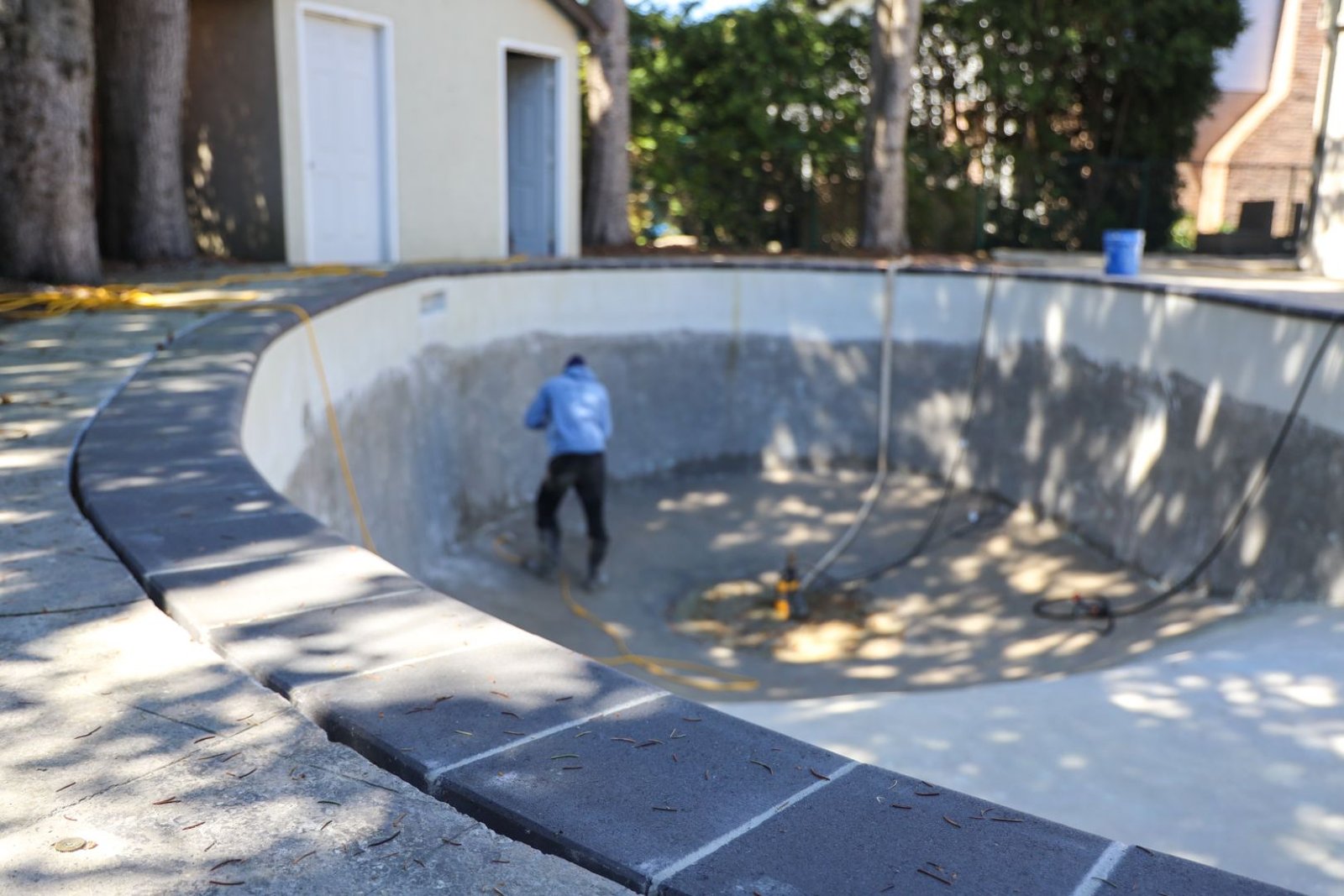
Restoration work can include resurfacing the interior finish (replastering, applying new quartz aggregate, or pebble finishes on concrete pools), replacing the vinyl liner on lined pools, updating coping and tile around the pool perimeter, replacing aging or inefficient equipment like pumps, heaters, filters, and automation systems, repairing structural cracks or addressing water loss issues, and adding new features like lighting, water features, or heating to a pool that did not originally have them.
Some of these items involve surface-level work; others go deeper into the pool’s structure or mechanical systems. The common thread is that the existing pool shell remains in place. For a detailed breakdown of what falls under restoration versus renovation versus resurfacing specifically, our post on pool renovation vs. restoration vs. resurfacing in Toronto clarifies each term.
What “Full Pool Replacement” Involves
Full replacement means the existing pool is demolished, removed from the property, and a new pool is installed in its place, or occasionally in a different location or configuration in the backyard. This is a significantly larger undertaking in terms of cost, timeline, and disruption to the property.
Full replacement is typically chosen when the existing pool structure has fundamental problems that cannot be adequately addressed through restoration, when the pool’s size, shape, or location no longer suits how the homeowner wants to use the backyard, or when the pool is simply at the end of its practical lifespan and the accumulated cost of bringing it to an acceptable standard approaches what a new pool would cost. Our swimming pool installation page outlines what the new pool process involves from site preparation through to completion.
Factors That Favour Restoration
For most Toronto homeowners with a pool that has reached the point of needing significant attention, restoration is the more common and cost-effective path. Several factors tend to support this direction.
The Pool Structure Is Fundamentally Sound
The most important variable is the integrity of the pool shell itself. A concrete pool with a structurally solid shell, even if the interior finish has worn through, the coping needs replacing, and the equipment is outdated, is a good candidate for restoration. The work that needs doing is real, but it is surface and system work rather than structural. A vinyl pool where the walls and floor are intact but the liner has aged past its service life is in the same category.
An experienced pool professional can assess the shell through inspection, and for concrete pools, through pressure testing the plumbing. If the bones are solid, restoration is likely to give you a pool that looks and functions like new at a fraction of the cost of replacement.
The Pool’s Size and Shape Still Work for You
If you are satisfied with where the pool sits in the yard, its general dimensions, and its basic configuration, restoration is almost always the better path. The desire to keep the pool in roughly the same form is a strong signal that restoration makes sense, since the new-pool alternative adds significant cost without changing the fundamental outcome you are after.
Specific Systems or Surfaces Have Failed, Not the Whole Pool
When the issue is clearly bounded, for example the liner has reached end of life, the heater needs replacement, and the coping has cracked, you are looking at a restoration project with a defined scope. Those are all addressable issues without touching the pool’s structure. Combining liner, equipment, and coping replacement into a single project, which Destination Pools handles as an integrated restoration, delivers a fully refreshed pool without the disruption and cost of a ground-up rebuild.
For a closer look at what restoration typically costs in the Toronto market, our post on inground pool restoration costs in Toronto covers the main variables.
Factors That Favour Full Replacement
Full replacement is the right choice in specific circumstances, and it is worth understanding what those are rather than dismissing it as an extreme option.
The Pool Has Significant Structural Failure
Concrete pools can develop structural cracks that go beyond the surface finish and into the shell itself. When the shell is compromised, particularly in multiple locations or with active water infiltration into the surrounding soil, restoration becomes a more uncertain investment. Patching a structurally compromised shell addresses the symptom but not the root cause, and in some cases creates a cycle of recurring repairs that adds up to more than replacement would have cost.
Fiberglass pools that have experienced significant osmotic blistering or delamination of the shell surface present a similar situation. Surface-level repairs are possible, but when the structural layer itself is affected, the calculus changes.
The Pool No Longer Fits the Backyard or How You Live
Design expectations for outdoor living spaces have changed significantly over the past two decades. A pool installed in the 1980s or early 1990s may sit in a position in the yard that blocks natural traffic flow, receives inadequate sun, or simply does not leave room for the deck, outdoor kitchen, or landscaping you want to create. When the fundamental positioning or layout of the pool is the problem, restoration addresses the surface but not the root issue.
Similarly, a pool that is significantly too small for how a family now uses the space, or one that has a depth profile or shape that no longer works for the household, may be a candidate for replacement rather than investing in restoration work on a pool that will continue to feel outdated in how it functions.
The Accumulated Restoration Scope Approaches New-Pool Territory
In some cases, a pool’s condition is such that the scope of restoration required, shell repairs, full liner replacement, all equipment, coping, tile, deck, and potentially plumbing, adds up to a figure that makes a fresh installation worth comparing. This is relatively rare, since a new pool involves excavation, forming, and construction that restoration avoids, but it is worth getting a clear picture of both options when the scope of work is extensive.
Side-by-Side Comparison
| Consideration | Restoration Makes Sense | Replacement Makes Sense |
|---|---|---|
| Pool shell condition | Structurally intact, surface wear only | Significant structural failure |
| Location in yard | Suits current lifestyle and design | Poorly positioned for how backyard is used |
| Size and shape | Works well for the household | Too small, wrong shape, or dated configuration |
| Specific issues | Liner, equipment, surfaces, or coping | Multiple overlapping structural problems |
| Pool age | Under 25-30 years with solid maintenance history | Older pool with unknown construction history |
| Scope of work relative to cost | Clear restoration scope at a fraction of new pool cost | Restoration scope approaches new-pool cost |
The Role of the Backyard in the Decision
One consideration that is easy to overlook is that the pool decision and the backyard decision are connected. A pool restoration opens up an opportunity to refresh the full outdoor living space at the same time: updated deck materials, new landscaping, an outdoor kitchen addition, or a pergola over the lounge area. Destination Pools approaches pool restoration as part of complete backyard transformation, so the pool, deck, and surrounding landscape are all planned together rather than tackled as separate projects over time.
Whether the direction is restoration or replacement, the conversation about what the full backyard should look and feel like is where the planning process should start. Our pool restoration service page outlines the full scope of what Destination Pools handles in Toronto and South Mississauga as part of an integrated restoration project.
Getting a Professional Assessment
The most important step in making this decision is a professional inspection of the existing pool. Photographs and visual assessments from the pool deck only tell part of the story. A thorough evaluation looks at the shell, the plumbing, the equipment, and the surrounding site conditions to give you an accurate picture of what you are working with.
With that picture in hand, the restoration versus replacement question becomes much clearer. In most cases, homeowners are relieved to find that restoration is a genuinely viable path that delivers a pool that looks and performs like new. Occasionally, the assessment reveals that replacement is the more sensible long-term investment. Either way, the right answer starts with knowing what the pool actually needs.
Frequently Asked Questions
How do I know if my pool shell is structurally sound?
A professional inspection is the most reliable way to assess shell integrity. For concrete pools, this typically involves a visual inspection of the interior surface for cracking patterns, a check of the coping and bond beam for movement, and pressure testing of the plumbing to identify active leaks. Surface cracking in plaster alone does not necessarily indicate structural failure. Wide cracks, cracks that have grown over multiple seasons, or cracks accompanied by significant water loss are more concerning and warrant professional evaluation.
Can a vinyl pool be converted to a different pool type during restoration?
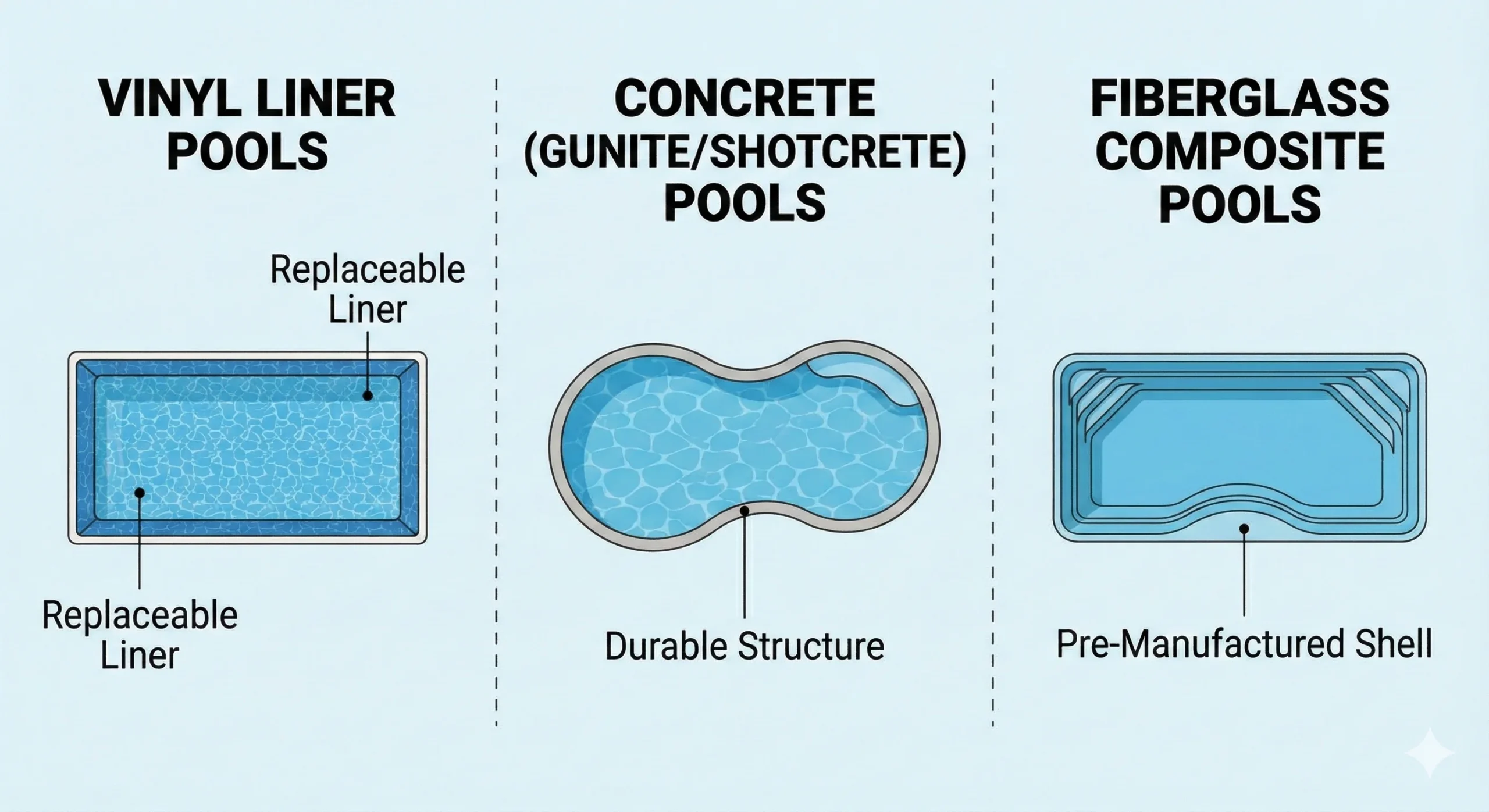
Converting from a vinyl pool to a gunite (concrete) pool involves significant structural work, essentially rebuilding the pool walls and floor to accommodate the different construction method. It is closer to replacement than restoration in scope and cost. Most homeowners with a vinyl pool in reasonable structural condition choose to stay within the vinyl system, updating to a new liner and equipment, rather than undertaking that level of structural change. The choice of pool type, including the trade-offs between vinyl, concrete, and fiberglass, is worth exploring in our post on concrete vs. vinyl vs. fiberglass pools in Toronto.
How long does pool restoration take compared to a new pool build?
Restoration scope varies widely. A liner replacement with equipment updates might take one to two weeks from draining to swim-ready. A more comprehensive restoration involving resurfacing, coping, tile, equipment, and deck work might run four to eight weeks depending on scope and weather. A full new pool installation typically runs eight to sixteen weeks or longer, including site preparation, construction, finishing, and curing time. Restoration is generally the faster path to having a functioning pool.
Will restoring an older pool bring it up to current safety codes?
A restoration project is an opportunity to bring safety features up to current standards, including anti-entrapment drain covers, proper fencing and gating, and updated electrical and bonding. Some updates may be required as part of the permit process if the restoration scope triggers permit requirements. Our post on pool fence regulations in Toronto is a helpful reference for understanding the current requirements.
Is restoration or replacement more disruptive to the yard?
Restoration is significantly less disruptive in most cases. The existing pool shell stays in place, which means no excavation and no heavy equipment moving soil through the yard. The disruption is generally limited to the pool area itself. Full replacement involves demolition, excavation, and new construction, all of which affect a larger area of the yard and require a longer timeline to restore surrounding landscaping.
Talk to Destination Pools About Your Options
If your pool is showing signs of age and you are wondering whether restoration or replacement is the right direction, the first step is a conversation. Destination Pools works with homeowners across Toronto and South Mississauga, including Port Credit, Lakeview, Clarkson, and Mineola, to assess existing pools honestly and recommend the path that makes the most sense for the specific situation.
Contact Destination Pools to arrange a site assessment and get a clear picture of what your pool needs and what each option would involve.