A vinyl liner is one of the hardest-working components of your inground pool. It contains the water, protects the walls and floor structure, and defines how your pool looks every single season. When a liner is in good shape, you barely notice it. When it starts to fail, the signs are hard to miss, and the consequences of waiting too long can be significantly more expensive than the liner replacement itself.
For homeowners across Toronto and South Mississauga, Ontario’s freeze-thaw cycle adds a layer of seasonal stress that accelerates liner wear beyond what owners in milder climates experience. Knowing what to look for, and acting at the right time, makes the difference between a straightforward liner replacement and a larger structural repair project.
1. The Liner Is Visibly Fading or Has Lost Its Pattern
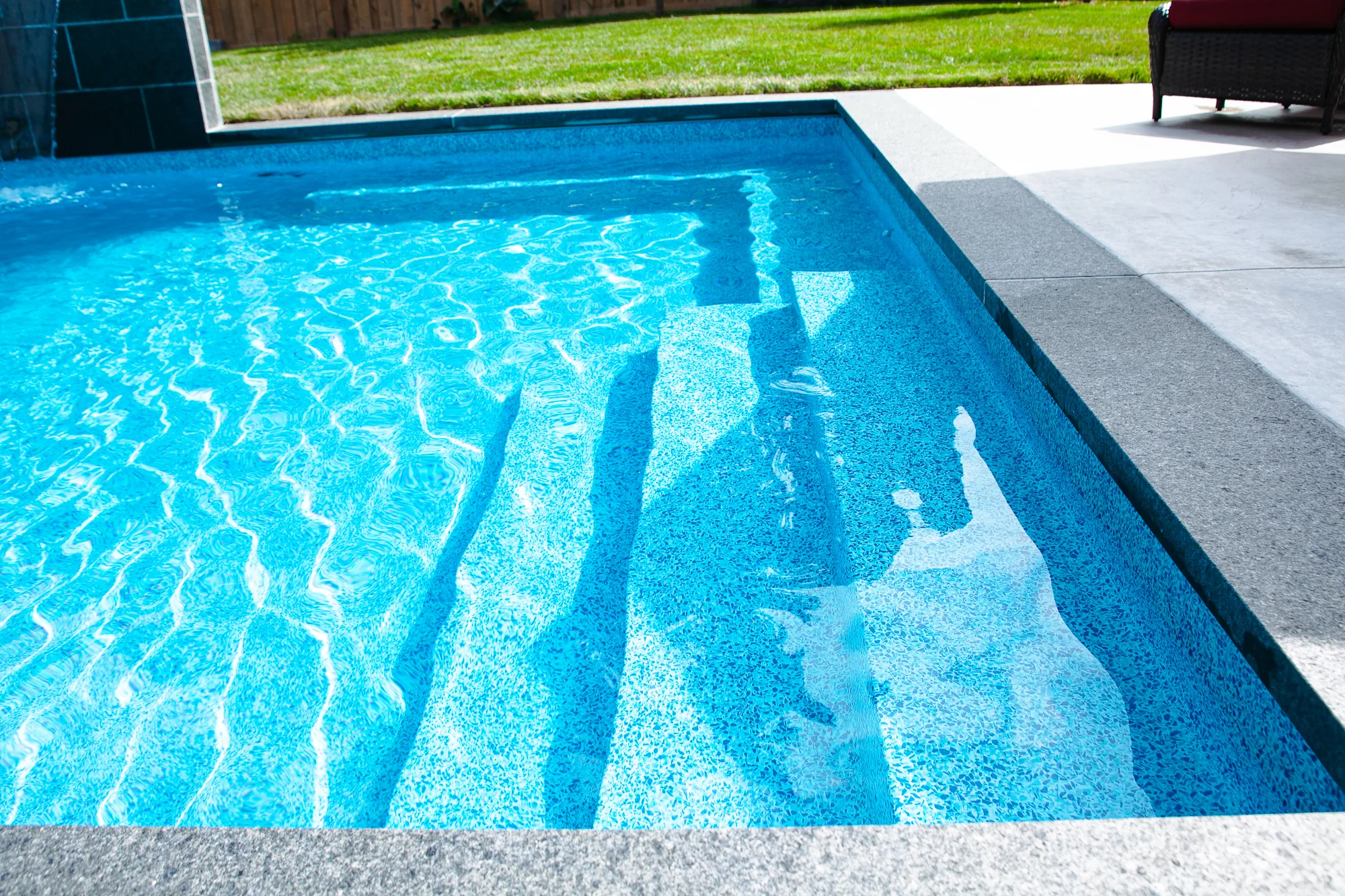
Vinyl liners are manufactured with UV-resistant compounds baked into the material, but those compounds degrade over time with sustained sun exposure. The first visual sign is typically a washed-out appearance: colours that once looked vivid now appear pale or grey, and any printed pattern becomes indistinct. The bleaching tends to be uneven, with shallow areas and steps fading first since they receive more direct sunlight.
Fading is primarily cosmetic in its early stages, but it signals that the plasticisers in the vinyl are breaking down. A liner that looks faded has already begun to lose the flexibility and elasticity that allow it to seal properly. The material becomes more prone to cracking, puncturing, and pulling away from the pool’s edges, so fading is often the first warning that a replacement timeline should start forming in your planning.
2. Wrinkling Along the Floor or Walls
A correctly installed liner should lie smooth and taut against the pool floor and walls. Wrinkles develop when the liner absorbs water and stretches, which is most often caused by prolonged exposure to unbalanced water chemistry. Acidic water is the most common culprit: it draws water into the vinyl itself, causing the material to swell and lose its original fit against the pool structure.
Minor wrinkling that appeared recently and is limited to a small area may resolve if water chemistry is brought back into balance quickly. But widespread wrinkles, especially along the floor, or wrinkling that has persisted for more than a season, indicate that the liner has been permanently stretched. A stretched liner will never lay flat again, and its ability to maintain a proper seal is compromised. At this stage, replacement is the practical path forward.
3. Visible Tears, Punctures, or Seam Failures
Punctures from sharp objects, seam separations near fittings, and tears along the bead track at the pool’s top edge are all direct failures in the liner’s ability to contain water. Small punctures can sometimes be patched temporarily using underwater vinyl patch kits, and those patches may buy a season or two if the liner is otherwise in reasonable condition.
However, patching is not a long-term solution. Every patch point is a zone of reduced elasticity, and a liner that has required multiple patches over its life is one that is failing at an accelerating rate. When tears appear at seams, around return jets, or at the bead track, the liner has lost structural integrity in its most load-bearing areas. Replacement is the only permanent fix at that point.
4. The Liner Is Pulling Away From the Pool’s Bead Track
The bead track is the channel that runs around the top perimeter of the pool, holding the liner in place. When a liner pulls away from the bead track, it exposes the gap between the liner and the pool wall, allowing water to infiltrate behind the liner. That water can erode the sand base that the liner rests on, cause rust on steel-walled pools, and eventually lead to structural problems that go far beyond the liner itself.
A liner pulling away from the bead track is one of the most urgent signs that replacement cannot wait. The longer water runs behind the liner, the more extensive and expensive the secondary damage becomes. If you see the liner sagging or detached from the track edge, contact a pool professional promptly rather than monitoring it further.
5. Unexplained and Consistent Water Loss
Every pool loses water to evaporation. In the heat of a Toronto summer, roughly a quarter-inch per day is typical. If you are losing noticeably more, or if you find yourself adding water every few days to keep the level stable, a liner leak is one of the most common explanations.
Small liner leaks are not always obvious to the eye, particularly if they are along the floor. A dye test or a bucket test can help distinguish evaporation from an actual leak. If a leak is confirmed and the liner is older or showing other signs of wear, liner replacement is almost always more cost-effective than chasing and patching individual leak points. For a broader look at what constitutes normal pool wear versus structural issues worth investigating, our post on signs your pool needs restoration covers the full picture.
6. The Liner Feels Brittle or Stiff
A healthy vinyl liner is supple and flexible. When you press against it or feel the material near the steps and shallow end, it should give slightly. A liner that feels stiff, crinkles like paper, or crumbles at the edges has reached the end of its useable life. This brittleness is caused by the loss of plasticisers over many years of UV exposure and chemical contact.
A brittle liner can crack under the normal stress of water pressure changes, thermal expansion, and the movement that occurs during pool closing and opening. Even if it is not visibly failing yet, a brittle liner is one that will fail, often catastrophically and with little warning. When a liner reaches this point, replacement should be planned for the upcoming season rather than deferred further.
7. The Liner Is More Than 10 to 15 Years Old
Liner age alone is not a reason to panic, but it is a reason to inspect more carefully each season. Most quality vinyl liners, properly maintained, last somewhere in the 10-to-15-year range in Ontario conditions. Some heavier-gauge liners in well-maintained pools last longer. But past the 15-year mark, any of the signs above should be taken seriously rather than dismissed, because the material itself is simply approaching the end of its designed service life.
Age-based planning also gives you the advantage of timing. Homeowners who replace their liner proactively, before it fails, can choose the timing of the project, select a finish that complements their backyard design, and avoid the emergency-repair scenario where the pool is out of commission mid-season.
At a Glance: Liner Warning Signs and How to Respond
| Warning Sign | What It Likely Means | Typical Next Step |
|---|---|---|
| Fading or discolouration | Plasticisers breaking down, UV damage | Plan replacement within 1-2 seasons |
| Widespread wrinkling | Permanent stretch from chemistry imbalance | Replace; wrinkling does not self-correct |
| Tears or seam failures | Structural liner failure | Replace; patching is a short-term measure |
| Liner pulling from bead track | Water infiltrating behind liner | Urgent replacement to prevent wall damage |
| Consistent unexplained water loss | Active liner leak | Dye test to confirm, then replace |
| Brittle or stiff material | End of liner service life | Replace before failure occurs |
| Liner is 10+ years old | Approaching end of designed lifespan | Inspect closely each spring; plan ahead |
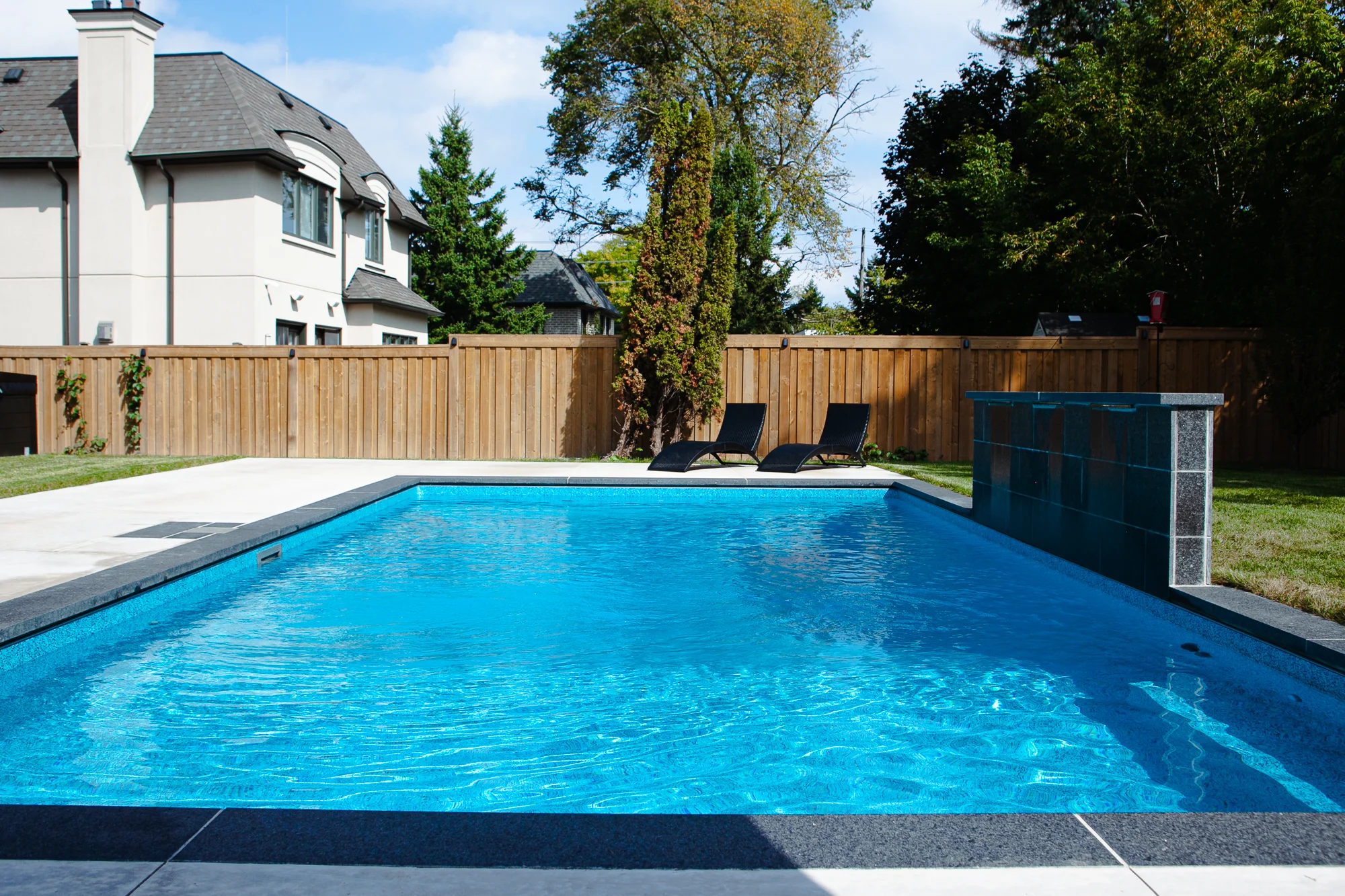
What Happens Next: The Liner Replacement Process
Once the decision to replace is made, the process is more straightforward than many homeowners expect. Here is a general overview of what a liner replacement involves from start to finish.
Step 1: Drain the Pool
The pool is fully drained before the old liner can be removed. Drainage timing and rate matter, particularly in areas with high water tables, to avoid hydrostatic pressure pushing up on the pool shell from below. A pool professional will manage this carefully.
Step 2: Remove the Old Liner and Inspect the Shell
With the pool empty, the old liner is removed and the pool walls, floor, and coping track are inspected. This is the moment to address any structural issues with the pool shell: cracks in the floor, deterioration in steel walls, or uneven sand beds. It is also the time to upgrade fittings, returns, and light fixtures if needed. Starting fresh with a compromised shell under a new liner simply delays a larger repair, so this inspection step is taken seriously.
Step 3: Install the New Liner
The new liner is stretched into place, attached to the bead track, and vacuum-fitted to remove air pockets before water is introduced. Liner installation requires skill and precision: wrinkles introduced during installation are permanent, so the process is methodical. Most liner installations take one to two days for the installation itself.
Step 4: Refill and Balance
With the liner in place, the pool is refilled. Water chemistry is carefully balanced as the pool fills, which prevents the new liner from being immediately exposed to corrosive or unbalanced water. A proper startup chemistry protocol protects the new liner from day one. For a full breakdown of what proper pool chemistry looks like across the season, our inground pool maintenance guide for Toronto is a useful reference.
Best Timing for Replacement
In Ontario, the ideal windows for liner replacement are spring (before the swim season opens) or fall (after closing). Spring replacement means you open for the season with a new liner, fresh chemistry, and no disruption to summer swimming. Fall replacement gives you a full season to plan your liner selection without any rush pressure. Both timing windows avoid the heat of summer when scheduling is tightest and demand on pool contractors is highest.
Liner Replacement as Part of a Broader Pool Refresh
A liner replacement is often a natural trigger for looking at the pool holistically. If the liner is being replaced, the pool is already drained and the structure is exposed. Many homeowners use this opportunity to combine the liner replacement with coping upgrades, tile work, or equipment modernization as part of a broader pool restoration in Toronto. The disruption of draining and refilling the pool happens once rather than twice, and the result is a pool that looks and performs like new across every dimension, not just one.
If the backyard around the pool has also been on your mind, this is the ideal moment to consider the full picture: updated decking, landscaping, or an outdoor kitchen to complete the space. Destination Pools handles pool restoration and full backyard transformation as integrated projects, which means you do not have to coordinate multiple contractors or live through multiple rounds of construction disruption.
Frequently Asked Questions
How long does a vinyl pool liner typically last in Toronto?
In Ontario’s climate, most quality vinyl liners last between 10 and 15 years with proper care. Ontario’s freeze-thaw cycle and seasonal pool closings put cumulative stress on liner material that shortens lifespan compared to more temperate regions. Thicker liners and careful chemistry management push the timeline toward the higher end of that range.
Can I patch a liner instead of replacing it?
Patching is an option for isolated punctures or small tears on an otherwise sound liner. Underwater vinyl patch kits bond to the liner material and can seal a small failure effectively. However, a liner that needs multiple patches, shows widespread wear, or is already more than 10 years old is usually better served by full replacement. A new liner outlasts a patched one and provides complete peace of mind for several more seasons.
Will pool liner replacement disrupt my swimming season?
A liner replacement typically takes three to five days from draining to refill and ready to swim, depending on pool size and any additional work to the shell or equipment. Scheduling in spring or fall avoids any disruption to summer use. If a liner fails mid-season and requires urgent replacement, most contractors can complete the work within a week, though spring and fall scheduling offers more flexibility in timing.
Is there anything I can do to extend my liner’s life?
Consistent water chemistry is the single most important factor. Keeping pH, alkalinity, and sanitiser levels within the recommended ranges prevents the chemical degradation that ages liners prematurely. Closing and opening the pool correctly each season, protecting the liner from prolonged direct chemical contact (such as adding chemicals directly without adequate dilution), and removing sharp objects from the pool floor all contribute to a longer liner life.
Do I need a permit to replace my pool liner in Toronto?
Liner replacement is considered a maintenance repair and does not typically require a building permit in Toronto. Structural changes to the pool shell, expanding the pool footprint, or adding new equipment that requires electrical work may involve permits, but a standard liner swap does not. Our post on pool permits in Toronto covers when permits come into play for pool-related projects.
Ready to Assess Your Pool Liner?
If your liner is showing any of the signs above, or if it has been more than 10 years since the last replacement, a professional inspection is the right starting point. Destination Pools serves homeowners across Toronto and South Mississauga, including Port Credit, Lakeview, Clarkson, and Mineola, with pool restoration and liner replacement work that is timed around your schedule and designed to keep your pool in service for years to come.
Contact Destination Pools to arrange an assessment and get a clear picture of where your liner stands, and what your options are for the season ahead.