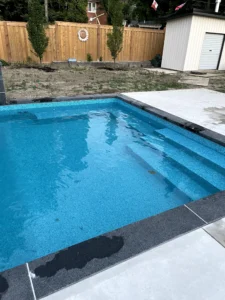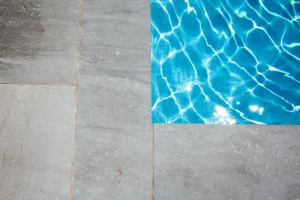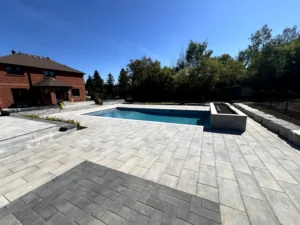
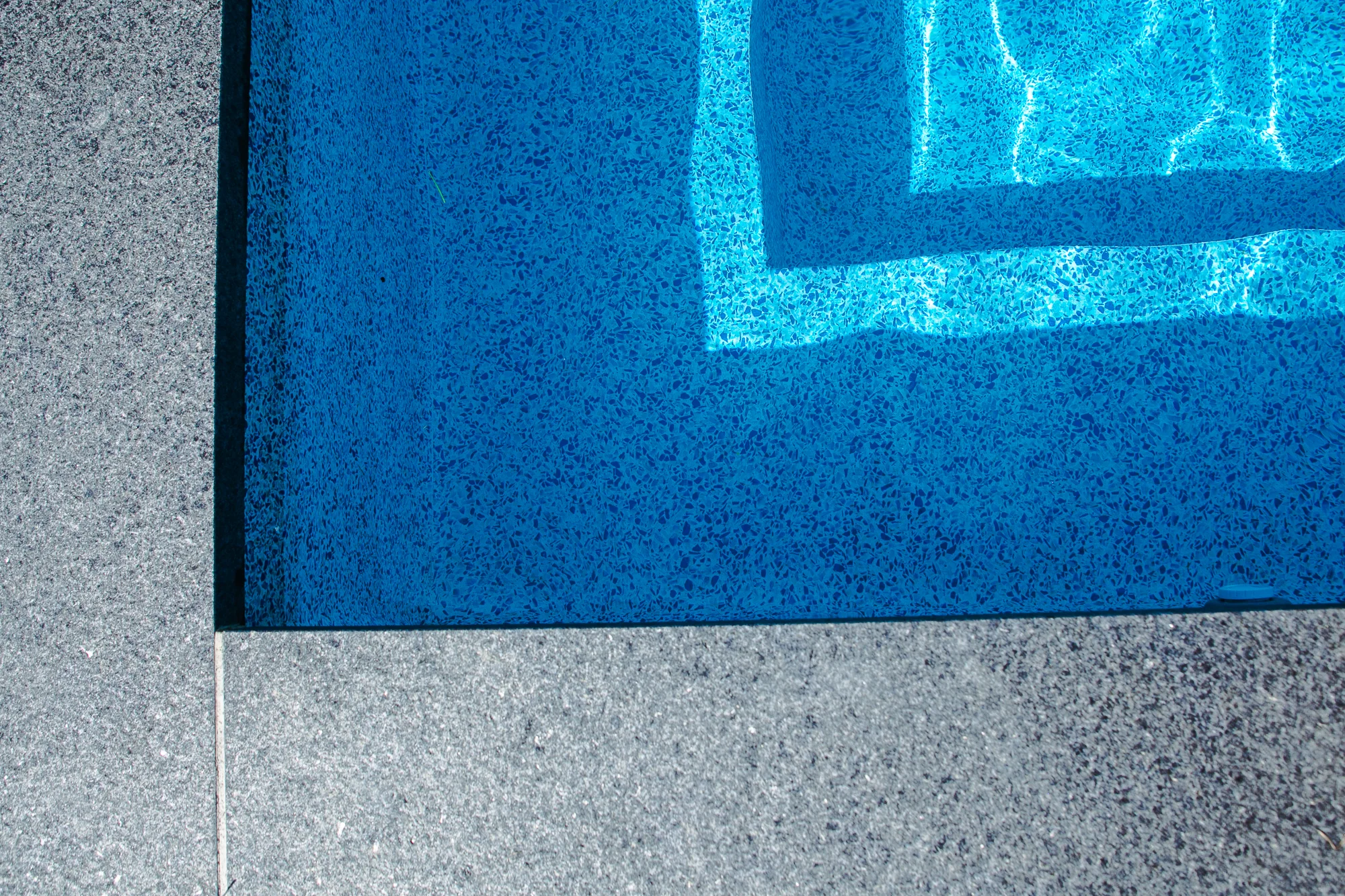
The deck surrounding your pool does more than frame the water. It is where people walk barefoot, dry off, eat, entertain, and spend most of the time they spend outdoors. A well-designed pool deck ties together the pool, the home, and the surrounding landscape. A poorly chosen one creates maintenance headaches, safety concerns, and a look that quickly feels dated.
For Toronto homeowners, the choice of pool deck material involves one layer of complexity that does not apply in warmer climates: Ontario’s freeze-thaw cycle. The repeated expansion and contraction of ground and materials through fall, winter, and early spring affects every hard surface, and the materials that perform best here are not always the ones that come up first in general pool design inspiration.
This guide walks through the three most common pool deck material choices in the Toronto area, concrete, interlock pavers, and flagstone, covering the trade-offs for each so you can have an informed conversation with your contractor about what makes sense for your backyard.
Concrete Pool Decks
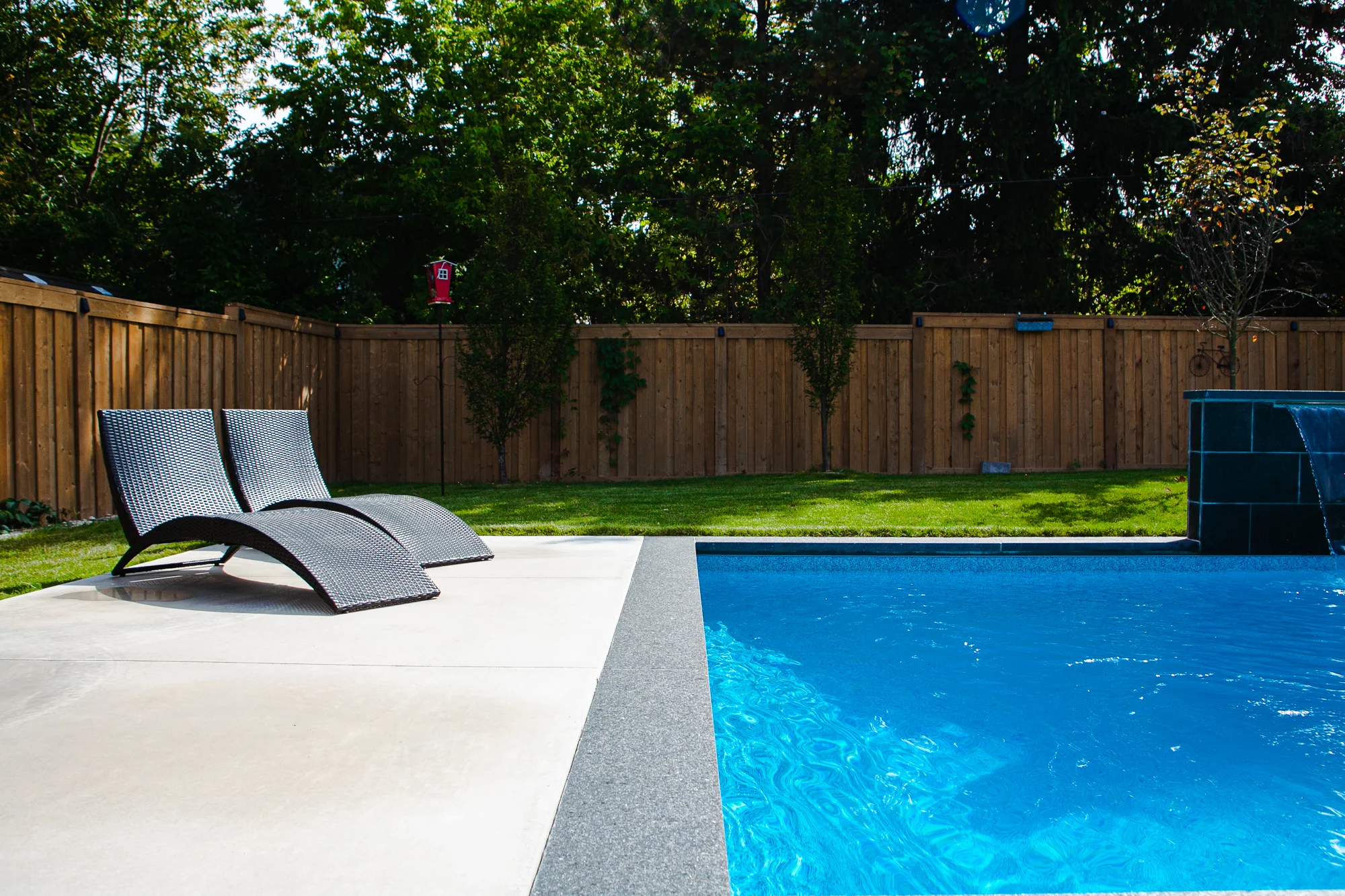
Concrete is one of the most widely used pool deck materials, valued for its seamless appearance, design flexibility, and relatively straightforward installation on prepared ground. When concrete is finished with brushing, stamping, or exposed aggregate, it can achieve a wide range of looks from clean and contemporary to textured and natural.
What Works Well
Poured concrete creates a continuous surface without joints between units, which gives a poolside space a clean, unified appearance. Stamped concrete in particular can mimic the look of natural stone, brick, or wood at a lower material cost, making it a popular choice for homeowners who want a refined aesthetic without the cost of the natural material itself.
Concrete is also highly customizable in shape. Because it is poured in place, it conforms to curves and custom pool shapes that would require cutting and fitting with unit-based materials like pavers. For free-form pool designs, concrete has a practical advantage in how cleanly it follows the pool’s perimeter.
Trade-Offs to Understand
In Ontario’s climate, concrete’s primary limitation is its relationship with freeze-thaw cycling. Concrete is a rigid material that does not flex. When ground beneath it shifts through freezing and thawing, the slab bears that movement as stress. Over enough cycles, cracking is essentially inevitable. The question is usually not whether a concrete pool deck will crack in a Toronto climate, but when, where, and how significantly.
Proper installation with adequate reinforcing, control joints placed at strategic intervals to direct cracking, and a high-quality sealant applied and maintained every few years reduces the risk and severity of cracking significantly. But it does not eliminate it. Concrete pool decks in Ontario typically require more maintenance attention over time than paver-based alternatives, including crack repair, resealing, and in some cases surface resurfacing as the finish weathers.
Concrete can also become slippery when wet, which is a material concern immediately around a pool. A brushed or broom-finished surface provides more traction than a smooth finish, and exposed aggregate has excellent grip. Stamped concrete with certain patterns can be quite slippery when wet and requires careful finish selection for pool-side use.
Our post on concrete pool deck restoration in Toronto covers what maintenance and restoration of an existing concrete deck typically involves, which gives some useful context on the long-term ownership picture.
Interlock Paver Pool Decks
Interlocking concrete pavers are the most popular pool deck material across the Toronto area, and for good reason. They were specifically designed to handle ground movement, which makes them particularly well-suited to Ontario’s climate.
What Works Well
The defining characteristic of an interlock paver system is that individual units are not rigidly fixed to each other or to a concrete base. They are laid on a compacted granular base and sand setting bed, and the joints between them allow for minor movement without cracking. When ground shifts through freeze-thaw cycling, the pavers shift slightly with it rather than fracturing. Individual units that become uneven over time can be lifted, the base corrected, and the pavers re-laid, a repair that is far simpler and less visually disruptive than patching cracked concrete.
The design range of interlock pavers has expanded significantly over recent years. Beyond basic rectangular units, the market now includes large-format pavers that mimic natural stone slabs, tumbled finishes that create an aged aesthetic, and colour blends that allow for detailed patterns and borders. The flexibility to mix sizes, colours, and patterns within a single surface makes interlock one of the more design-expressive paving options available.
Drainage is another practical advantage around pools. The joints in an interlock surface allow water to drain between units rather than pooling on the surface. This is beneficial for safety immediately around the pool edge and helps with how water moves through the overall landscape. For projects that combine a pool deck with driveway or walkway interlock, a unified material across the entire outdoor space creates a cohesive look. Our interlock driveway and walkway installation page covers the full scope of what Destination Pools designs and builds in Toronto.
Trade-Offs to Understand
The joints between pavers, while structurally beneficial, require maintenance attention over time. Polymeric sand, which is swept into joints during installation and hardens when wetted, prevents weed growth and stabilizes the surface. Over time, polymeric sand erodes and needs to be refreshed. Without proper joint sand maintenance, weeds can establish in joints and edge creep can occur as units shift laterally.
Paver surfaces also require that the base preparation is done correctly. An improperly prepared granular base leads to settling, heaving, and unlevel surfaces that are more difficult and costly to correct than a well-done original installation. Quality installation matters as much as the material choice with interlock.
Flagstone Pool Decks
Flagstone, which encompasses a range of natural stone options including limestone, travertine, slate, and granite, brings a distinctly premium and organic quality to a pool deck. It is the material that tends to appear in high-end pool design photography, and its appeal is immediate: no manufactured product fully replicates the natural variation in tone, texture, and character that comes with real stone.
What Works Well
Natural flagstone has several characteristics that make it particularly well-suited to the pool environment. Most natural stone has a textured surface that provides grip when wet, which is a significant safety advantage over smooth materials. Lighter stone varieties, particularly limestone and travertine, absorb less heat than dark pavers or concrete, which means a more comfortable surface for bare feet on hot summer days. The thermal mass of stone also means that a shaded flagstone surface stays cooler than many alternatives.
The visual weight and permanence that flagstone brings to an outdoor space is difficult to replicate with manufactured materials. Large-format natural stone slabs create a sophisticated, intentional look that photographs beautifully and adds genuine appeal to the property. For homeowners pursuing a high-end backyard transformation, flagstone is a material that delivers aesthetically at a level that concrete and standard pavers do not match.
For driveways and walkways that extend from the pool area toward the home, flagstone creates a continuous visual language across the outdoor space. Our flagstone driveway installation page covers the range of flagstone applications Destination Pools handles beyond the pool surround.
Trade-Offs to Understand
The primary trade-off with flagstone is material cost. Natural stone commands a higher price per square foot than concrete or manufactured pavers, and the skill required to install it correctly, with proper cutting, fitting, and levelling of irregular natural pieces, makes labour costs higher as well. Flagstone is typically the most expensive of the three options discussed here.
Like concrete, flagstone set in mortar over a concrete base is subject to cracking from freeze-thaw movement. The mortar joints between stones can open over time, and individual stones can crack or chip. Flagstone set on a flexible bed, similar to a paver installation, handles movement better but involves different installation techniques. The appropriate installation method depends on the specific stone, the site, and the scope of the project.
Natural stone also requires sealing to protect against pool chemistry, staining from organic debris, and moisture penetration. The sealing schedule depends on the specific stone type and the quality of the sealer applied, but most natural pool decks benefit from resealing every few years. Some stone varieties, particularly softer limestone, require more careful maintenance than harder options like granite or slate.
Material Comparison at a Glance
| Factor | Concrete | Interlock Pavers | Flagstone |
|---|---|---|---|
| Freeze-thaw performance | Vulnerable to cracking over time | Handles movement well; units shift without cracking | Mortar-set flagstone can crack; flexible-set performs better |
| Design range | High; stamping, aggregate, custom colours | Very high; many shapes, sizes, colours, patterns | Distinctive natural variation; premium appearance |
| Traction when wet | Varies; brushed/aggregate good, smooth poor | Good; joint texture adds grip | Generally very good; natural texture |
| Heat absorption | Moderate; depends on colour and finish | Moderate; dark colours absorb more heat | Lower for light stone; comfortable barefoot |
| Long-term maintenance | Sealing, crack repair, possible resurfacing | Joint sand refresh, occasional re-levelling | Periodic sealing, joint maintenance |
| Repairability | Moderate; patches are visible | Excellent; individual units replaceable | Good if matching stone is available |
| Relative cost | Moderate | Moderate to high depending on unit selection | High; premium material and labour cost |
Thinking About the Full Backyard
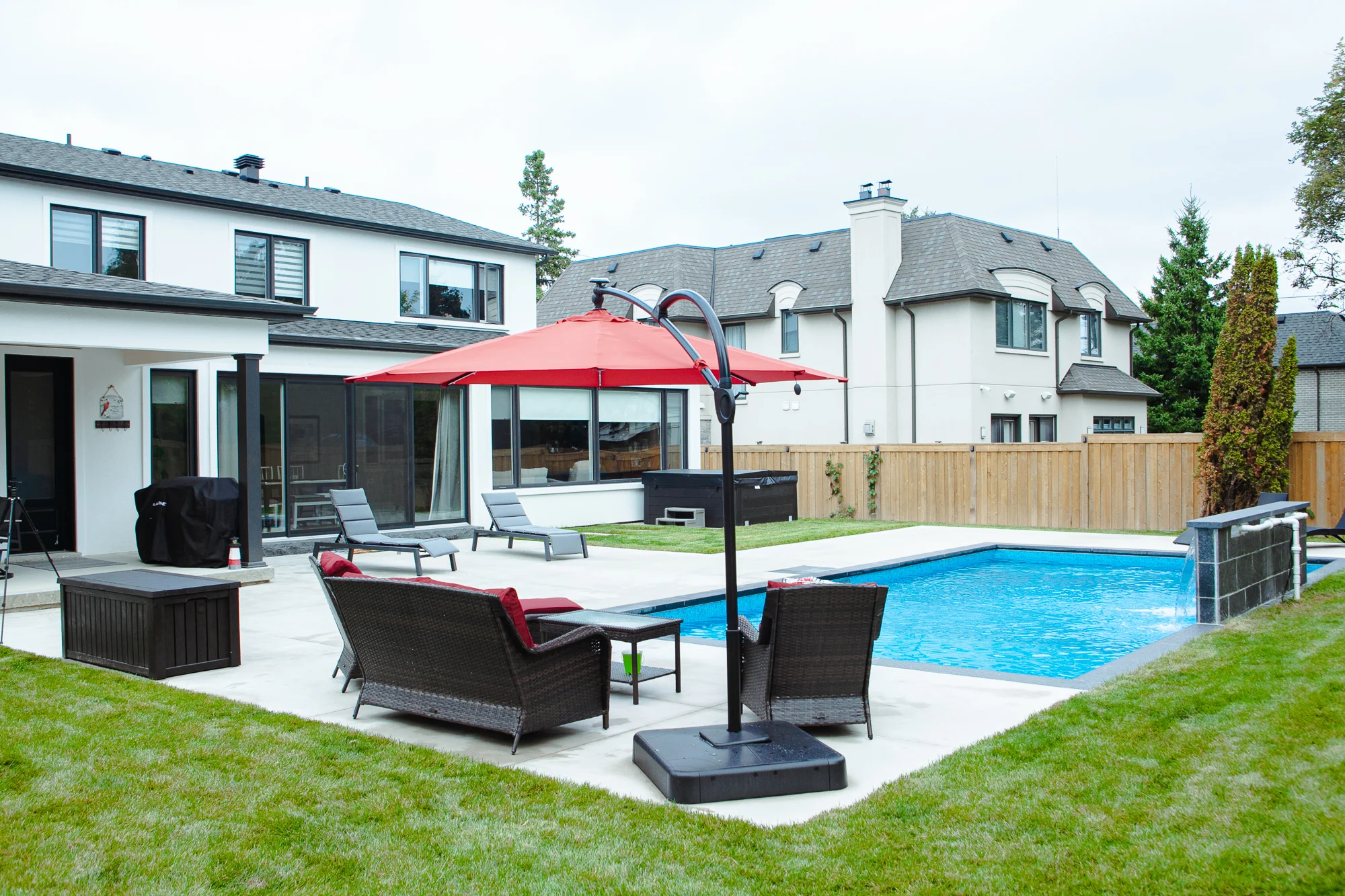
The pool deck is one element of a larger outdoor living space, and the material you choose for it shapes the visual language of everything around it. A flagstone pool deck pairs naturally with natural stone retaining walls and lush landscape plantings. An interlock pool deck connects visually to an interlock driveway and walkway for a unified exterior from the street to the backyard. A stamped concrete deck might complement an architectural home with clean contemporary lines.
For homeowners who are thinking about the pool deck as part of a broader backyard project that includes an outdoor kitchen, custom deck structure, or significant landscaping, choosing a deck material that works across the full space is worth the conversation upfront. Our pool deck ideas post explores the full range of what is possible in the Toronto and South Mississauga market, and our custom deck installation page covers the elevated deck and composite decking options that complement any of the three hard surface choices discussed here.
Frequently Asked Questions
Which pool deck material is safest around water in Toronto?
All three materials can be installed safely around pools when the right finish is chosen. For concrete, a brushed or exposed aggregate finish provides better wet traction than smooth or certain stamped finishes. Interlock pavers have naturally textured surfaces and joint gaps that improve traction. Natural flagstone is typically quite grippy due to its naturally uneven surface. The specific product selection and finish matter as much as the material category for safety.
How does freeze-thaw cycling affect each material?
Interlock pavers are designed to flex with ground movement and generally perform best through Ontario’s freeze-thaw cycles, since individual units can shift without cracking. Concrete is rigid and susceptible to cracking from ground movement over time; proper reinforcing and control joints reduce but do not eliminate this. Flagstone’s performance depends on how it is set: mortar-set flagstone behaves similarly to concrete in terms of vulnerability to movement, while flagstone set on a flexible granular base handles movement better.
Can I mix materials around the pool deck?
Yes, and mixing materials is a common design approach in Toronto backyards. A natural stone or large-format paver perimeter immediately around the pool edge, combined with interlock pavers in the wider outdoor living area, creates both a visual transition and a practical zoning of the space. Combining wood or composite deck sections for lounge areas with a hard surface surround for dining and traffic areas is also popular. The combination that works best depends on the pool shape, the yard’s orientation, and the overall design direction.
How do I maintain a pool deck in Toronto’s climate?
For concrete: reseal every 2-3 years, address cracks promptly before water infiltration widens them, and have the surface professionally restored when the finish has worn through. For interlock: check joint sand annually and add polymeric sand where it has eroded, re-level any sunken or raised units, and clean the surface in spring after winter debris has accumulated. For flagstone: reseal every 2-4 years depending on the stone type and sealer, clean joints and repoint any open mortar, and address any cracked or chipped stones before water reaches beneath them.
Does pool deck material affect home resale value?
A well-installed pool deck in good condition adds meaningful curb appeal and value to a home in the Toronto market. The material itself matters less than the quality of design and execution. A carefully designed interlock deck that complements the home’s architecture will perform as well in a resale context as a premium flagstone installation. The key is that the deck looks intentional, is in good repair, and functions well as part of a complete backyard. A dated or poorly maintained deck can detract from a pool’s value regardless of the material used.
Design Your Pool Deck With Destination Pools
Destination Pools designs and installs pool decks across Toronto and South Mississauga, working with concrete, interlock pavers, and natural stone to create outdoor spaces that hold up to Ontario’s climate and reflect how each homeowner wants to use their backyard. Whether you are starting fresh with a new pool or updating the deck around an existing one, our team handles the full project from design through installation.
Homeowners in Port Credit, Lakeview, Clarkson, and Mineola are welcome to reach out for a consultation. Contact Destination Pools to start planning your pool deck project.