If you own a vinyl-lined inground pool in the Toronto area, the liner is one of the components you will eventually need to replace. The question most pool owners ask at some point, usually after a leak, a wrinkle that won’t lie flat, or a liner that looks noticeably faded, is: how long was this supposed to last?
The answer depends on several variables, and Ontario’s climate is the most significant one. A liner that might last 20 years in a climate without harsh winters will age faster here, where seasonal closings, freeze-thaw cycles, and months of off-season stress are simply part of owning a pool.
The Short Answer: 10 to 15 Years in Ontario Conditions
Most quality vinyl pool liners installed in Ontario last between 10 and 15 years. Some well-maintained liners in ideal conditions reach the upper end of that range or slightly beyond. Budget-grade or thinner liners in pools with inconsistent chemistry may start showing serious wear closer to the 8-year mark.
The 20-year figure that sometimes appears in marketing materials for vinyl pools reflects laboratory conditions and optimal scenarios, not what most Ontario pool owners actually experience. That does not mean vinyl liners are a poor choice. Quite the opposite: a 10-to-15-year liner lifespan, with a replacement cost that is a fraction of a full pool rebuild, makes vinyl pools one of the more economical options to own over their lifetime. But setting realistic expectations from the start helps you plan ahead rather than be caught off guard.
Why Ontario’s Climate Shortens Liner Lifespan
Pool liners in southern Ontario face stresses that liners in warmer climates simply do not encounter. Understanding these stresses helps explain why proactive maintenance matters so much here.
The Freeze-Thaw Cycle
Toronto and the surrounding GTA experience repeated freeze-thaw transitions throughout winter and early spring. Ground movement caused by frost heaving puts stress on the pool structure and, by extension, on the liner that is anchored to it. The bead track, fittings, and liner perimeter all experience movement during these cycles that accumulates over many seasons. This is one reason that bead track separation and perimeter leaks are more common in Ontario pools than in pools built in non-freezing climates.
Seasonal Opening and Closing
Every time a pool is closed for winter and opened in spring, the liner goes through a cycle of handling, exposure, and re-tensioning. Improper closings that leave water levels too high or too low, or that allow ice to form in contact with the liner, can cause physical damage. Improper openings, especially those involving chemical shock applied directly to the liner surface without adequate dilution, accelerate chemical degradation. Multiply those risks over 10 or 15 closing and opening seasons, and the cumulative effect is significant.
For a full breakdown of how to protect your liner through each season, our pool opening and closing checklist for Ontario covers the key steps to protect your liner through each transition.
UV Exposure During the Swimming Season
Ontario summers bring intense UV radiation, particularly in the long daylight hours of June and July. UV breaks down the plasticisers in vinyl over time, causing the material to fade, stiffen, and eventually become brittle. Areas of the liner closest to the surface, the shallow end, steps, and the tanning ledge if the pool has one, show UV degradation first because they receive the most direct exposure with the least water depth providing any shielding.
The Key Factors That Determine How Long Your Liner Lasts
Within that 10-to-15-year range, where your liner lands depends on several variables that are within your control.
Liner Thickness and Construction Quality
Vinyl liners are available in a range of thicknesses, typically measured in mils (thousandths of an inch). A standard liner might be 20 mil. Heavier-duty options run to 27 mil or higher. The thicker the liner, the more resistance it has to punctures, the more durable the UV-resistant outer layer, and generally the longer it will last.
Liner construction quality also matters beyond thickness alone. Better liners use higher concentrations of UV stabilisers, have stronger seam construction, and use backing materials that resist water absorption. These differences are not always visible at a glance, which is one reason the reputation of the manufacturer and installer matters when making a liner selection.
Water Chemistry Consistency
Water chemistry is the most controllable factor in liner lifespan, and it is where most premature liner failures originate. Low pH water is acidic and attacks the vinyl, drawing out plasticisers and causing brittleness and fading. High sanitiser concentrations, particularly chlorine levels that are not managed carefully, bleach and degrade the liner surface. Hard water with high calcium content leads to calcium scaling that stains and scuffs the liner over time.
Keeping pH between 7.2 and 7.6, alkalinity between 80 and 120 ppm, and sanitiser levels within the recommended range for your pool type is not just about water comfort; it is one of the most direct investments you can make in liner longevity. For homeowners considering saltwater systems, the chemistry profile of a saltwater pool tends to be gentler on liner material than traditional chlorine pools when managed correctly. Our breakdown of saltwater vs. chlorine pools in Toronto covers the chemistry differences in more detail.
Proper Closing and Opening Practices
The actions taken at closing and opening have an outsized impact on how the liner ages through off-season storage. Closing with the water level too high risks liner damage from ice expansion at the waterline. Leaving the pool uncovered or using a cover that traps debris and chemical buildup accelerates surface staining. Adding winterizing chemicals correctly, diluted and distributed around the pool rather than poured directly onto the liner, prevents chemical burn spots that show up at opening time.
Physical Care During Use
Sharp objects are a liner’s most immediate threat. Pool toys with hard edges, metal components from floats, and even rough-soled footwear on pool steps all present puncture risk. Keeping the pool floor clear of debris and establishing simple pool-use habits, like avoiding diving into shallow areas and keeping sharp items out of the water, extends liner life without any meaningful effort.
Liner Lifespan by Pool Type and Use Pattern
| Variable | Effect on Liner Lifespan | Notes for Ontario Pools |
|---|---|---|
| Liner thickness (20 mil vs. 27 mil) | Thicker liners last 20-30% longer on average | Investment pays back in fewer replacement cycles |
| Consistent water chemistry | Major factor; poor chemistry can cut lifespan in half | Particularly important during hot summer months |
| Correct seasonal closing | Prevents ice damage and off-season chemical buildup | Critical in Ontario’s harsh winters |
| UV exposure and shade | More sun exposure accelerates fading and brittleness | Shallow ends and steps degrade fastest |
| Physical wear (toys, footwear) | Direct puncture risk; cumulative abrasion | Steps and ledges are highest-wear areas |
| Saltwater vs. traditional chlorine | Saltwater tends to be gentler on liner material | Chemistry management still required |
Signs That Your Liner’s Time Is Running Out
Even with excellent care, a liner will eventually reach the end of its service life. The signs to watch for include persistent fading or colour loss, wrinkling that does not respond to chemistry corrections, tears or punctures requiring repeated patching, a liner that feels stiff or papery when pressed, and any separation from the bead track at the pool’s perimeter.
Consistent unexplained water loss is another indicator worth investigating. Every pool loses water to evaporation, but if you are adding water significantly more often than expected, a liner leak is a common cause. Our full guide to signs your pool needs restoration provides a detailed look at how to read these warning signals across the pool as a whole, not just the liner.
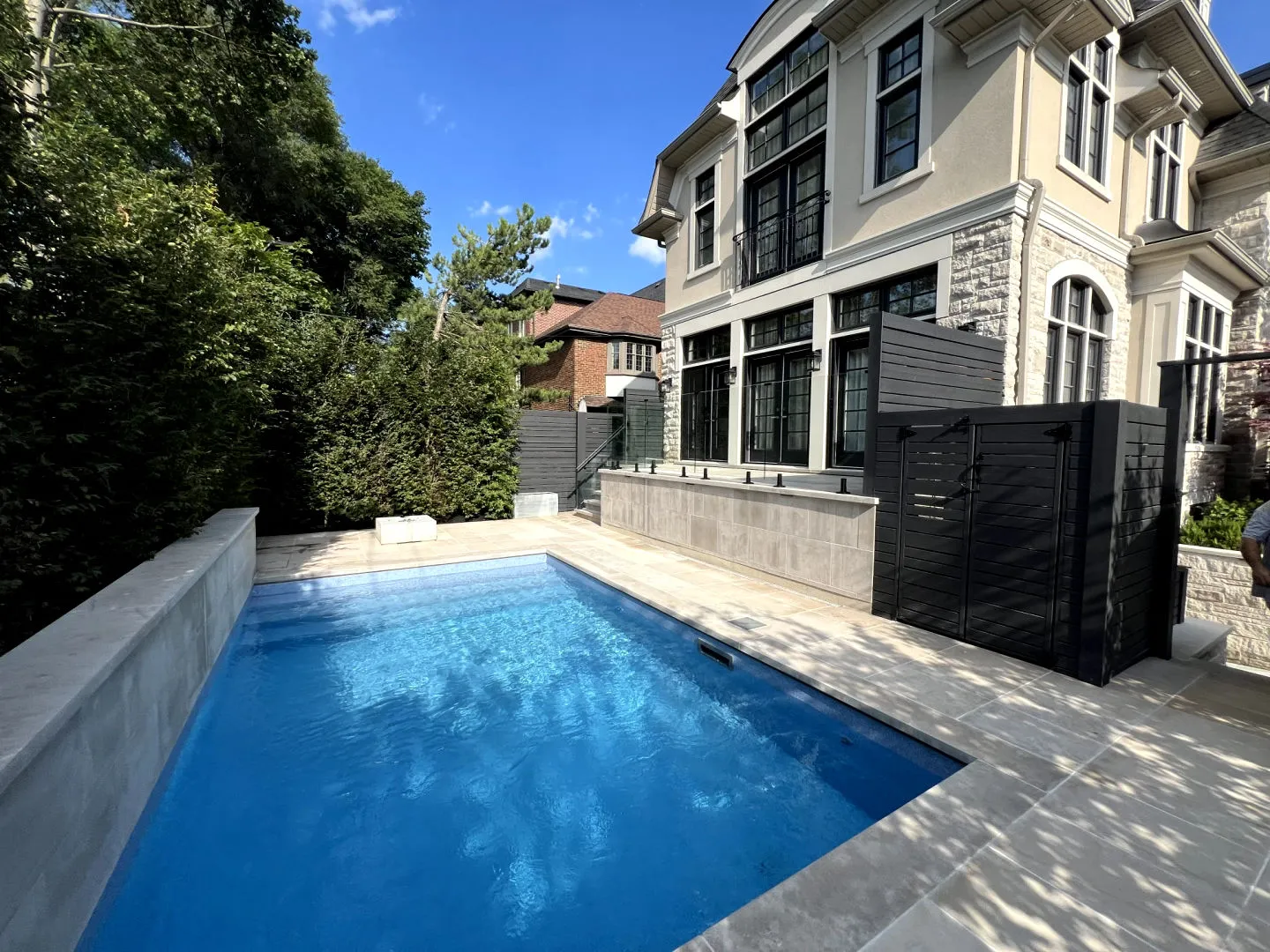
Planning for Liner Replacement: A Proactive Approach
The most straightforward liner replacements are the ones that are planned in advance rather than forced by a failure. Homeowners who monitor their liner’s age and condition, and begin planning for replacement when the liner is approaching the 10-year mark or showing early signs of wear, have full control over timing, finish selection, and coordination with any other pool or backyard work they want to accomplish at the same time.
A liner replacement is also one of the most effective opportunities to refresh the pool’s overall appearance. Modern liner patterns range from simple solid tones to sophisticated stone and tile-look prints that dramatically change how a pool looks. Combined with updated coping, tile, or a broader pool restoration in Toronto, a liner replacement can make a pool that has seen a decade of use feel entirely new.
For Toronto and South Mississauga homeowners, the spring window before pool opening and the fall window after closing are both ideal times to schedule a replacement. Destination Pools works with homeowners across Port Credit, Lakeview, Clarkson, and Mineola, planning liner replacement to fit around your season rather than disrupt it.
Frequently Asked Questions
Does an above-ground pool liner last as long as an inground liner?
Above-ground liners tend to have shorter lifespans, typically in the 6-to-10-year range. They are generally made from thinner material than inground liners, experience more UV exposure along the waterline due to the pool’s geometry, and are more vulnerable to physical stress from the pool wall flexing. Ontario winters are also harder on above-ground pools overall, since the structure itself is more exposed to temperature swings than an in-ground installation.
Does a saltwater pool extend the liner’s life?
Saltwater pools generate chlorine through electrolysis at lower and more consistent concentrations than traditional chlorine dosing, which tends to be gentler on liner material over time. However, chemistry management still matters significantly. An improperly balanced saltwater pool can damage a liner just as readily as a traditional chlorine system. The water type is one factor; consistent monitoring remains the primary one.
Can I tell if my liner is leaking without draining the pool?
Yes. A bucket test is a simple way to separate evaporation from an actual leak. Fill a bucket with pool water, place it on a pool step at water level, mark the water level inside and outside the bucket, and measure the difference after 24 hours. If the pool level drops significantly more than the bucket level, a leak is likely. A pool professional can then perform a dye test or pressure test to locate the source.
Is it worth repairing a liner rather than replacing it?
It depends on the liner’s age and overall condition. Isolated punctures on a liner that is otherwise in good shape and less than 8 years old can be patched effectively. Once a liner is showing multiple signs of wear, over 10 years old, or has failed at a seam or bead track, replacement is generally more cost-effective than continued repairs. Each repair point reduces the liner’s flexibility and creates a potential future failure zone.
What is the best time of year to replace a pool liner in Ontario?
Spring and fall are both ideal. A spring replacement means the new liner is in place before the swim season opens, giving you a full summer without any concerns. A fall replacement allows you to plan and select your liner finish through the off-season without any rush. Both windows offer better contractor availability than mid-summer, when pool service demand peaks across the GTA.
Talk to Destination Pools About Your Liner
If your liner is approaching the 10-year mark or showing signs of wear, an inspection is the right first step. Destination Pools serves homeowners throughout Toronto and South Mississauga, including Port Credit, Lakeview, Clarkson, and Mineola, with liner replacement and pool restoration work designed to fit your schedule and protect your investment for seasons to come.
Reach out to Destination Pools to discuss your liner’s condition and get a clear picture of what replacement looks like for your pool.