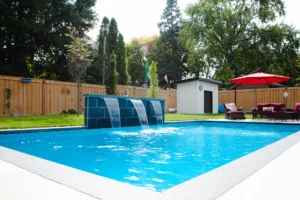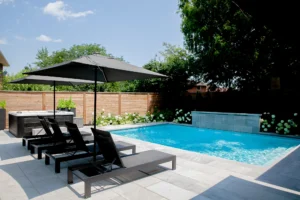
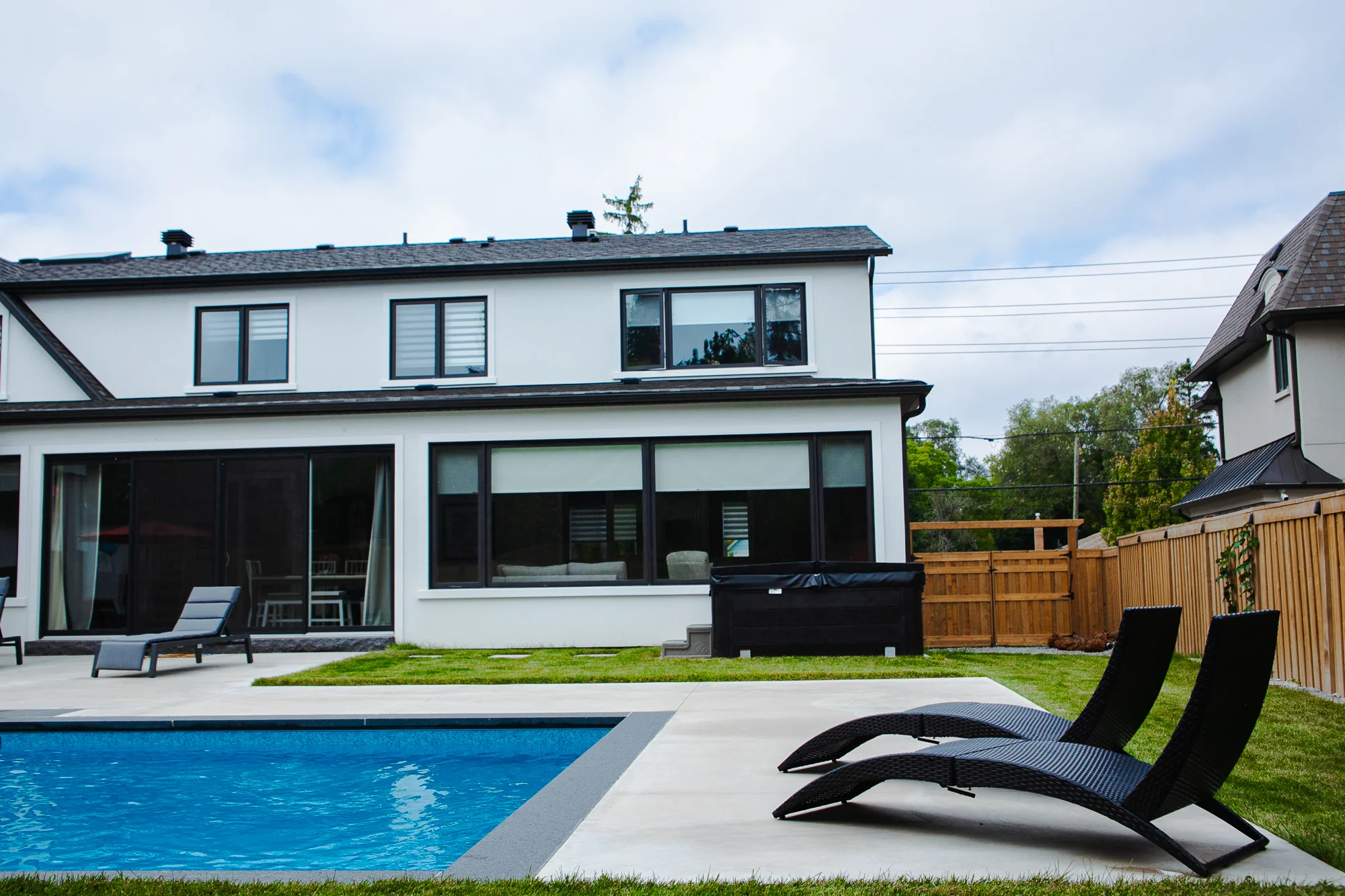
Getting the permit process right from the start protects you legally, avoids costly delays mid-project, and ensures your pool meets the safety standards the city requires. This guide covers exactly what is needed, in what order, and what to expect at each step. For a full overview of how we manage pool installations in Toronto from design through to completion, visit our swimming pool installation page.
Does an Inground Pool Require a Building Permit in Toronto?
Under the Ontario Building Code, residential swimming pool construction is not classified as a structure that requires a building permit. This surprises many homeowners who assume any significant outdoor construction would trigger the standard permit process.
However, this does not mean you can simply dig and build without any city involvement. Several other approvals are required, and skipping them creates serious legal and safety exposure. The pool enclosure (fence) requires its own permit, and a zoning certificate must be obtained before that permit can be issued.
What Approvals and Permits Are Actually Required?
1. Zoning Applicable Law Certificate (ZALC)
This is typically the first step in the process. The Zoning Applicable Law Certificate confirms that your proposed pool installation complies with the City of Toronto’s zoning by-laws, including setback requirements from property lines, existing structures, and utilities.
To apply, you will need to submit a site plan drawn to scale showing the proposed pool location, dimensions, and its relationship to property lines and the existing dwelling. Application fees apply and processing times vary. Once the ZALC is issued, you can move to the next approval step.
2. Pool Fence Enclosure Permit
A permit for the pool enclosure fence is required in Toronto for all residential pools. This is the permit that confirms your fence design and installation will meet the city’s pool safety standards, which are governed by the City of Toronto’s pool enclosure by-law.
The fence permit application is submitted after the ZALC is obtained. It requires documentation showing the fence height, gate type, latch mechanism, and how the enclosure ties into any existing fencing or structures on the property.
3. Toronto and Region Conservation Authority (TRCA) Approval
If your property falls within a TRCA regulated area, you will need additional approval from the Toronto and Region Conservation Authority before construction can begin. Under the Conservation Authorities Act and Ontario Regulation 41/24, constructing a pool is considered development activity when it occurs within a regulated area such as a floodplain, ravine valley, or area near a watercourse.
The TRCA permit process involves submitting project details, drainage information, and sometimes environmental assessments. Not all Toronto properties are in regulated areas, but many lots near ravines, the Don Valley, and waterfront areas are. Your contractor or a permit expediter can confirm whether your property is affected.
Pool Fence Requirements in Toronto
The pool enclosure requirements in Toronto exist specifically to prevent unsupervised access to pools, particularly by young children. Understanding the key requirements before planning your fence will help you avoid a redesign later.
| Requirement | Specification |
|---|---|
| Minimum fence height (single residential) | 1.2 metres (approximately 4 feet) |
| Minimum fence height (multiple residential) | 1.8 metres (approximately 6 feet) |
| Maximum gap between fence components | 100mm (approximately 4 inches) |
| Gate requirements | Self-closing and self-latching; latch on pool side |
| Climbability | Fence must not be easily climbable; horizontal rails must face inward |
| Inspection | Required upon completion before pool use |
The enclosure must fully surround the pool and separate it from the rest of the yard. In some configurations, the home itself can form one side of the enclosure, but any doors from the house that open into the pool enclosure must be equipped with self-closing, self-latching hardware that meets the city’s specifications.
Understanding TRCA Regulated Areas
Toronto has an unusually large proportion of properties that fall within TRCA regulated zones compared to many other municipalities. The TRCA’s regulated areas include land within a defined distance of rivers, streams, and Lake Ontario, as well as ravine valley systems throughout the city.
If your property backs onto a ravine, is within a certain distance of a watercourse, or is located in a floodplain, TRCA approval is likely required. The TRCA website includes mapping tools that allow you to check whether a specific address falls within a regulated area. Alternatively, your pool contractor should be familiar with this requirement and can flag it during the initial consultation.
TRCA-regulated projects may require a more detailed site assessment and additional review time. Building without TRCA approval in a regulated area can result in stop-work orders, fines, and requirements to restore the site.
How Long Does the Pool Permit Process Take in Toronto?
The permit timeline varies based on several factors, including how complete and accurate your application is, how quickly the city and TRCA process applications at the time you apply, and whether any revisions are requested.
In general, homeowners should plan for the permit and approval process to take several weeks to a few months from the time the initial applications are submitted. Spring is typically the busiest period for both applicants and city processing, as many homeowners begin planning pools at that time of year. Submitting applications as early as possible, often in the winter or early spring for a summer build, gives the process the best chance of completing on schedule.
Working with an experienced pool contractor who has managed this process before can significantly reduce back-and-forth with the city. Many pool builders handle permit applications directly on behalf of their clients or work with permit expediting services to manage the process efficiently.
Does My Pool Contractor Handle the Permits?
At Destination Pools and Landscaping, permit management is part of how we approach every project. We prepare the required documentation, submit applications, liaise with the city, and coordinate TRCA approval where applicable. This takes the administrative burden off our clients and ensures applications are submitted correctly the first time.
For more detail on how our pool installation process unfolds from the initial design through to a completed and inspected pool, see our step-by-step guide on pool construction in Toronto. You can also review our inground pool cost guide for context on how permitting fits into the overall project budget, and browse our backyard pool ideas gallery to start thinking about design.
Frequently Asked Questions
Do you need a building permit for an inground pool in Toronto?
No, the Ontario Building Code does not require a building permit for the pool itself. However, a Zoning Applicable Law Certificate and a Pool Fence Enclosure Permit are both required, and TRCA approval is needed for properties in regulated areas. The pool cannot legally be used until the enclosure passes a final inspection.
How high does a pool fence need to be in Toronto?
For single residential properties, the minimum fence height is 1.2 metres. For properties with multiple residential units, the minimum is 1.8 metres. All gates must be self-closing and self-latching, with the latch mechanism on the pool side of the gate.
What is a TRCA regulated area and does it affect my pool project?
The Toronto and Region Conservation Authority regulates land near rivers, streams, ravines, and floodplains throughout Toronto. If your property falls within a TRCA regulated area, you must obtain a TRCA permit before any pool construction begins. TRCA mapping tools can help you determine whether your property is affected.
How long does pool permitting take in Toronto?
The timeline varies, but homeowners should generally plan for several weeks to a few months from initial application to permit approval. Applying early, ideally in winter or early spring for a summer build, and working with a contractor who handles the paperwork correctly the first time, helps keep the process on schedule.
What happens if I build a pool without the required approvals in Toronto?
Building without the required zoning certificate, enclosure permit, or TRCA approval can result in stop-work orders, fines, and a requirement to bring the installation into compliance or remove it entirely. It can also create complications when selling the property, as unpermitted work must typically be disclosed to buyers.
Start Your Toronto Pool Project with Confidence
Understanding the permit process before you begin takes a potential source of stress and delay off the table from day one. At Destination Pools and Landscaping, we guide Toronto homeowners through every step of the approval process and handle the permit applications directly so the project stays on track.
Contact us today to discuss your pool project. We will walk you through the permitting requirements for your specific property and help you plan a timeline that works.