Pools are built to last, but they are not maintenance-free forever. Every inground pool, regardless of type or quality of original construction, will eventually show signs that it needs professional attention. The challenge is knowing when those signs cross the line from “keep an eye on it” to “time to act.”
For homeowners in Toronto and South Mississauga, staying ahead of pool deterioration matters more than it might in milder climates. Ontario’s freeze-thaw cycle puts seasonal stress on pool surfaces, coping, and equipment that accelerates wear in ways that are not always obvious until the damage is significant. Here are seven warning signs to watch for, and what each one means for your pool.
1. The Pool Surface Feels Rough or Has Started to Flake
Concrete pools rely on a smooth interior finish to protect the shell and keep swimming comfortable. Over time, plaster, marbelite, and quartz surfaces erode. The first sign is usually a subtle roughness that catches on skin or swimwear. Left unaddressed, the surface progresses to pitting and flaking, where sections of the finish detach and create abrasive patches throughout the pool.
At this stage, the pool is not just uncomfortable. The exposed concrete underneath is vulnerable to staining, algae growth, and water infiltration into the shell. Resurfacing at the first sign of roughness is far more cost-effective than waiting until the underlying structure is compromised. Most Toronto-area concrete pools need their first resurface somewhere between 10 and 20 years into their life, depending on water chemistry and maintenance history.
2. You Are Noticing Unexplained Water Loss
All pools lose water to evaporation, particularly during a hot Toronto summer. A rough rule of thumb is around a quarter inch per day in warm, dry weather. If you are consistently losing more than that, or if you find yourself topping up the pool every two or three days without an obvious reason, a leak is likely.
Pool leaks can originate in the shell (concrete cracks, fiberglass blisters, or vinyl liner punctures), in the underground plumbing, or around fittings, returns, and light fixtures. Ignoring a slow leak accelerates structural damage, raises chemical consumption, and in serious cases can wash out the soil surrounding the pool shell. Early detection and targeted repair is always preferable to addressing the secondary damage caused by waiting too long.
3. Your Vinyl Liner Is Fading, Wrinkling, or Showing Tears
Vinyl liner pools are the most common type across the GTA, and the liner itself is the pool’s first line of defence against water infiltrating the walls and floor. Liners are designed to last between 10 and 20 years, but UV exposure, chemical imbalance, and physical wear will eventually cause deterioration.
Fading is primarily cosmetic at first, but it signals that the liner material is breaking down at a molecular level. Wrinkling along the floor or walls usually means the liner has stretched due to water absorption from inconsistent chemistry. Tears at the bead track or seam lines, even small ones, allow water to reach the pool wall and floor, which can cause far more expensive structural damage over time. Liner replacement is one of the most straightforward pool restoration projects and delivers an immediate visual and functional improvement. For more on how vinyl compares to other pool types in terms of long-term maintenance, see our breakdown of concrete vs. vinyl vs. fiberglass pools in Toronto.

4. Persistent Staining That Will Not Respond to Chemical Treatment
Some pool staining, particularly from organic matter like leaves or algae blooms, responds well to shocking, brushing, and adjusted chemistry. Metal staining from iron, copper, or manganese in the water supply is more stubborn, and staining embedded in a deteriorating plaster surface often cannot be resolved chemically at all.
If your pool has dark, reddish, or bluish-green patches that return reliably after treatment, the surface itself may be the root of the problem. An acid wash can recover surface-level staining on concrete pools that are otherwise in good condition. When the staining is embedded deeper, or the plaster has worn past the point of recovery, resurfacing is the right move.
5. Coping Stones Are Cracking, Shifting, or Pulling Away From the Pool Edge
Coping is the stone or concrete cap that forms the finished edge around the pool perimeter. In Toronto and South Mississauga, the freeze-thaw cycle puts significant stress on coping year after year. Water infiltrates small gaps, freezes, expands, and widens cracks with each cycle. Over many winters, this mechanical stress will cause even well-installed coping to crack and shift.
Cracked or shifting coping creates a safety concern at the water’s edge and can allow water to penetrate behind the pool shell, causing far greater damage to the structure over time. Coping issues are typically addressed as part of a broader restoration, combined with a liner replacement or resurfacing, to refresh the entire pool perimeter in one project.

6. Pool Equipment Is Constantly Failing or Noticeably Outdated
Pool pumps, heaters, filters, and automation systems have a finite service life. A heater that takes hours to reach temperature, a single-speed pump that runs loudly and draws excessive power, or a filter that requires weekly backwashing are all signs that the mechanical side of the pool is approaching end-of-life.
Older single-speed pumps are significantly less energy-efficient than modern variable-speed alternatives. Outdated control systems often cannot integrate with current automation platforms or remote monitoring apps. Incorporating an equipment overhaul into a broader pool restoration project is a natural opportunity to improve efficiency without the disruption of two separate jobs. If a saltwater conversion has been on your mind as part of the upgrade, our guide on salt water vs. chlorine pools in Toronto covers what that transition involves.
7. The Pool No Longer Matches How You Use Your Backyard
Not every restoration trigger is structural. Sometimes the motivation is simply that the pool and the backyard around it no longer reflect how you live or the aesthetic you want for your home.
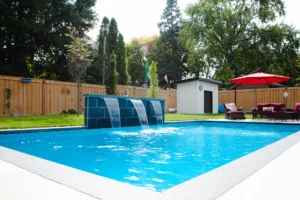
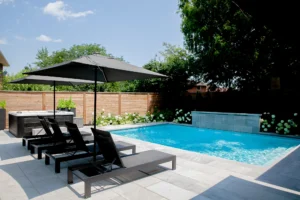
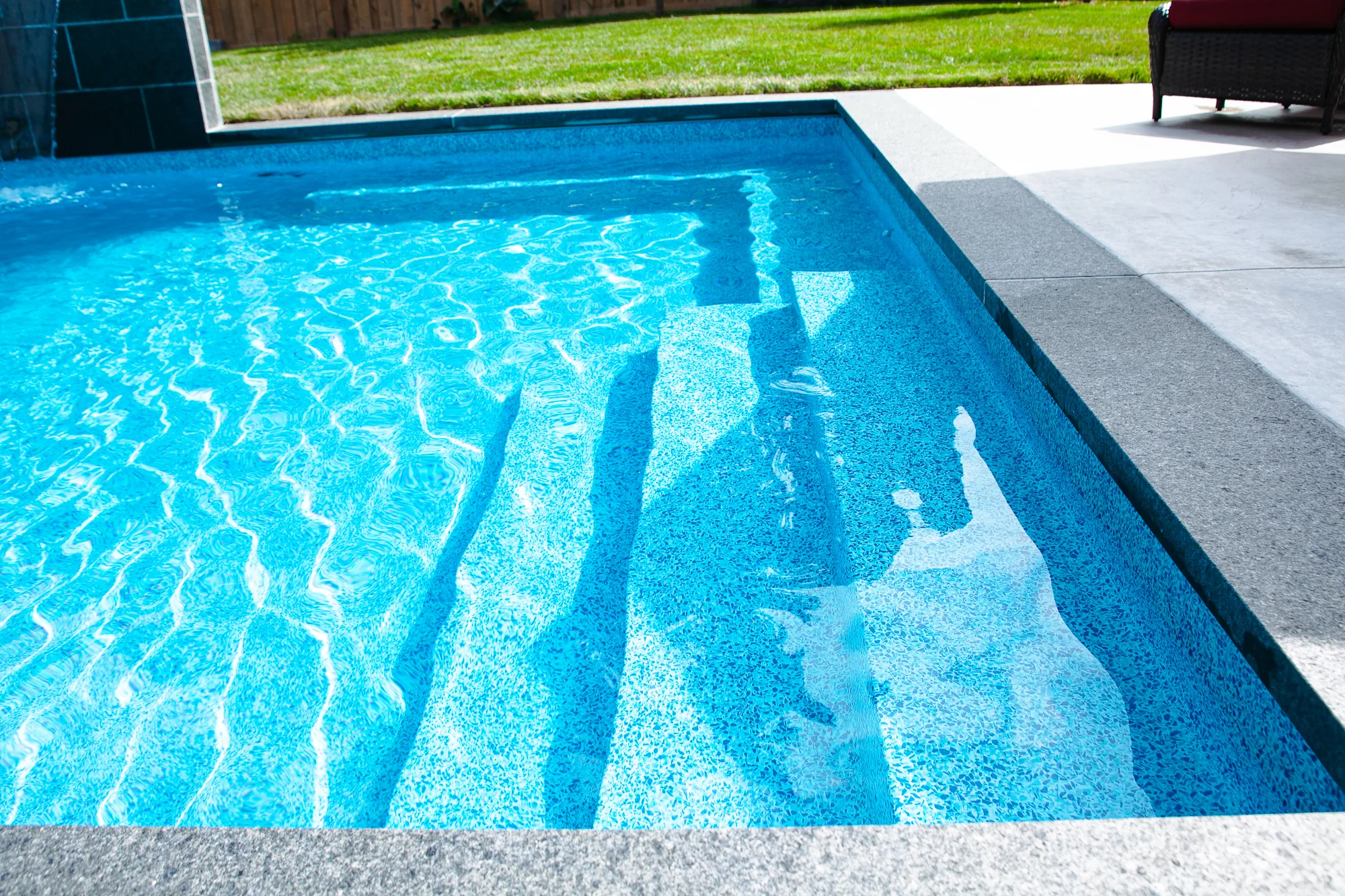
A pool installed in the 1990s or early 2000s reflects the design sensibilities of that era: simple rectangular shapes, white plaster finishes, basic coping, and minimal features. Today’s pools incorporate darker aggregate finishes, LED lighting, water features, upgraded tile and coping materials, and more sophisticated integration with the surrounding outdoor living space. Updating the surface finish, tile, coping, and lighting can completely change how the pool feels. Pair the pool restoration with a deck refresh, outdoor kitchen, and updated landscaping, and the result is a backyard that looks and functions entirely differently from what it was. Our backyard pool ideas gallery shows the kind of complete transformations that are possible when the whole project is approached together.
How Urgent Is Each Warning Sign?
Not all warning signs require the same response timeline. Here is a quick reference guide to help prioritize:
| Warning Sign | What It Likely Means | Urgency |
|---|---|---|
| Rough or pitted concrete surface | Surface finish worn, shell exposure possible | High |
| Water loss beyond normal evaporation | Liner, shell, or plumbing leak | High |
| Vinyl liner tearing or significant wrinkling | Active damage, wall or floor exposure risk | High |
| Cracked or shifting coping | Safety concern, water infiltration risk | High |
| Vinyl liner fading only | UV and chemical wear, approaching end of life | Medium |
| Persistent staining not cleared by chemicals | Surface degradation or embedded mineral staining | Medium |
| Outdated or frequently failing equipment | Efficiency and reliability issues | Medium |
| Dated appearance only, no structural issues | Cosmetic concern, restoration worthwhile but not urgent | Low |
When Restoration Makes More Sense Than Building New
Full pool demolition and a new build is a significant undertaking. It is disruptive, time-consuming, and represents a much larger investment than restoration. For the vast majority of aging pools in Toronto and South Mississauga, professional restoration delivers results comparable to a new pool, without the scale of a ground-up project.
Restoration makes the most sense when the pool shell or structure is fundamentally sound and the issues are confined to the surface finish, liner, coping, or equipment. If you are unsure whether your pool is a good restoration candidate or whether a new build makes more practical sense for your situation, the team at Destination Pools will give you an honest assessment. For perspective on the scope and process of a new pool project, our guide to pool construction in Toronto step by step walks through what that path looks like by comparison.
Frequently Asked Questions
What is the first step in getting a pool restoration started?
The best starting point is an on-site assessment with a pool restoration specialist. A qualified team will walk the pool and surrounding area, identify all areas of concern, and help you prioritize what needs to be addressed now versus what can wait. Contact Destination Pools and Landscaping to arrange a free consultation in Toronto or South Mississauga.
Can a pool be restored if it has been sitting empty for several years?
In most cases, yes. A pool that has been sitting dry is not automatically beyond restoration. The key factors are the condition of the shell or liner, whether there has been structural movement from frost or soil pressure, and the state of the plumbing and equipment. An empty pool is actually easier to assess in some respects, since the full surface and structure are visible. An inspection will determine what is salvageable and what needs replacing.
Will my pool need to be drained for restoration work?
Most restoration work requires full or significant draining. Liner replacement, concrete resurfacing, crack repair, and coping work all require the pool to be empty. Equipment work may not require draining, depending on the components involved. Your restoration team will outline the drainage requirements specific to your project scope.
How do I know if my pool has a leak or if it is just evaporation?
A simple bucket test helps distinguish the two. Fill a bucket with pool water to match the pool’s current water level, place it on a step, and mark both levels. After 24 to 48 hours with the pump off, compare how much each dropped. If the pool lost significantly more water than the bucket, a leak is likely. Professional leak detection can then pinpoint exactly where the loss is occurring.
Does pool restoration increase a home’s value in Toronto?
A well-maintained, freshly restored pool generally supports a home’s value and appeal, particularly in Toronto neighbourhoods and South Mississauga communities where outdoor living carries weight in the real estate market. A pool in poor condition, by contrast, can be a deterrent to prospective buyers. Restoration brings the pool up to a standard that reflects positively on the property rather than raising red flags during inspections or showings.
If you are ready to have your pool assessed, contact Destination Pools and Landscaping to book your free pool restoration consultation in Toronto or South Mississauga.