Getting Your Pool Ready for the Season
For Ontario pool owners, spring opening is one of the two most important maintenance events of the year, alongside closing the pool in the fall. Done well, opening sets up cleaner water, lower chemical costs, and fewer surprises for the rest of the summer. Done poorly, it can mean algae-filled water, equipment problems, or a longer wait before the pool is actually swimmable.
This guide covers the full spring opening process for Toronto and South Mississauga homeowners, with a clear step-by-step checklist and timing guidance for the region.
When to Open Your Pool in Ontario
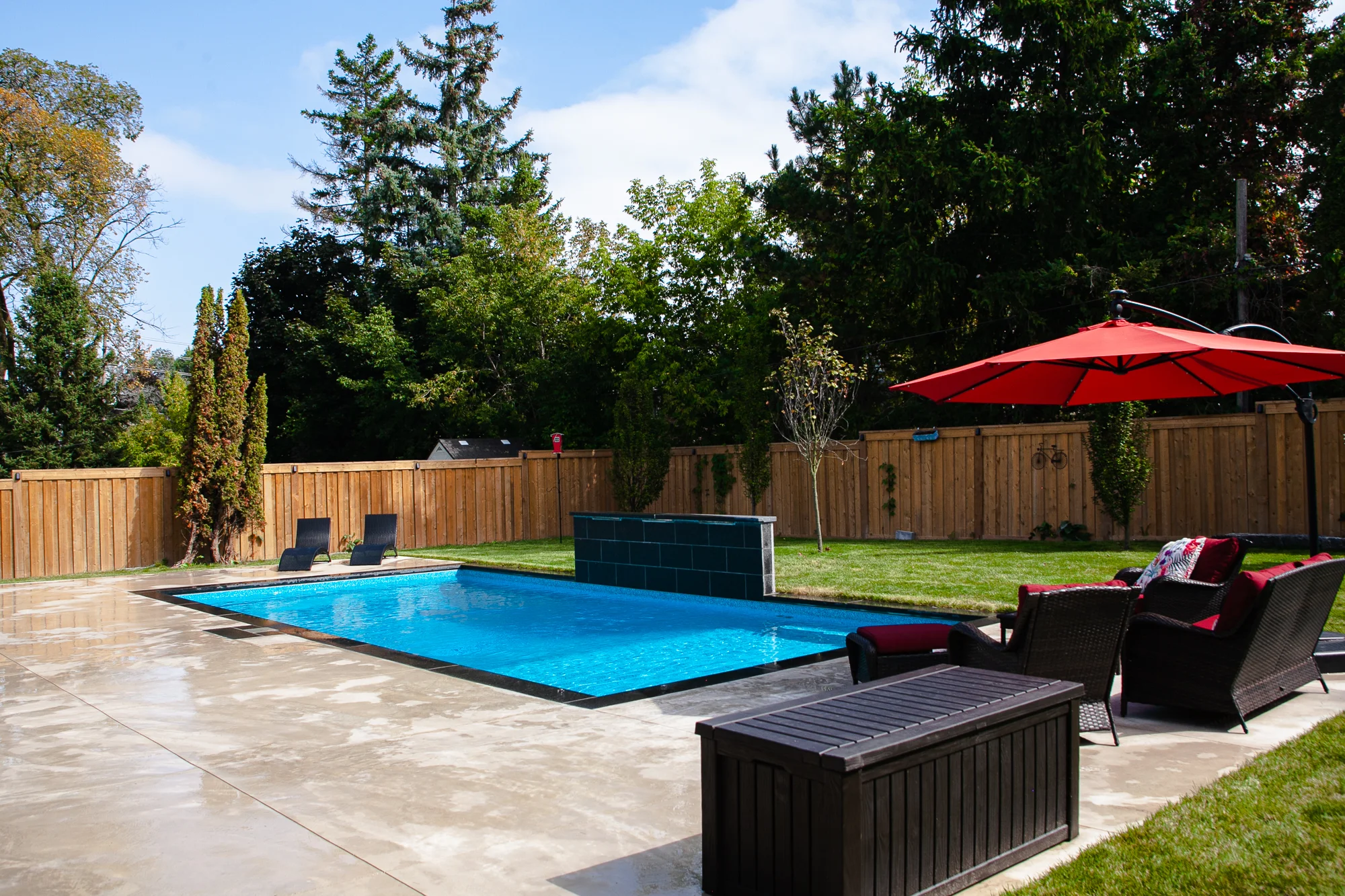
The right time to open a pool in Ontario is when overnight temperatures are reliably above freezing and daytime temperatures are approaching 15 degrees Celsius. In Toronto and South Mississauga, this typically falls between late April and mid-May, though the exact timing shifts slightly from year to year depending on the spring.
Opening earlier than conditions warrant does not gain you much: the water will be too cold to swim in comfortably, and you will simply be running the equipment and managing chemicals in water that nobody is using. However, opening before conditions are fully stable does help prevent algae from establishing as the water warms, so a late April opening is reasonable in most years.
Spring Pool Opening Checklist
Step 1: Remove the Winter Cover
- Pump off any standing water on top of the cover before removing it
- Remove the cover carefully to keep debris from falling into the pool
- Spread the cover on a clean surface, rinse it with a hose, and allow it to dry fully before folding and storing. A damp cover stored folded will develop mould
- Inspect the cover for tears, holes, or worn sections while it is flat and easy to examine
Step 2: Inspect the Pool and Surroundings
- Walk the perimeter and look at the coping, tile line, and deck surface for any cracks, chips, or lifting that may have occurred over winter
- Check the pool shell for visible surface damage or staining
- Look for any debris that settled to the bottom over winter
- If you notice significant surface wear or structural concerns, address these before opening for the season. Our guide on signs your pool needs restoration covers what to watch for
Step 3: Reconnect Plumbing and Equipment
- Remove all winterizing plugs from skimmers, return lines, and fittings
- Reinstall all jets, eyeball fittings, and skimmer baskets
- Reconnect the pump, filter, heater, and any other equipment that was winterized or disconnected
- Check all connections and unions for signs of cracking or leaking before turning on the system
Step 4: Reinstall Accessories
- Install ladders, handrails, and any steps that were removed for winter
- Reinstall underwater lights, if applicable
- Reinstall diving boards, slides, or water features if present
Step 5: Adjust the Water Level
- The water level typically drops over winter. Fill the pool to the midpoint of the skimmer opening
- Do not run the pump until the water level is high enough to fully cover the skimmer and avoid cavitation
Step 6: Start the Equipment
- Prime the pump if necessary and turn on the system
- Check that all return jets are flowing and that the skimmer is drawing correctly
- Check the filter pressure gauge and note the baseline reading
- Run the system for several hours and check for any leaks at equipment connections
Step 7: Balance the Water Chemistry
- Test the water for pH, total alkalinity, calcium hardness, chlorine, and stabilizer
- Adjust each parameter to its target range before adding shock or algaecide
- Shock the pool with a full dose of chlorine shock to oxidize any organic matter and kill bacteria
- Run the pump continuously for at least 24 hours after shocking
- Retest the water before swimming and confirm all parameters are in range
| Parameter | Target Range |
|---|---|
| pH | 7.2 to 7.6 |
| Total Alkalinity | 80 to 120 ppm |
| Calcium Hardness | 200 to 400 ppm |
| Free Chlorine | 1 to 3 ppm |
| Cyanuric Acid | 30 to 50 ppm |
Professional vs. DIY Pool Opening
Many Toronto and South Mississauga pool owners handle their own opening after their first season or two. The process is learnable, and doing it yourself saves a service call each time. If your pool has a more complex plumbing configuration or automation system, or if last year’s closing turned up any surprises, having a professional handle the opening is a reasonable way to catch problems early rather than mid-summer.
If your pool needs attention beyond routine opening, Destination Pools handles pool restoration across Toronto and South Mississauga. Contact us to discuss what your pool needs.
Frequently Asked Questions
Can I open my pool before the water is warm enough to swim?
Yes, and it is often a good idea. Opening the pool when the water is still cold, around 15 degrees Celsius, helps prevent algae from establishing as temperatures rise. You will be running the pump and managing chemistry before swimming begins, but you will start the swim season with cleaner, better-balanced water.
How long should I run the pump after opening in spring?
Run the pump continuously for at least 24 hours immediately after opening and shocking the pool. This ensures the shock is fully distributed and the filter has time to remove any fine particles. After that, a daily run time of eight to twelve hours is typical for summer maintenance, though warmer water and heavier pool use may call for longer run times.
What if my pool water is still green or cloudy after opening?
This is common on a pool that sat closed through a long winter. Retest the water, correct pH and alkalinity first, then shock again if needed and run the filter continuously until the water clears. It can take a few days of continuous filtration to fully clear a pool that opened green.
Should I hire a professional for pool opening in Toronto?
Many experienced pool owners handle their own opening, especially once they are comfortable with the process. If you are new to pool ownership, or if your pool has a complex plumbing configuration or automation system, having a professional handle the first few openings is a worthwhile investment in understanding what the process involves.
Does South Mississauga have different timing than Toronto?
No. Toronto and South Mississauga, including Port Credit, Lakeview, and Clarkson, share close to the same spring weather pattern, so the same late April to mid-May opening window applies across the area. Watch overnight lows rather than the calendar date.