Why Toronto Homeowners Are Choosing Fiberglass
Fiberglass pools have grown steadily in popularity across Toronto and South Mississauga over the past decade. The appeal is straightforward: the shell arrives pre-formed and is set into the excavated space in a fraction of the time it takes to build a concrete pool. The smooth, non-porous surface is easier on skin and swimwear, resists algae growth, and requires less chemical maintenance than concrete alternatives. For homeowners who want a quality inground pool without an extended construction window, fiberglass is a compelling option worth understanding in full.
Destination Pools and Landscaping is a Toronto-based outdoor living company with hands-on expertise in pool installation, hardscaping, and landscaping. Our team serves homeowners across Toronto and South Mississauga, from the first design conversation through to the final finish.
That said, the investment involved is real, and it varies significantly from one project to the next. Understanding what drives the cost helps you plan more accurately and have more productive conversations with pool builders.
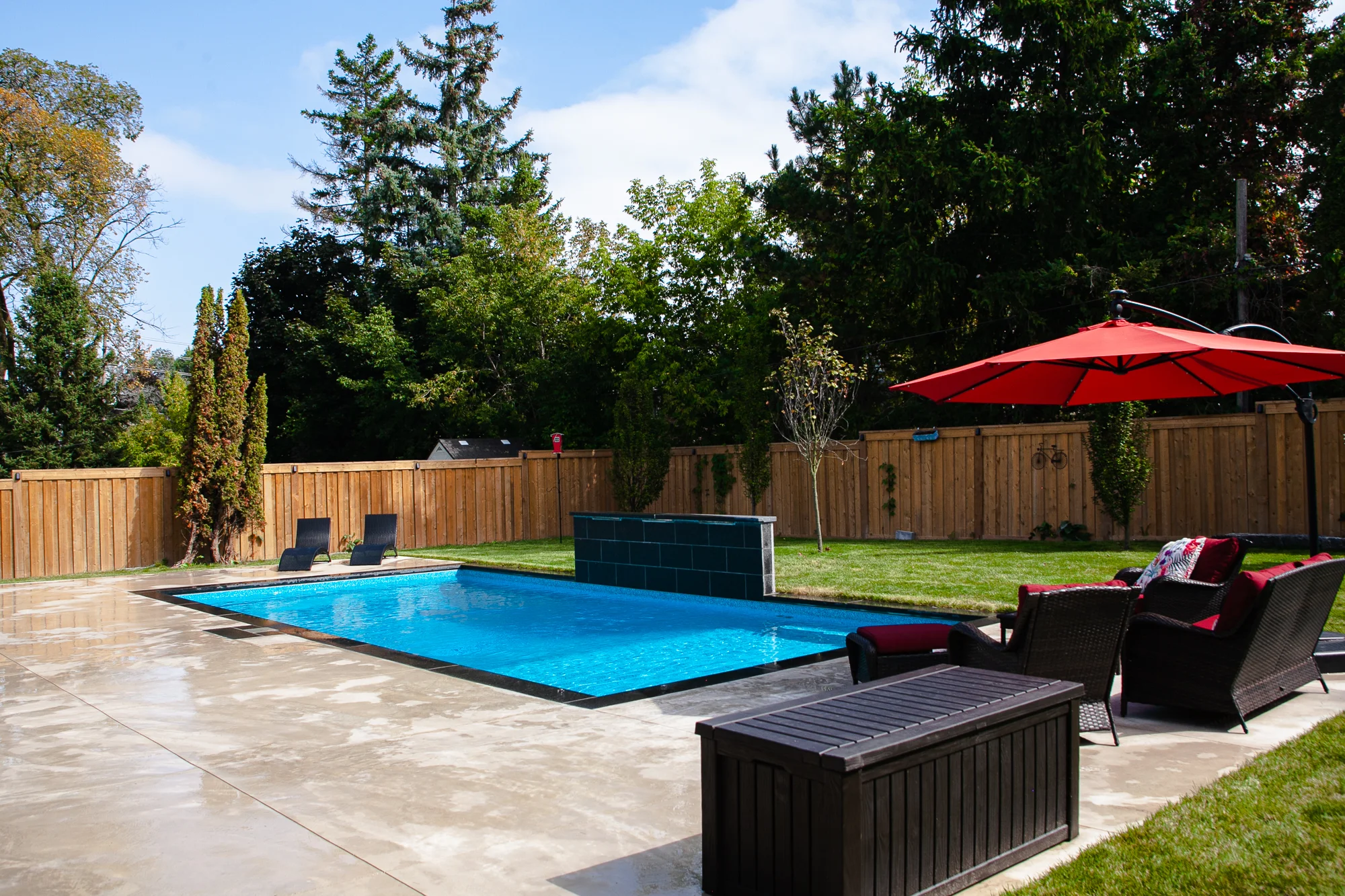
Factors That Affect Fiberglass Pool Cost in Toronto
No two fiberglass pool projects are identical. The following variables combine to determine where your project lands on the investment scale.
Pool Size and Model
Fiberglass pools come in manufactured shell sizes and shapes, unlike concrete pools which are fully custom-built on site. The shell itself is a significant portion of the total project cost, and larger or more complex models carry higher price points. Pools with tanning ledges, beach entries, or integrated spa sections involve more material and more installation complexity than a straightforward rectangular design.
Excavation and Site Conditions
Toronto and South Mississauga properties bring a range of site conditions that directly affect excavation scope. Heavy clay soil common to much of the GTA requires specialized equipment and generates significant spoil that must be removed and disposed of. Properties with bedrock, high water tables, or sloped grades add further complexity. Tight side yards and restricted equipment access mean more manual labour, which adds time and cost. A site assessment before any quote is finalized is essential.
Backfill Material
Once the fiberglass shell is set in place, the space around it must be backfilled. The material used matters: sand and gravel backfill provides good drainage and prevents hydrostatic pressure from building against the shell. Using the wrong backfill or inadequate compaction can cause the shell to shift or crack over time. Proper backfill is a non-negotiable part of a well-executed fiberglass installation.
Equipment Package
The mechanical system that keeps a fiberglass pool running includes the pump, filter, heater, and, if desired, a salt chlorine generator. Variable-speed pumps are more energy-efficient than single-speed models and are now required under Ontario’s energy efficiency guidelines. The equipment package you select has a meaningful impact on the overall project cost and on your long-term operating costs. A more capable system typically means lower energy bills over the life of the pool.
Add-Ons and Features
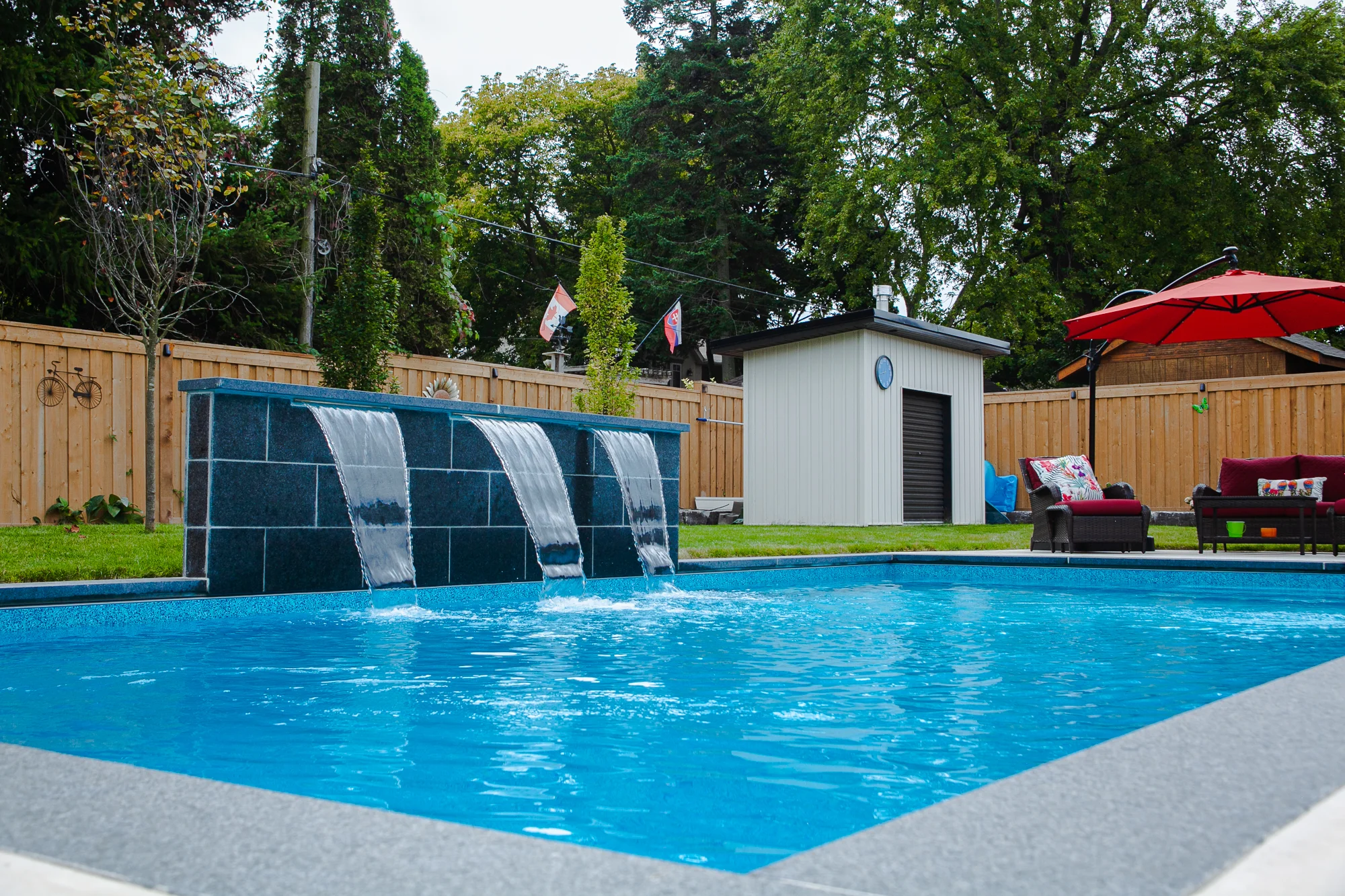
Water features, LED lighting, automatic covers, and integrated spas all add to the project scope. These are worth considering early in the planning process rather than after the pool is installed, as retrofitting features is more complex and costly than incorporating them during the original build. Our backyard pool ideas gallery shows a range of completed projects to help you visualize what different feature combinations look like in practice.
Pool Deck and Surrounds
The pool itself rarely sits in isolation. A new pool installation is almost always accompanied by work on the surrounding deck, coping, and patio. The material you choose for the pool surround, from poured concrete to large-format natural stone or interlock pavers, adds to the overall project scope and budget. Coordinating the pool and deck installation with one contractor is generally more efficient than staging them separately. Destination Pools handles both pool installation and custom deck installation, so the full backyard scope can be managed as one project.
Permits and Inspections
A building permit is required to install an inground pool in Toronto. The permit process involves submitting drawings, paying application fees, and scheduling inspections at key stages of the build. A pool fence enclosure permit is also required before the pool can be filled with water. Your pool builder should manage the permit process on your behalf. For a full breakdown of what the permit process involves, see our post on pool permits in Toronto.
Landscaping and Final Grade
Installing a pool displaces a significant volume of soil and disrupts the surrounding yard. Final grading, lawn restoration, and any additional landscaping to complete the backyard are typically handled after the pool and deck are finished. If you are planning a full backyard transformation, incorporating landscaping into the scope from the beginning ensures everything is designed to work together.
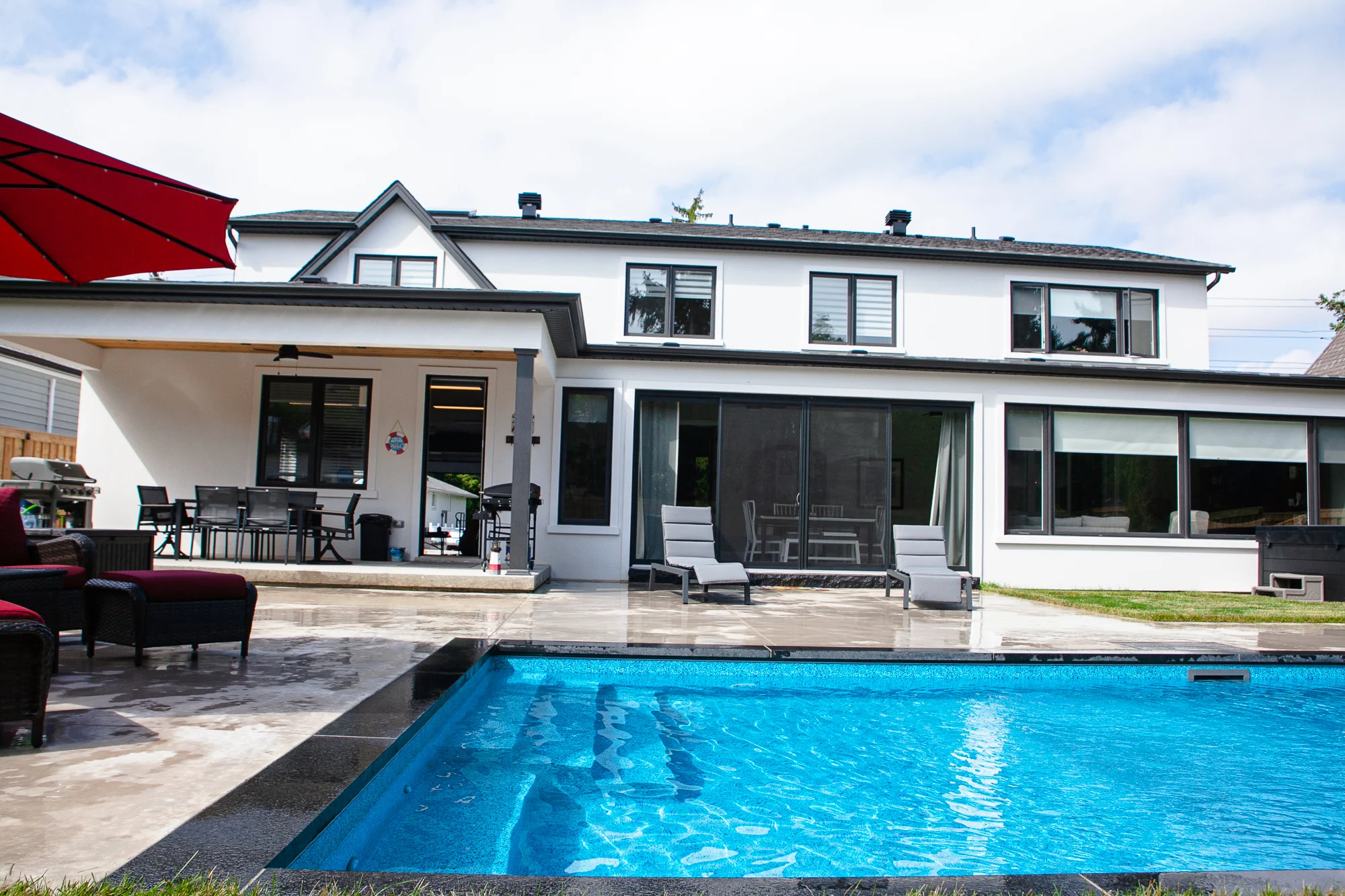
How Fiberglass Compares to Concrete and Vinyl
Fiberglass, concrete, and vinyl liner pools each represent a different approach to inground pool construction, with different trade-offs in upfront investment, long-term maintenance, and customization. Concrete pools offer the most design flexibility but require longer construction timelines and more intensive ongoing maintenance. Vinyl liner pools typically carry a lower initial investment but require periodic liner replacement. Fiberglass sits between the two in many respects, offering a relatively fast installation, low chemical demand, and a smooth finish that holds up well over time.
Our detailed guide on concrete vs. vinyl vs. fiberglass pools in Toronto walks through the differences in depth to help you decide which type is the best fit for your backyard and your priorities.
Getting an Accurate Quote
Because fiberglass pool projects vary so significantly based on site conditions, scope, and the features you choose, the only reliable way to understand what your project will cost is to have your property assessed in person. A reputable contractor will walk the site with you, review the pool models that suit your space, and provide a detailed quote that breaks down each component clearly.
Destination Pools and Landscaping installs inground swimming pools across Toronto and South Mississauga. Our team works with homeowners from the planning stage through to the completed backyard, including the pool, deck, and surrounding landscaping. Contact us to arrange a consultation and start building a clear picture of what your project involves.
If you are still early in your research, our inground pool cost guide for Toronto covers the broader range of factors that apply to all pool types, including fiberglass.
Frequently Asked Questions
How long does a fiberglass pool installation take in Toronto?
A fiberglass pool installation typically takes between two and four weeks from excavation to a filled, operational pool, not including the time required for the surrounding deck work. This is generally faster than a concrete pool, which can take two to three months. Site conditions, permit timelines, and scheduling can all affect the final duration.
Do fiberglass pools hold up in Ontario winters?
Yes, fiberglass pools are well-suited to Ontario’s climate when properly installed and winterized. The flexible nature of the fiberglass shell handles freeze-thaw conditions better than concrete, which is more prone to cracking under repeated thermal stress. Proper backfill, adequate drainage, and correct winterization procedures are all important for long-term performance.
Can a fiberglass pool be any size or shape?
Fiberglass pools are manufactured in fixed shell sizes and shapes, unlike concrete pools which are fully custom-built. Pool manufacturers offer a wide range of models, but if your yard requires an unusual size or shape, concrete may be a better fit. A pool builder can help you identify which fiberglass models work within your available space.
Does a fiberglass pool require less maintenance than concrete?
Generally, yes. The smooth, non-porous surface of a fiberglass pool resists algae adhesion, which reduces the amount of brushing and chemical treatment required compared to concrete pools. Fiberglass also does not need to be resurfaced on a regular schedule the way concrete pools do. That said, all pools require consistent water chemistry management, regular cleaning, and seasonal opening and closing regardless of pool type.
Do I need a permit to install a fiberglass pool in Toronto?
Yes. A building permit is required for all inground pool installations in Toronto, including fiberglass. A pool fence enclosure permit is also required before the pool can be filled. Your contractor should handle the permit applications on your behalf as part of the project.
To learn more about the team behind your project, visit our About Us page or head back to the Destination Pools homepage to explore our full range of pool and landscaping services for Toronto and South Mississauga homeowners.