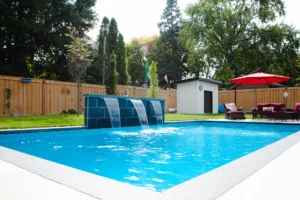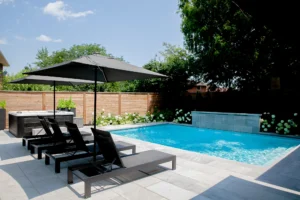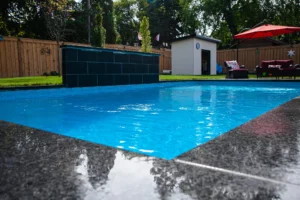
Coping and waterline tile are two of the most visible parts of a pool, framing the water and forming the edge homeowners touch, sit on, and walk across every time they use the pool. They are also two of the components most exposed to the elements: freeze-thaw cycles, pool chemicals, and constant water contact all take a steady toll over the years, often well before the pool shell itself shows any signs of aging.
For Toronto and South Mississauga homeowners, understanding when coping and tile have reached the end of their useful life, and what is involved in replacing them, is a practical piece of pool ownership knowledge. This guide covers the warning signs, the replacement process, and how this work fits into a broader restoration project.
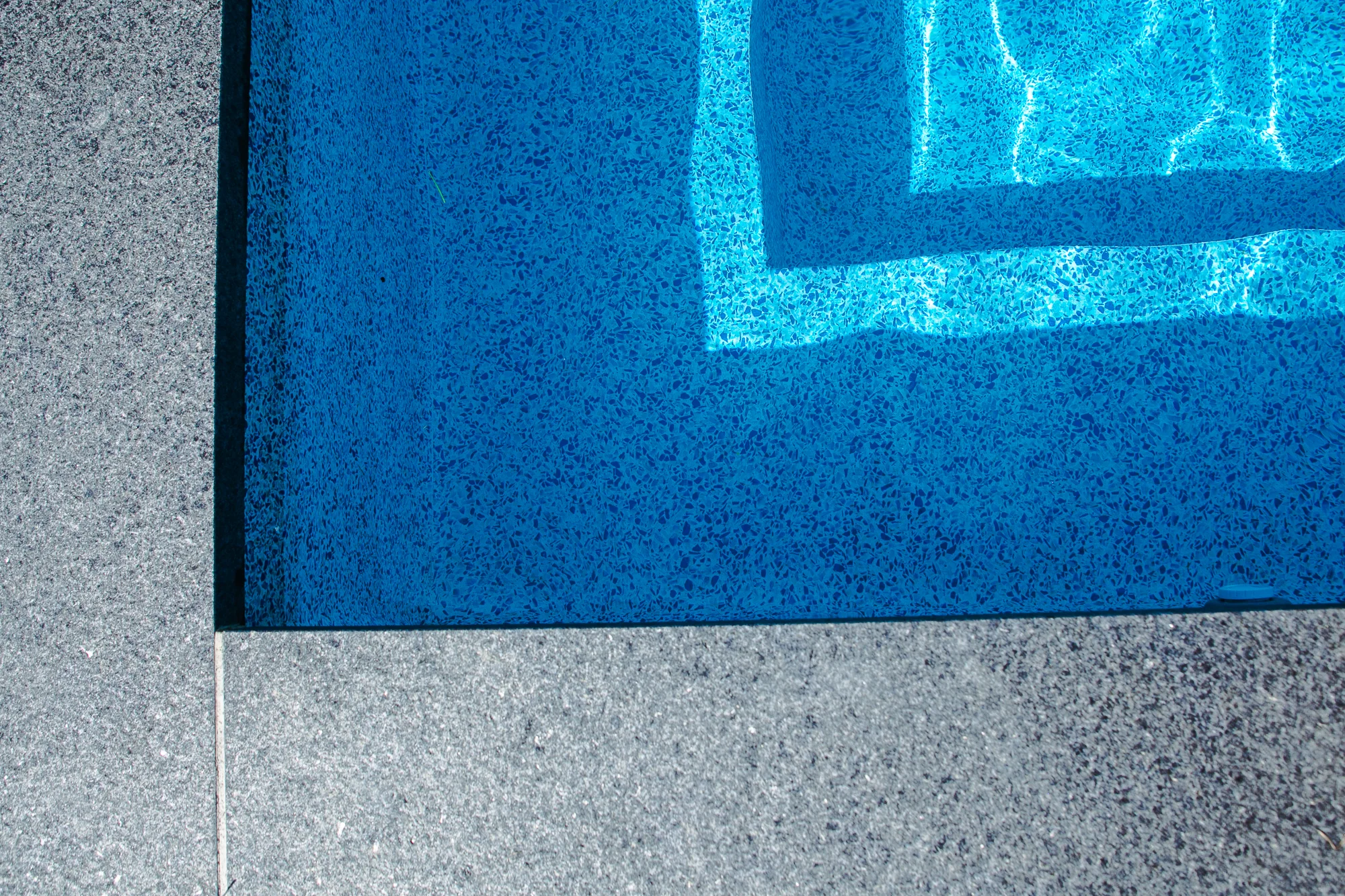
What Coping and Waterline Tile Actually Do
Coping is the material that caps the edge of the pool shell, forming the transition between the pool structure and the surrounding deck. It serves both a functional and safety role, providing a non-slip edge for swimmers to grip and a barrier that directs water away from the pool structure rather than allowing it to seep behind the shell.
Waterline tile is the narrow band of tile installed at the pool’s water level, typically just below the coping. Beyond its decorative purpose, waterline tile protects the surrounding plaster or finish from the buildup of oils, sunscreen residue, and mineral deposits that naturally accumulate at the waterline, an area that would otherwise stain and degrade the finish faster than the rest of the pool surface.
Signs Your Coping Needs Attention
Coping in the Toronto climate faces a particularly tough environment. Water gets into small cracks, freezes, expands, and widens the crack over successive winters, a process that accelerates once the material starts to fail. A few signs are worth watching for.
Visible cracking across multiple sections of coping, rather than an isolated hairline crack, usually signals that freeze-thaw damage has progressed. Coping that has begun to lift, shift, or separate slightly from the pool shell is a sign that the bond or the underlying support has weakened. Spalling, where the surface of concrete coping flakes or crumbles away, is another common sign of advanced deterioration. Finally, coping that feels loose or rocks slightly underfoot is both a cosmetic problem and a safety concern that should not wait.
Signs Your Waterline Tile Needs Attention
Waterline tile issues tend to show up differently. Individual tiles that have come loose or fallen off entirely are the most obvious sign, but there are subtler indicators worth watching for as well. Grout that has eroded or gone missing between tiles allows water behind the tile band, which can loosen additional tiles over time and, in some cases, allow water to reach the plaster or finish behind it. Persistent staining or a chalky buildup on the tile that no longer responds to normal cleaning can indicate the glaze has broken down. Cracked or chipped tiles, particularly if the damage appears across several tiles rather than one isolated spot, usually point to an underlying issue rather than a one-off impact.
Why These Issues Rarely Stay Isolated
Coping and tile problems have a tendency to compound if left unaddressed. Water that gets behind failing coping can migrate toward the pool structure or the surrounding deck base, potentially contributing to the kind of settling or cracking that shows up in the deck itself. Our post on concrete pool deck restoration in Toronto covers how deck and coping issues often need to be addressed together rather than separately.
Similarly, water intrusion behind loose waterline tile can accelerate wear on the plaster or finish immediately below it, turning a tile problem into a resurfacing problem if it goes unaddressed for too long. Catching these issues early, and understanding them as connected rather than isolated line items, tends to keep the eventual restoration scope smaller.
What the Replacement Process Involves
| Stage | What Happens |
|---|---|
| Assessment | Inspection of coping and tile condition, and a check for related issues in the deck or plaster below |
| Removal | Old coping and/or tile is carefully removed without damaging the pool shell or adjacent deck |
| Substrate repair | Any damage to the underlying structure or bond beam revealed during removal is addressed |
| Installation | New coping and/or tile is installed, set, and properly sealed against water intrusion |
| Finishing | Grout, sealant, and final detailing are completed before the pool is refilled |
Because coping and tile sit at the interface between the pool and its surroundings, material choice matters. Options range from natural stone and poured concrete for coping to a wide range of tile styles and finishes for the waterline band, each with different durability profiles and maintenance needs in the Ontario climate. A pool professional can walk through which materials tend to hold up best given the specific site conditions and sun exposure.
Coping and Tile Replacement as Part of a Larger Restoration
Coping and waterline tile replacement is rarely done in complete isolation. It is commonly bundled with resurfacing work, since both involve draining the pool and working around the same shell edge, and combining them into one project avoids draining and refilling the pool twice. Our post on pool resurfacing options in Toronto covers the finish choices that are often selected alongside new coping and tile.
If you are trying to figure out whether your pool needs this specific work or a broader restoration, our pool restoration service page outlines the full range of what a restoration project can include, and our post on signs your pool needs restoration is a good starting point for a broader assessment.
Frequently Asked Questions
Can coping be replaced without draining the pool?
In most cases, no. Coping sits at the pool’s edge and its replacement typically requires the water level to be lowered, and often the pool fully drained, to safely remove the old material and properly install and seal the new coping.
How long does waterline tile typically last before needing replacement?
Waterline tile in the Toronto climate commonly lasts fifteen to twenty-five years depending on the tile material, installation quality, and water chemistry maintenance over that time. Pools with consistently balanced water chemistry tend to see tile and grout last toward the longer end of that range.
Is it possible to replace just a few damaged tiles instead of the whole waterline band?
Spot repairs are possible for isolated damage, though matching the exact tile pattern, colour, and finish can be difficult once a tile line has aged, since manufacturers frequently discontinue specific products. For pools with widespread wear, replacing the full waterline band tends to produce a more consistent, longer-lasting result.
Does damaged coping affect pool safety?
Yes. Coping that has cracked, lifted, or become loose can create a trip hazard and a less secure grip point for swimmers entering or exiting the pool. Beyond the cosmetic concern, this is a safety issue worth addressing promptly.
What coping materials hold up best to Toronto winters?
Materials with strong freeze-thaw resistance tend to perform best, though the right choice depends on the specific pool, budget considerations, and desired appearance. A pool professional can review the trade-offs between different coping materials given your site’s specific exposure and conditions.
Talk to Destination Pools About Coping and Tile Replacement
If your pool’s coping or waterline tile is showing signs of wear, addressing it before the damage spreads to the deck or the pool finish typically means a smaller, more contained project. Destination Pools works with homeowners across Toronto and South Mississauga, including Port Credit, Lakeview, Clarkson, and Mineola, to assess coping and tile condition as part of a full pool and backyard evaluation.
Contact Destination Pools to have your pool’s coping and tile assessed and discuss the right materials and timeline for your project.