What Goes Into the Cost of a Heated Driveway in Toronto?
Every winter, Toronto homeowners spend hours shovelling snow, applying ice melt, and dealing with the aftermath of freeze-thaw cycles on their driveways. A radiant heated driveway eliminates that routine entirely, keeping your surface clear and safe without any manual effort. But before you commit, the first question most people ask is a reasonable one: what is this actually going to cost?
Destination Pools and Landscaping is a Toronto-based outdoor living company with hands-on expertise in pool installation, hardscaping, and landscaping. Our team serves homeowners across Toronto, Etobicoke and South Mississauga, from the first design conversation through to the final finish.
The honest answer is that there is no single number. A heated driveway installation in Toronto is a custom project, and the investment varies significantly based on a combination of factors specific to your property, your chosen system, and your surface material. This post breaks down each of those factors so you know exactly what drives the quote, and what to discuss when you reach out to a contractor.
If you are still weighing whether the investment makes sense for your situation, our post on whether heated driveways are worth it in Toronto is a useful starting point before you dive into the cost breakdown below.
The Two Main System Types: Hydronic vs. Electric
The first and often most significant cost variable is the type of radiant heating system you choose. There are two categories: hydronic and electric. Each has its own installation requirements, operating characteristics, and implications for your overall budget.
Hydronic Radiant Systems
Hydronic systems circulate a heated mixture of water and antifreeze through flexible tubing embedded beneath the driveway surface. The heat is generated by a boiler, which is installed in the garage or utility space. Operating cost depends on the boiler, the fuel it runs on and how the system is controlled, which matters most on larger driveways where you are heating a significant surface area.
On the installation side, hydronic systems are more complex. They require plumbing connections, a boiler unit, a manifold, and careful routing of the tubing. If you do not already have a compatible boiler, that adds to the scope of work. Those components shape the installation scope, and they are worth weighing against how the system will run over its life, particularly on a full-sized double driveway.
Electric Radiant Systems
Electric systems use heating cables or mats embedded beneath the surface, connected to your home’s electrical panel. Installation is generally simpler and less invasive than hydronic, and there is no boiler to accommodate. For smaller driveways or walkways, electric systems are often the more practical choice.
The consideration is how it runs. Electric heating cables draw power whenever they are on, so the size of the system and how it is controlled both affect your hydro use. This is why system sizing matters: a well-designed electric system with smart controls and snow sensors can be programmed to activate only when conditions require it, rather than running continuously.
Key Factors That Affect Your Heated Driveway Cost
Beyond the system type, a range of site-specific and material factors will shape what your installer quotes. Here is a summary of the main variables:
| Cost Factor | Why It Matters | Impact on Scope |
|---|---|---|
| Driveway Size | More square footage means more tubing or cable, more material, and more labour | High |
| System Type (Hydronic vs. Electric) | Hydronic needs a boiler, manifold and plumbing; electric needs panel capacity. Each has its own installation scope and operating profile | High |
| Surface Material | Concrete, interlock, and flagstone each have different installation methods and material costs | High |
| New Installation vs. Retrofit | Installing heating under a new driveway is significantly more straightforward than retrofitting under an existing one | High |
| Existing Infrastructure | Whether a compatible boiler or electrical capacity already exists affects how much additional work is needed | Medium to High |
| Controls and Automation | Basic manual controls vs. smart snow-sensor systems with automatic activation | Medium |
| Site Conditions and Access | Slope, grade, soil type, and equipment access can affect excavation and labour requirements | Medium |
| Permits | Toronto and Mississauga may require permits depending on scope, particularly for electrical work | Low to Medium |
Driveway Size and Layout
Square footage is one of the most straightforward drivers of cost. A single-car driveway requires considerably less heating cable or tubing than a double-wide or extended driveway leading to a detached garage. The relationship is fairly linear: more surface area means more material and more installation time.
Layout also plays a role. A straight rectangular driveway is the simplest to work with. Curved layouts, stepped grades, or driveways with integrated walkways or landings require more precise planning and custom routing of the heating elements. If you are also considering heated front walkways or steps alongside the driveway, those can often be incorporated into the same system, which adds to the total scope but may be more efficient than treating them as separate projects later.
Surface Material: Concrete, Interlock, or Flagstone
The driveway surface you choose has a direct effect on both the installation process and the overall project cost. Each material interacts differently with radiant heating systems, and each has its own material and labour profile.
Concrete Driveways with Radiant Heating
Concrete is one of the most common pairings for radiant heating because the heating elements are embedded directly in the slab during the pour. This makes new-build installations straightforward. Concrete is also a strong conductor of heat, which helps the system perform efficiently. Our concrete driveway installation service covers both standard and heated applications, and the two can be scoped together as a single project.
Interlock Driveways with Radiant Heating
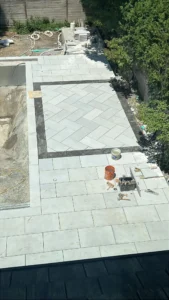
Interlock is a popular surface choice in Toronto for its aesthetic versatility and the ability to remove and reset individual pavers if needed. When we build a heated interlock driveway, the hydronic piping is set in a reinforced concrete base of about 6 inches, and the pavers are laid on top. That base keeps the pavers from shifting and spreads heat evenly under the surface. Learn more about what goes into an interlock driveway installation in Toronto and how it can be designed to accommodate heating from the outset.
Flagstone Driveways with Radiant Heating
Flagstone offers a distinctive, high-end look and pairs well with heated systems for homeowners who want both form and function. The stone is set on the same heated concrete base, so the setting bed and joints need careful work to keep irregular natural stone level and well supported. For projects where aesthetics are the priority, flagstone driveway installation combined with a heated system can be a compelling combination, particularly for front-of-house applications.
New Build vs. Retrofit
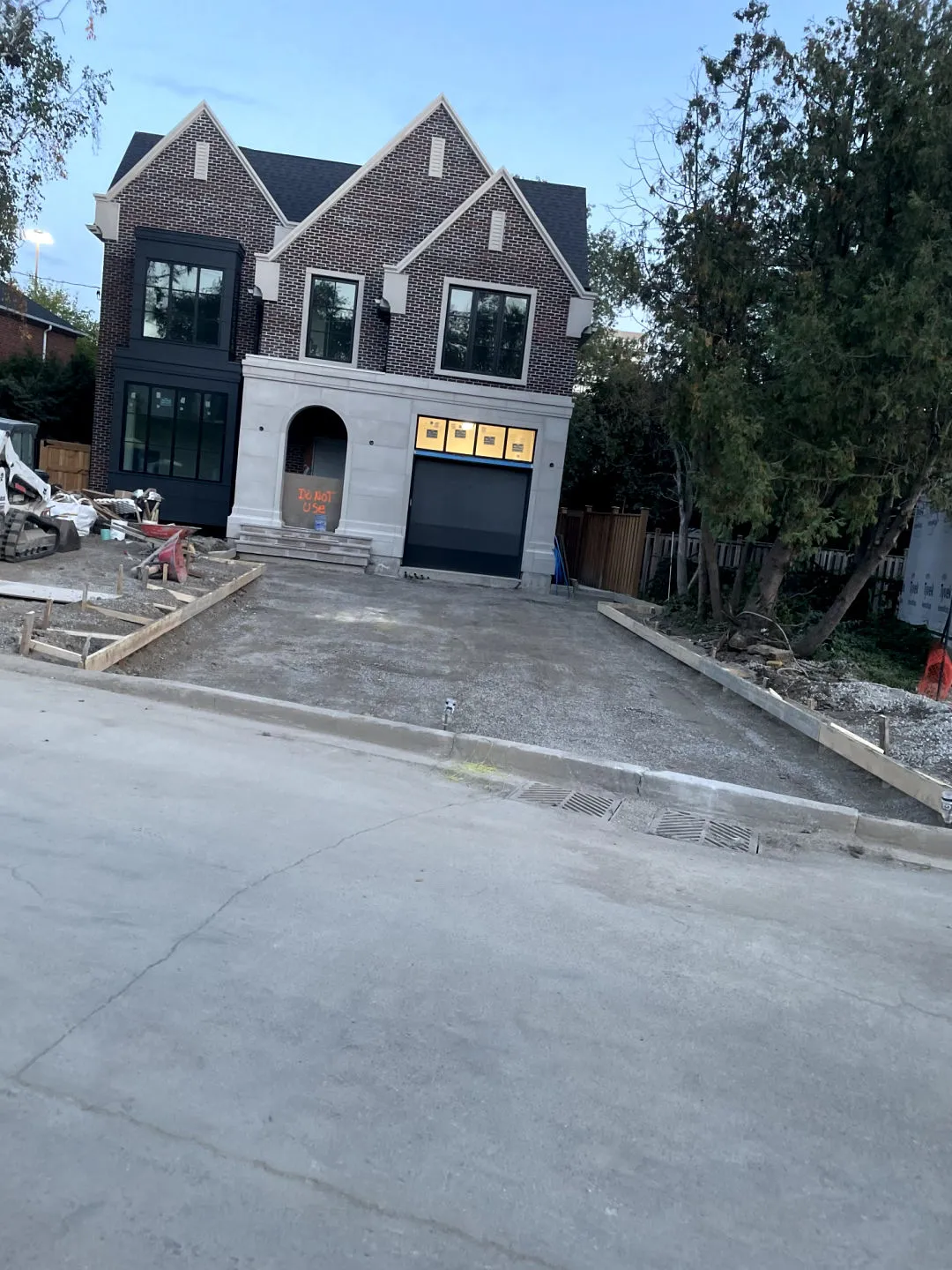
Whether you are installing a heated driveway as part of a new driveway build or retrofitting an existing surface is one of the most significant cost variables in the entire project. New builds are considerably more straightforward because the heating system is planned and installed before the surface goes down. The tubing or cables are laid, connected, tested, and then the driveway surface is completed on top.
A retrofit, by contrast, requires removing or excavating the existing driveway surface to access the sub-base, installing the heating system, and then resurfacing. This increases both material costs and labour time, and it also means you are essentially paying to install two driveways: the excavation and preparation, plus the new surface. If your existing driveway is near the end of its useful life anyway, a full replacement with an integrated heated system often makes more financial sense than trying to retrofit an older surface.
Electrical Capacity and Existing Infrastructure
For electric radiant systems, your existing electrical panel needs sufficient capacity to handle the added load. Many older Toronto homes, particularly in established neighbourhoods, may require a panel upgrade to accommodate a heated driveway system. That work, performed by a licensed electrician, adds to the overall project cost.
For hydronic systems, the question is whether you already have a compatible boiler and whether it has the capacity to handle the additional zone. If a boiler needs to be installed or upgraded, that is a meaningful addition to the scope. On the other hand, if you already have a hydronic heating system in your home, it may be possible to connect the driveway zone to the existing boiler, which changes the cost picture significantly.
Controls, Automation, and Snow Sensors
Basic heated driveway systems operate on a manual or timer-based control: you turn them on when you expect snow, and off when it has cleared. More advanced systems incorporate snow and moisture sensors that detect precipitation and activate the system automatically, then shut it off once the driveway surface is clear and dry.
Automated controls add to the installation scope, and they make sure the system only runs when conditions actually warrant it. For busy households or homeowners who travel frequently, automation also removes the need to remember to activate the system ahead of a storm. The choice between basic and smart controls is a worthwhile conversation to have with your installer when scoping the project.
Site Conditions and Access
Not all driveways are on flat, easily accessible terrain. Sloped driveways require additional consideration for both the heating system design and the surface installation. Properties with limited access for machinery may require more manual labour, which can affect the overall timeline and labour component of the quote. Soil conditions in the sub-base, particularly if there is significant clay or poor drainage, may also require additional preparation work before any heating elements are installed.
Permits in Toronto and Mississauga
Depending on the scope of your project, a permit may be required. Electrical work associated with a heated driveway installation, including panel upgrades, almost always requires a permit and inspection in Toronto and Mississauga. Significant driveway replacements may also require a right-of-way permit if the work extends to the boulevard or connects to municipal infrastructure. A reputable contractor will identify permit requirements during the quoting process and factor them into the project plan.
Frequently Asked Questions
Which heated driveway system is right for my budget?
It depends on your property: driveway size, whether you heat all of it or just zones, your existing boiler or electrical capacity, the surface material, and whether the driveway is being rebuilt. Each system has its own installation scope and operating profile. Discussing your specific situation with a contractor will give you a clearer picture of which system makes sense.
Can a heated driveway be installed under any surface material?
Radiant heating systems can be installed under concrete, interlock pavers, and natural stone surfaces including flagstone. Each material has different installation requirements and heat transfer characteristics, which affect how the system is sized and how it performs. Your contractor will recommend the appropriate approach based on the surface you choose.
Does a heated driveway add value to a Toronto home?
A heated driveway is a premium feature that can enhance a property’s appeal, particularly in a market like Toronto where winter maintenance is a real concern for homeowners. While it is difficult to assign a fixed dollar figure to the added value, buyers often view automated snow management as a meaningful convenience, especially for properties with larger driveways or accessibility considerations. For a fuller discussion of the value question, see our post on whether heated driveways are worth it in Toronto.
Do heated driveways require ongoing maintenance?
Radiant heating systems are generally low-maintenance once installed, as the heating elements are embedded beneath the surface and not exposed to weather or wear. Hydronic systems require periodic boiler servicing as part of normal boiler maintenance. Electric systems have no moving parts and typically require very little attention. The driveway surface itself should be maintained according to the material type, just as it would be without a heating system.
Is it possible to heat only part of a driveway?
Yes. It is common to heat high-priority zones, such as tire tracks, the area in front of the garage, or the section closest to the street, rather than the full driveway surface. This can reduce both the installation scope and the operating cost while still delivering meaningful snow-management benefits. Partial-zone installations are worth discussing with your installer if budget is a consideration.
Get a Custom Quote for Your Heated Driveway
A heated driveway is a long-term investment in comfort, safety, and convenience, and the right system for your property depends on a combination of factors that a general guide can only take so far. The most reliable way to understand what your project will involve is to have a contractor assess your specific driveway, discuss your surface preferences, and review your existing electrical or mechanical infrastructure.
Destination Pools and Landscaping installs heated driveways throughout Toronto, Etobicoke and South Mississauga, working with homeowners to design systems that match their property, their budget, and their long-term goals. Whether you are planning a full new driveway build or exploring options for your existing surface, we are happy to walk you through what is involved.
Contact us today to request a free, no-obligation quote and get a clear picture of what a heated driveway would look like for your home.
To learn more about the team behind your project, visit our About Us page or head back to the Destination Pools homepage to explore our full range of pool and landscaping services for Toronto and South Mississauga homeowners.