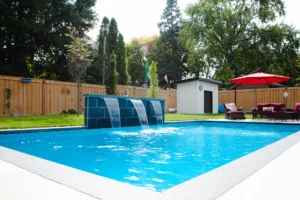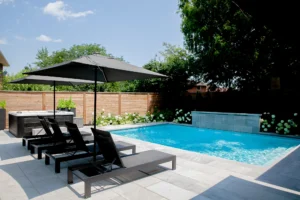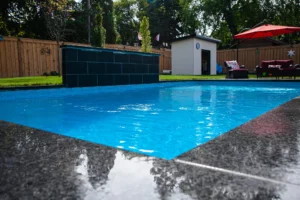
A pool restoration project already involves draining the pool, reworking equipment, and often refreshing the interior finish. For homeowners who have been curious about switching from a traditional chlorine system to a saltwater system, this window naturally raises the question: is now the time to make that change?
It is a reasonable thing to consider, since a saltwater conversion involves its own equipment and plumbing considerations that overlap directly with restoration work already underway. This guide walks through what a saltwater conversion involves, how it intersects with a restoration project, and the factors worth weighing before deciding either way.
A Quick Clarification: Saltwater Pools Still Use Chlorine
One of the most common misconceptions is that saltwater pools do not use chlorine. In reality, a saltwater system uses a salt chlorine generator to convert dissolved salt into chlorine through electrolysis, continuously producing the sanitizer the pool needs rather than requiring it to be added manually. The water still contains chlorine; the difference is in how that chlorine gets there and how it is maintained day to day. Our post on saltwater vs. chlorine pools in Toronto goes into more depth on how the two systems compare across water feel, maintenance routine, and equipment.
Why Restoration Is a Natural Point to Consider This
Converting an existing chlorine pool to saltwater involves installing a salt chlorine generator, which ties into the pool’s plumbing and electrical system alongside the pump and filter. Since a restoration project frequently involves reworking the equipment pad regardless, whether that is a pump upgrade, a heater replacement, or general plumbing adjustments, adding a salt system into that same work is generally far less disruptive than retrofitting it onto an already-finished setup later.
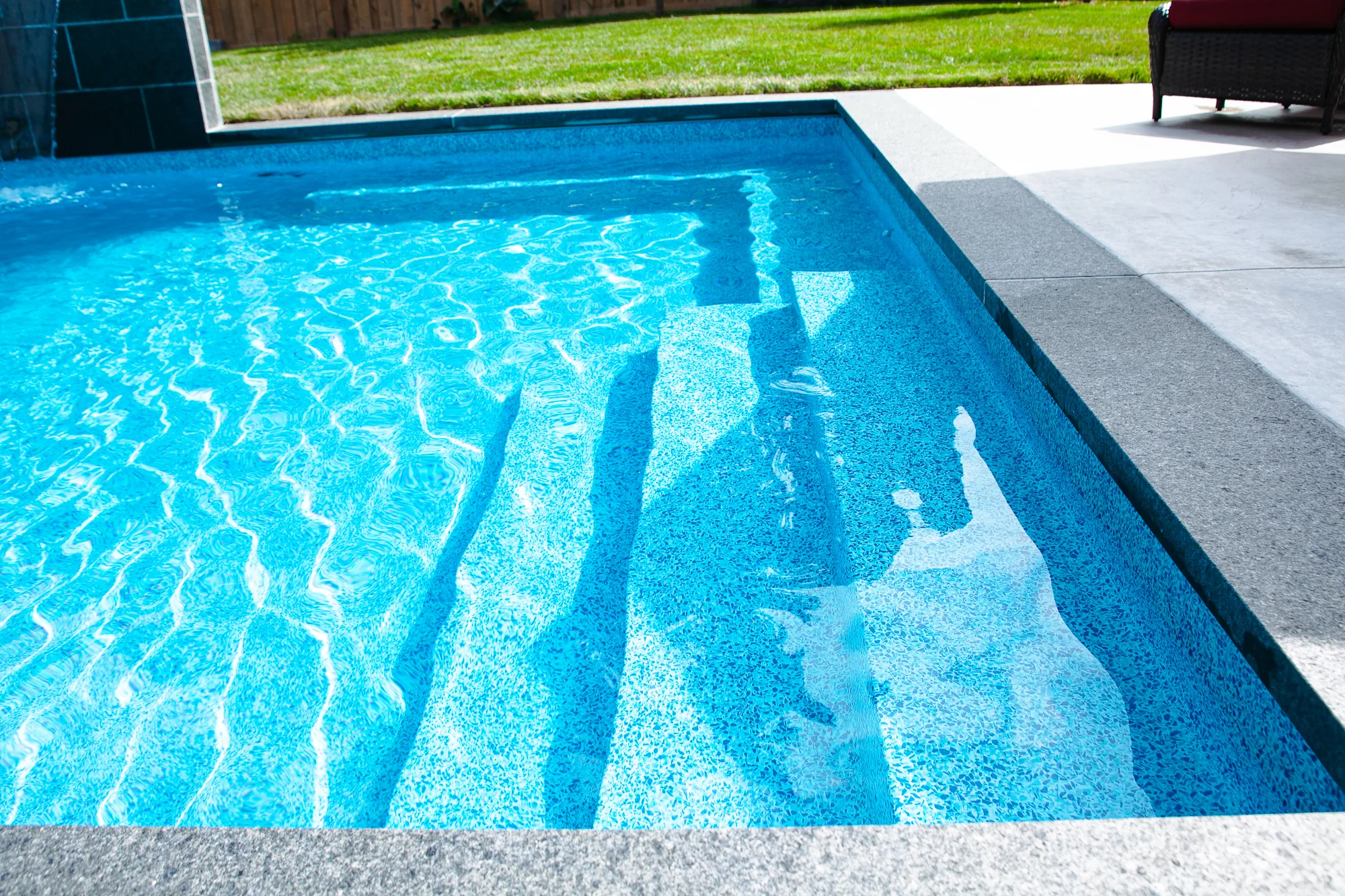
There is a second consideration specific to pool surfaces. Saltwater systems interact differently with certain pool finishes and metal components than traditional chlorine systems do, which means a restoration that already includes resurfacing or coping and tile work is a sensible time to select materials that pair well with a saltwater environment from the outset, rather than retrofitting a salt system onto a finish that was not selected with that in mind.
What a Saltwater Conversion Involves
| Component | What Changes |
|---|---|
| Salt chlorine generator | Installed in-line with existing plumbing, typically after the filter and before the heater |
| Electrical connection | The generator requires a dedicated electrical connection, often coordinated with other equipment work |
| Salt level | Salt is added to the pool water to reach the concentration required for the specific generator |
| Metal fixtures and hardware | Existing metal components (ladders, handrails, lights) should be assessed for salt compatibility |
| Control system | Many generators integrate with pool automation systems for monitoring and adjustment |
The scope of a conversion is generally moderate compared to other restoration line items, but it does require coordination with whatever else is happening in the restoration project, particularly plumbing and electrical work, to sequence everything correctly.
Factors Worth Weighing Either Way
The decision between staying with a traditional chlorine system and converting to saltwater comes down to homeowner priorities rather than one system being objectively superior. Saltwater systems are often chosen for the water feel many swimmers describe as softer and less irritating to eyes and skin, and for the reduced routine of manually adding chlorine. Traditional chlorine systems, on the other hand, tend to have a lower upfront equipment cost and remain a familiar, well-understood system for many pool owners and service professionals.
Salt can also be more corrosive to certain metals and some natural stone or specific finishes over time if compatibility was not considered during installation, which is precisely why pairing this decision with material choices made during a restoration is worth doing thoughtfully rather than as an afterthought. A pool professional familiar with both systems can walk through how each option would interact with your specific pool’s construction and finish choices.
How This Fits Into the Broader Restoration Decision
A saltwater conversion is one of several decisions that can be folded into a restoration project alongside equipment upgrades. Our post on upgrading pool equipment during restoration covers the pump, heater, and filter considerations that often get evaluated at the same time as a potential saltwater conversion, since these decisions are interconnected rather than separate line items.
Destination Pools approaches restoration as an opportunity to reassess the full system rather than treating each component in isolation. Our pool restoration service page outlines the full scope of what a restoration project can include across Toronto and South Mississauga.
Frequently Asked Questions
Is a saltwater pool actually chlorine-free?
No. A saltwater system uses a salt chlorine generator to produce chlorine from dissolved salt through electrolysis. The pool still contains and relies on chlorine as its sanitizer; the difference is in how the chlorine is generated and maintained rather than its presence in the water.
Can any pool be converted to saltwater, regardless of pool type?
Most pool types, including concrete, vinyl, and fiberglass, can accommodate a saltwater system, though each has different considerations around finish compatibility, metal fixtures, and structural components that should be reviewed by a professional before conversion.
Does converting to saltwater during restoration add significant time to the project?
Since a restoration project already involves equipment and plumbing work, adding a salt chlorine generator typically adds a modest amount of time rather than requiring a separate project phase, provided it is planned into the restoration scope from the outset.
Will a saltwater system affect my pool’s warranty on the resurfacing work?
This depends on the specific finish material and manufacturer. Some finishes are explicitly rated for saltwater compatibility, while others may have different warranty terms in a saltwater environment. This is worth confirming with your contractor when selecting materials if a conversion is part of the plan.
Can I switch back to a traditional chlorine system later if I convert now?
Yes, a salt chlorine generator can generally be removed or bypassed, allowing a return to manual or automated chlorine dosing. However, the plumbing and electrical work involved in conversion means this is a decision most homeowners prefer to make thoughtfully rather than switching back and forth.
Talk to Destination Pools About Your Restoration Options
Whether a saltwater conversion makes sense for your pool depends on your specific setup, finish choices, and preferences. Destination Pools works with homeowners across Toronto and South Mississauga, including Port Credit, Lakeview, Clarkson, and Mineola, to walk through these options as part of a complete restoration plan.
Contact Destination Pools to discuss whether a saltwater conversion fits into your restoration project.