The Pool Deck Does More Than You Might Think
The pool deck is the surface you and your family will walk on, sit on, and spend most of your outdoor time around. It frames the pool visually, defines the character of the backyard, and takes on more wear than almost any other outdoor surface on the property. In Toronto’s climate, it also has to perform through hard winters, hot summers, and everything in between.
Destination Pools and Landscaping is a Toronto-based outdoor living company with hands-on expertise in pool installation, hardscaping, and landscaping. Our team serves homeowners across Toronto and South Mississauga, from the first design conversation through to the final finish.
Choosing the right material and design for your pool deck has a lasting impact on how the backyard looks, how it functions day to day, and how much maintenance it requires over the years. This guide walks through the main material options available to Toronto homeowners, with notes on how each performs in Ontario’s climate and what each is best suited for.
What Makes a Good Pool Deck in Toronto
Before getting into specific materials, there are a few performance requirements that every pool deck in Ontario needs to meet, regardless of what it is made from:
- Slip resistance: The surface will regularly be wet. Any material used around a pool should have texture or a finish that reduces slip risk, particularly for children running between the pool and the house.
- Freeze-thaw tolerance: Toronto’s winters put outdoor surfaces through repeated freeze-thaw cycles. A material that holds up to this without cracking, heaving, or spalling is essential.
- Chemical resistance: Pool water, chlorine splash, and cleaning products should not stain or degrade the surface finish.
- Heat management: On hot summer days, some materials absorb and radiate heat uncomfortably. Lighter colours and materials with lower thermal mass stay more comfortable underfoot.
- Drainage: The deck should slope away from the pool and toward proper drainage to prevent water from pooling around the pool shell or near the foundation.
Pool Deck Material Options
Natural Stone and Large-Format Pavers
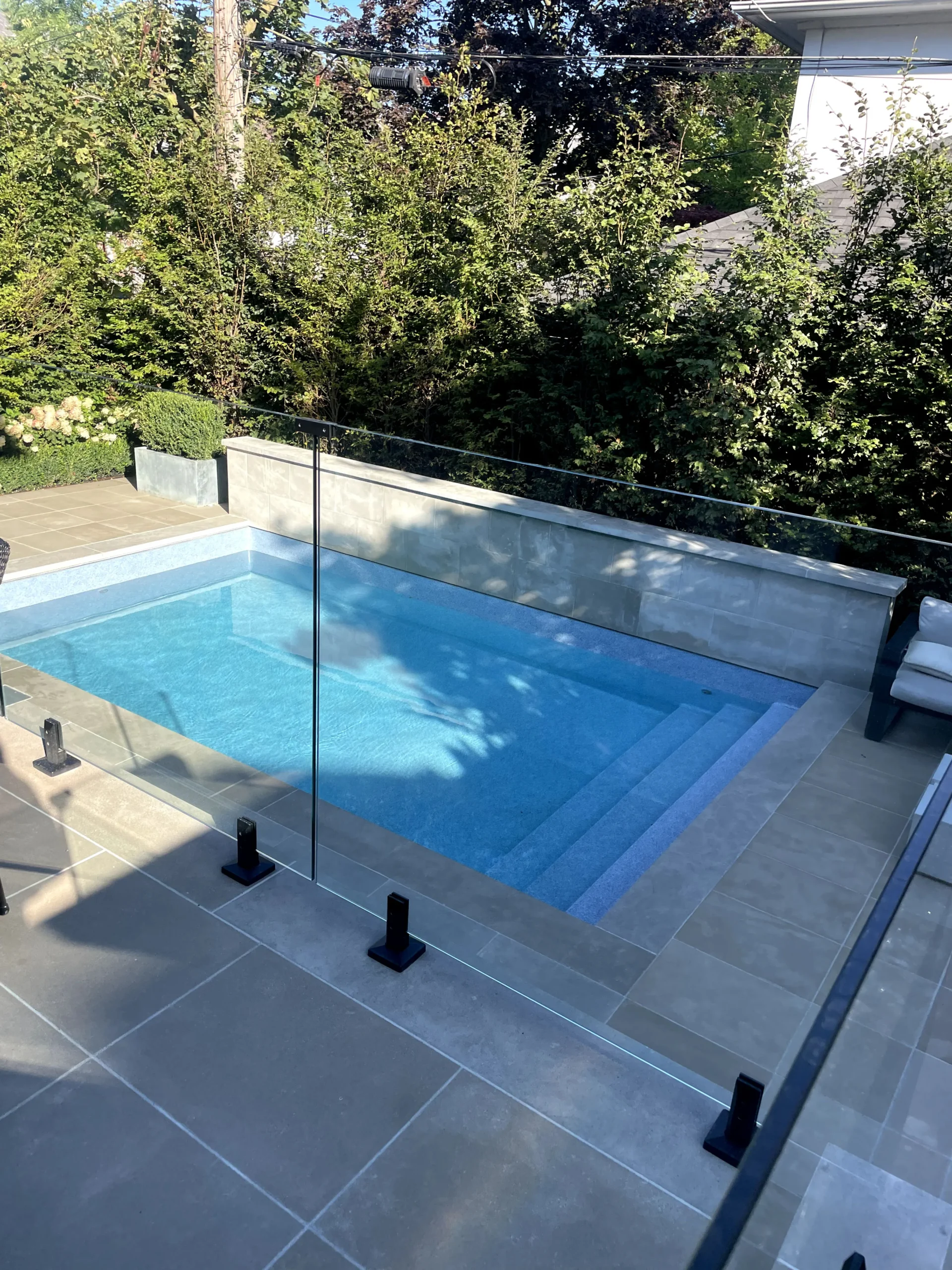
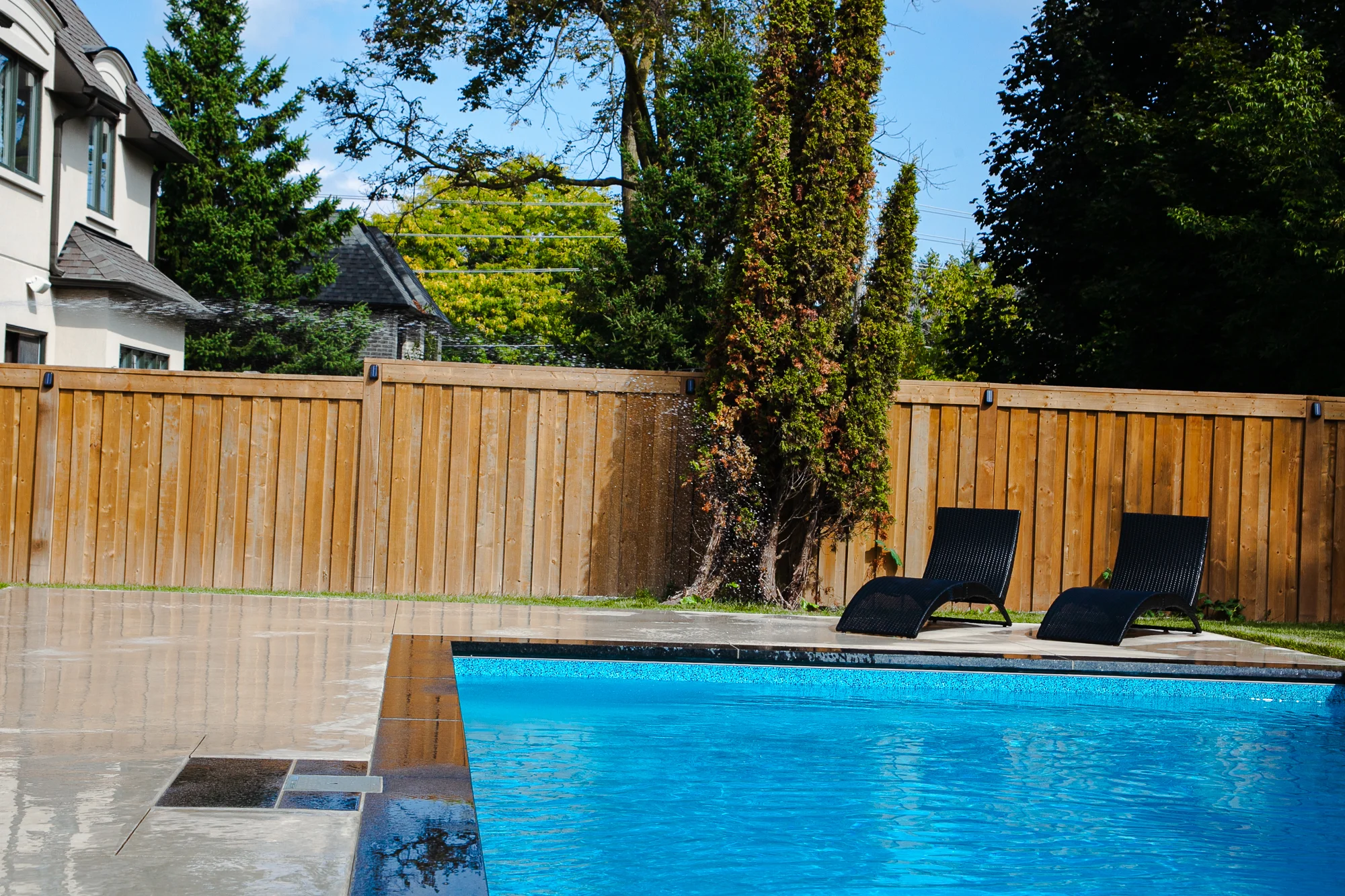
Natural stone, including limestone, travertine, granite, and slate, is one of the most visually striking options for a pool deck. Large-format slabs create a clean, contemporary look that photographs well and ages gracefully. Natural stone is cool underfoot relative to concrete on hot days, and many stones have a naturally textured surface that provides good traction when wet.
The trade-offs are higher material costs and the need for careful installation and sealing to protect against Ontario’s freeze-thaw conditions and pool chemistry. Not all natural stones are appropriate for use around pools; your contractor should specify materials rated for outdoor, wet-area use in a cold climate.
Porcelain Pavers
Porcelain pavers have become a popular choice in Toronto and South Mississauga, particularly in Port Credit, Lakeview, and Mineola, where premium finishes are in demand. They offer the look of natural stone with a more consistent appearance, excellent stain resistance, and very low maintenance. Porcelain is also non-porous, meaning it does not absorb water and is highly resistant to freeze-thaw damage when properly installed.
The key installation requirement for porcelain in a cold climate is a properly prepared and compacted base. Movement from freeze-thaw cycles in a poorly prepared base can cause pavers to shift or crack. Installed correctly, porcelain is one of the most durable pool deck options available in Ontario.
Concrete: Poured, Stamped, and Exposed Aggregate
Poured concrete is the most common pool deck surface in older Toronto backyards, and for good reason: it is practical, durable, and offers a wide range of finish options. Standard broom-finished concrete is the most affordable option. Exposed aggregate concrete, which reveals decorative stone in the surface, adds texture and visual interest while providing good traction. Stamped concrete uses textured forms to mimic the look of stone or tile at a lower material cost than the real thing.
Concrete requires a proper seal and periodic resealing to protect against pool chemistry and freeze-thaw damage. Unsealed concrete around a pool will stain and deteriorate more quickly. Cracks in concrete are inevitable over time in Ontario’s climate; the question is how significant they become and whether they affect only the surface or the underlying slab.
Interlock Pavers
Interlock concrete pavers offer practical advantages around pools, particularly where drainage is a priority. The joints between pavers allow water to drain naturally rather than pooling on the surface, which is an advantage around any pool. If a section of interlock settles or lifts from a shifting base, individual pavers can be lifted and reset without disturbing the rest of the surface, which is not possible with poured concrete.
Interlock is available in a wide range of colours, textures, and patterns and can be used to create complex, visually interesting pool surround designs. Destination Pools handles interlock installation across Toronto and South Mississauga and regularly incorporates interlock into pool deck and full backyard projects.
Composite Decking
Composite decking is used frequently around pools when a wood deck aesthetic is desired without the maintenance demands of natural wood. Composite boards are resistant to moisture, UV fading, and the chemical exposure that comes with being adjacent to a pool. They do not splinter, do not need to be stained or sealed annually, and maintain their appearance well over time.
Composite decking is particularly well-suited to raised or elevated pool decks where the pool is integrated with a structure rather than sitting at grade. Destination Pools installs custom decks across Toronto and South Mississauga and can design a deck that works seamlessly with the pool and surrounding patio.
Material Comparison at a Glance
| Material | Maintenance | Freeze-Thaw Performance | Slip Resistance | Best For |
|---|---|---|---|---|
| Natural stone | Moderate (sealing required) | Good (if properly sealed) | Good to excellent | Premium aesthetic, large lots |
| Porcelain pavers | Very low | Excellent (non-porous) | Good to excellent | Low maintenance, contemporary look |
| Poured concrete | Low to moderate (sealing) | Moderate (susceptible to cracking) | Good (textured finish) | Cost efficiency, standard applications |
| Stamped concrete | Moderate (sealing and upkeep) | Moderate | Moderate (depends on finish) | Decorative look at lower material cost |
| Interlock pavers | Low | Good (joints allow movement) | Good | Drainage, long-term flexibility |
| Composite decking | Very low | Excellent | Good | Raised decks, wood aesthetic without maintenance |
Design Ideas for Toronto Pool Decks
Beyond material choice, the layout and design of the pool deck shapes how the space functions and how it flows into the rest of the backyard.
Integrated Coping
Coping, the material that caps the pool edge, is often chosen to complement or match the surrounding deck. A consistent material from the coping through the deck creates a clean, seamless look. Contrasting the coping with the deck surface is another approach that defines the pool edge more distinctly.
Multiple Zones
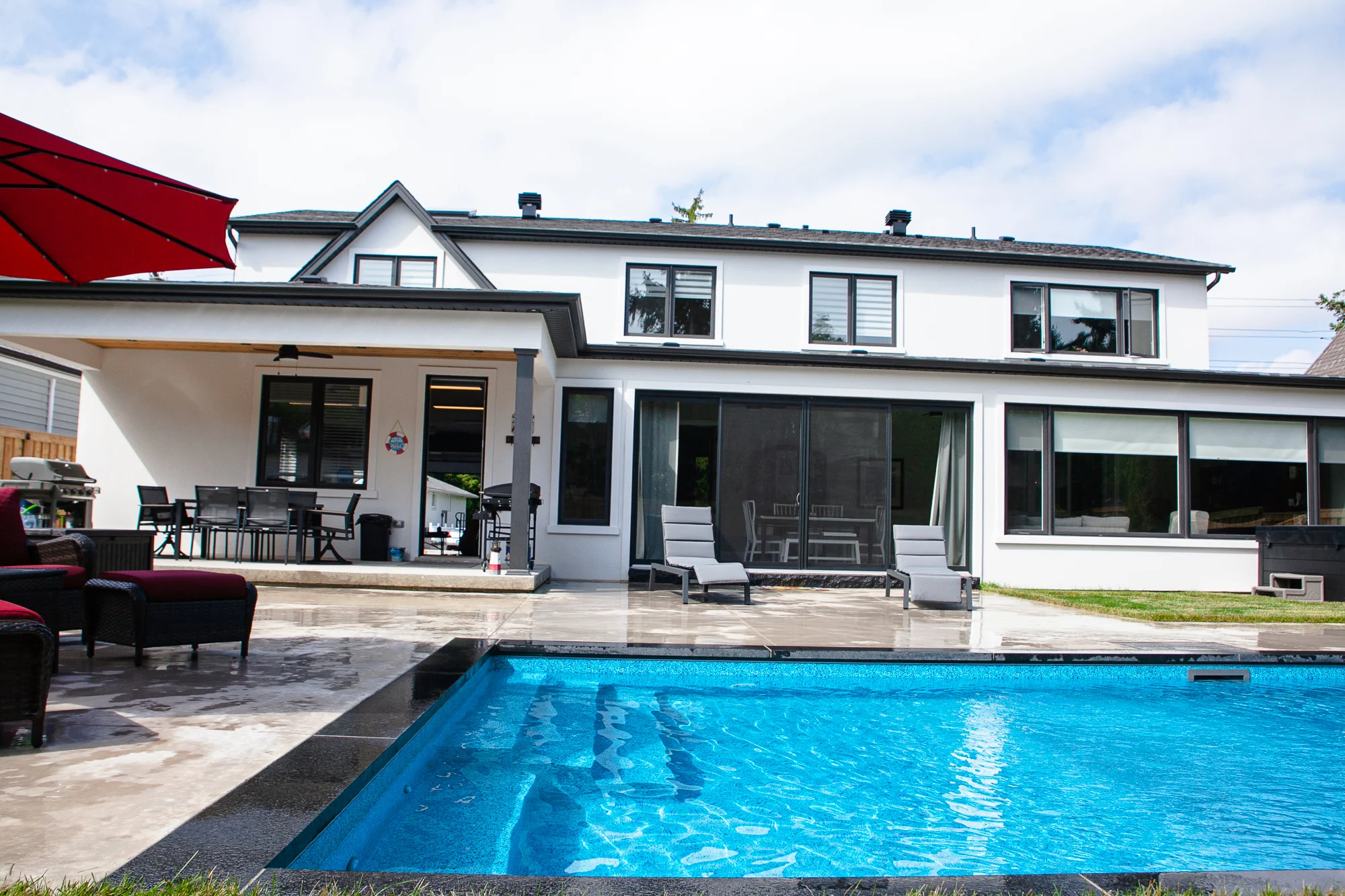
Larger pool surrounds work well when they are divided into distinct zones: a lounging area adjacent to the pool, a dining or entertaining space slightly removed, and transition areas between them. Low planters, changes in material or elevation, and built-in seating can all define zones without requiring walls or fencing.
Poolside Shade
Shade structures, from pergolas and awnings to shade sails, extend the usability of the pool deck on the hottest days and reduce direct sun on the deck surface, which helps with heat management and fading. A covered outdoor area adjacent to the pool also creates opportunities for an outdoor kitchen or dining space. Visit our backyard pool ideas gallery to see how different design elements come together in completed projects.
Planning Your Pool Deck
The pool deck is most effectively planned at the same time as the pool itself. This allows the coping, the deck material, and any surrounding landscaping to be designed as a cohesive whole rather than being retrofitted around a pool that is already in the ground. Destination Pools handles both pool installation and the surrounding deck and hardscape work across Toronto and South Mississauga, so the full scope can be managed with one contractor and one design process.
Ready to start planning? Contact Destination Pools to arrange an on-site consultation and begin designing your pool deck.
Frequently Asked Questions
What is the most popular pool deck material in Toronto right now?
Large-format porcelain pavers and natural stone have become very popular in Toronto and South Mississauga for their clean, contemporary look and low maintenance requirements. Interlock and composite decking are also in high demand depending on the design and application. The most popular choice depends on the budget, the backyard size, and the aesthetic the homeowner is after.
How much space should a pool deck have around the pool?
A minimum of 1.5 metres of clear deck space around the pool is generally recommended for safe movement, but most comfortable outdoor living spaces have significantly more. The right amount of deck depends on how you plan to use the space: loungers, furniture, and entertaining areas all require additional room beyond the minimum.
Does pool deck material affect the water temperature?
Yes, to a degree. Darker materials absorb more heat from the sun and can radiate it back, making the surface hot underfoot on a sunny summer day. Lighter colours and materials with lower thermal mass stay cooler. This is worth considering in Toronto’s summer heat, particularly for a south-facing backyard with full sun exposure.
Can I add a pool deck to an existing pool?
Yes. Adding or replacing a pool deck around an existing pool is a common project. The scope depends on the condition of the existing surround, any drainage issues that need to be addressed, and the material you choose. Destination Pools handles pool deck restoration and replacement alongside our pool restoration services.
Do I need a permit for a pool deck in Toronto?
A permit is not always required for a pool deck at grade. However, raised decks above a certain height, structures like pergolas, and any work that affects grading or drainage may require permits. Check with your contractor or the City of Toronto before starting work.
To learn more about the team behind your project, visit our About Us page or head back to the Destination Pools homepage to explore our full range of pool and landscaping services for Toronto and South Mississauga homeowners.