A Question Worth Taking Seriously
For Toronto homeowners planning a backyard pool, the choice between above ground and inground is often the first and most consequential decision in the process. Both options give you a place to swim, but they differ significantly in how they are built, what they cost, how long they last, and what they mean for your property. Neither is universally better. The right answer depends on your priorities, your budget, your lot, and how you plan to use the pool.
Destination Pools and Landscaping is a Toronto-based outdoor living company with hands-on expertise in pool installation, hardscaping, and landscaping. Our team serves homeowners across Toronto and South Mississauga, from the first design conversation through to the final finish.
This guide lays out the key differences to help you think through the decision clearly.
Above Ground Pools: What to Know
Above ground pools sit on top of the existing grade rather than being excavated into the ground. They are typically round or oval in shape and come as prefabricated kits that are assembled on site.
Advantages
- Lower upfront investment: Above ground pools are significantly less expensive to purchase and install than inground pools of comparable swimming area.
- Faster installation: A standard above ground pool can be installed in a day or two, compared to several weeks for an inground pool.
- Removable: If your circumstances change, an above ground pool can be taken down and removed, which is not possible with an inground pool.
- Simpler permit requirements: Depending on the depth and size, some above ground pools face fewer permit requirements, though a pool fence enclosure is still required in Toronto for pools holding water 89 cm or deeper.
Disadvantages
- Shorter lifespan: Most above ground pools last 10 to 15 years with proper care, compared to decades for a well-maintained inground pool.
- Limited customization: Above ground pools come in standard shapes and sizes. Custom shapes, integrated spas, tanning ledges, and water features are generally not available.
- Visual impact: Above ground pools are more visible and can be difficult to integrate into the overall backyard aesthetic, particularly on smaller lots.
- Deck integration is more complex: Adding a deck around an above ground pool is possible but adds cost and planning complexity.
- No property value benefit: Above ground pools are generally not considered to add measurable value to the property in the Toronto market.
Inground Pools: What to Know
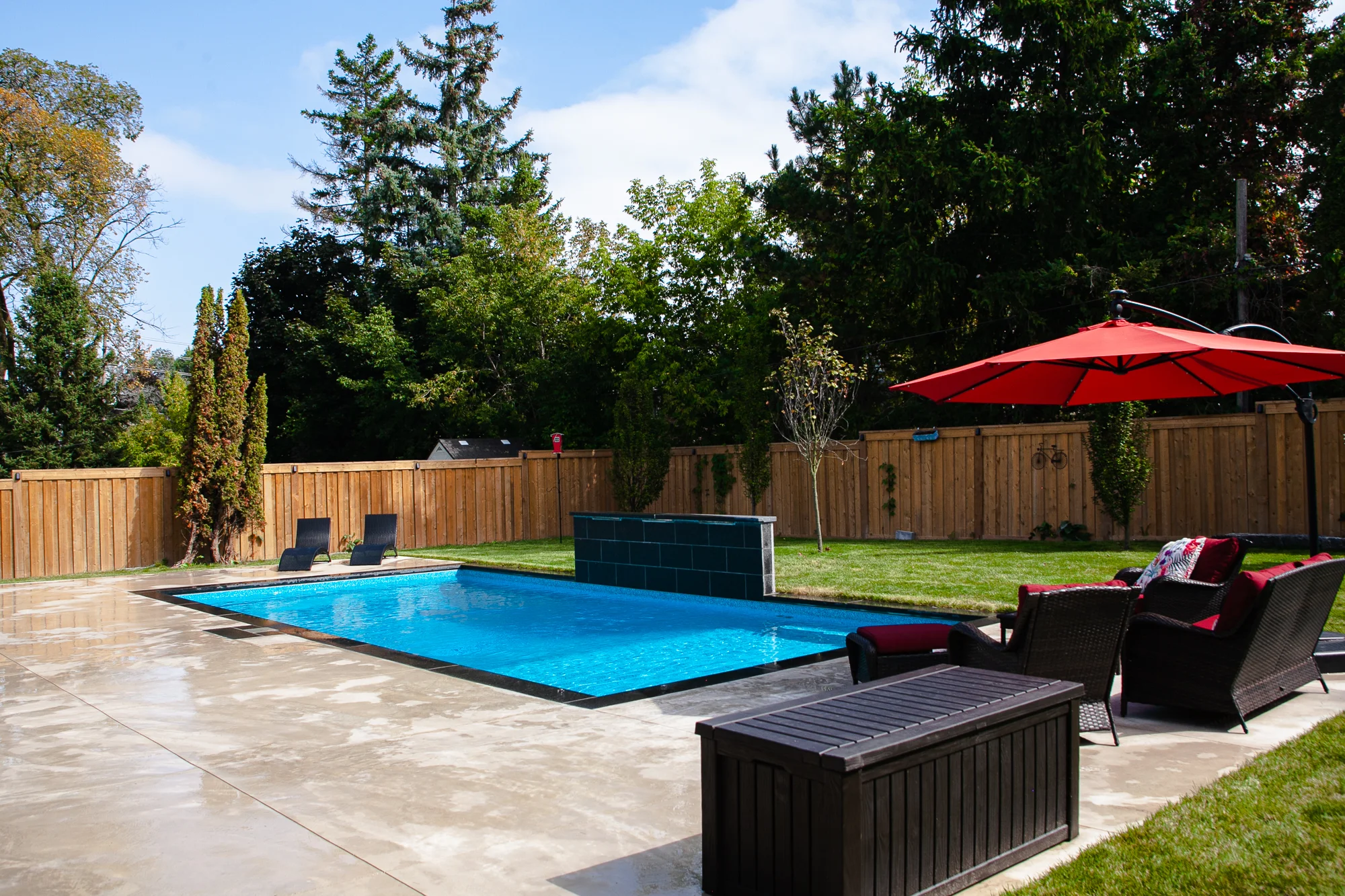
Inground pools are permanent structures excavated into the ground and built from concrete, vinyl, or fiberglass. They are a longer-term investment with a different set of trade-offs.
Advantages
- Longevity: A well-built inground pool, properly maintained, can last 30 to 50 years or more, depending on the material and the quality of the original installation.
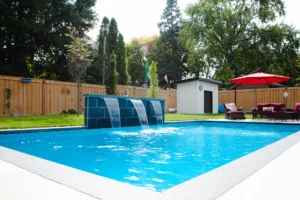
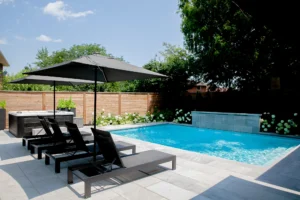
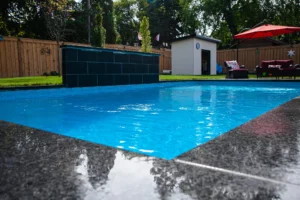
- Customization: Inground pools can be built in virtually any shape and size, with features like integrated spas, tanning ledges, vanishing edges, water features, and LED lighting all available.
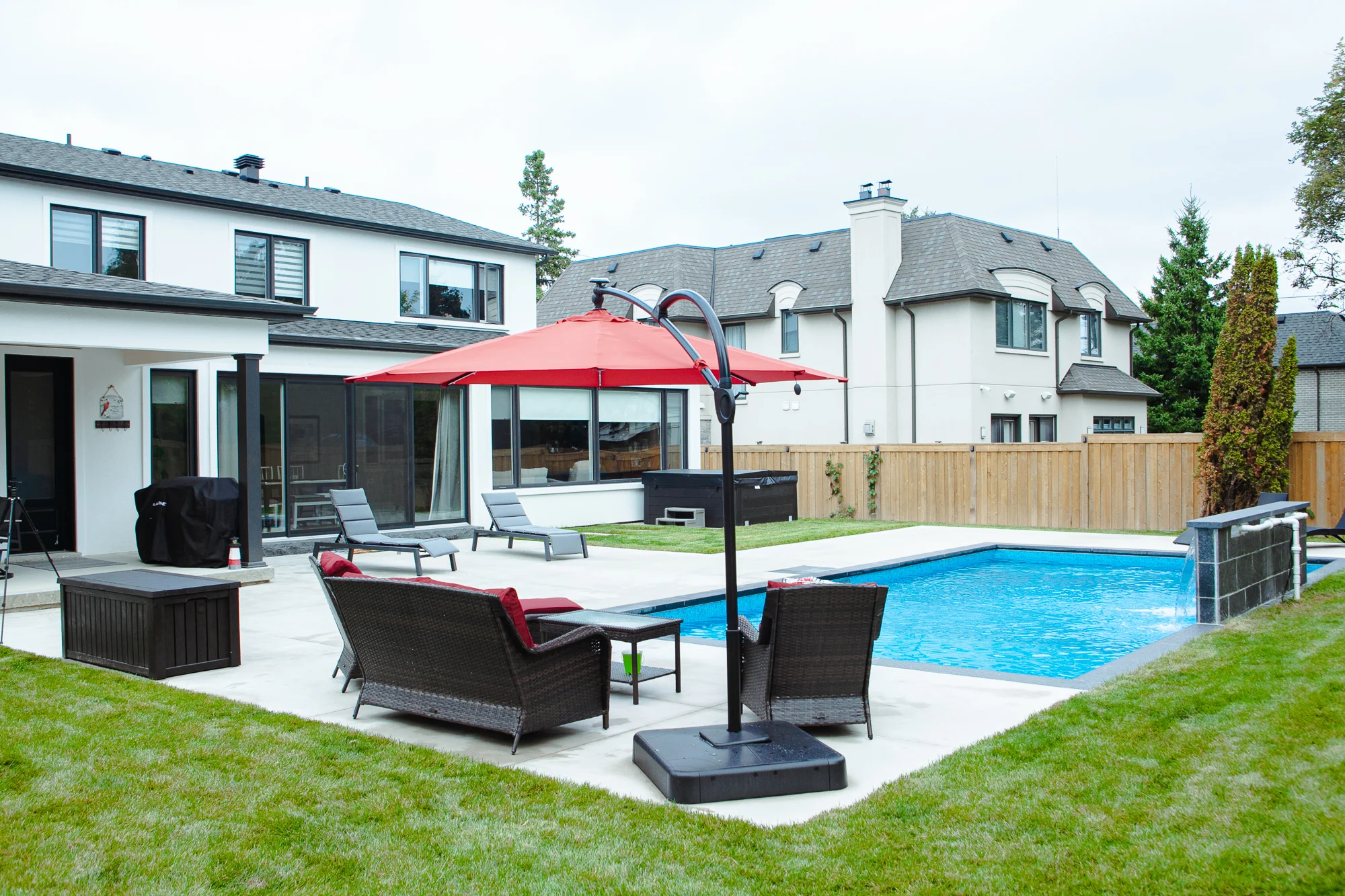
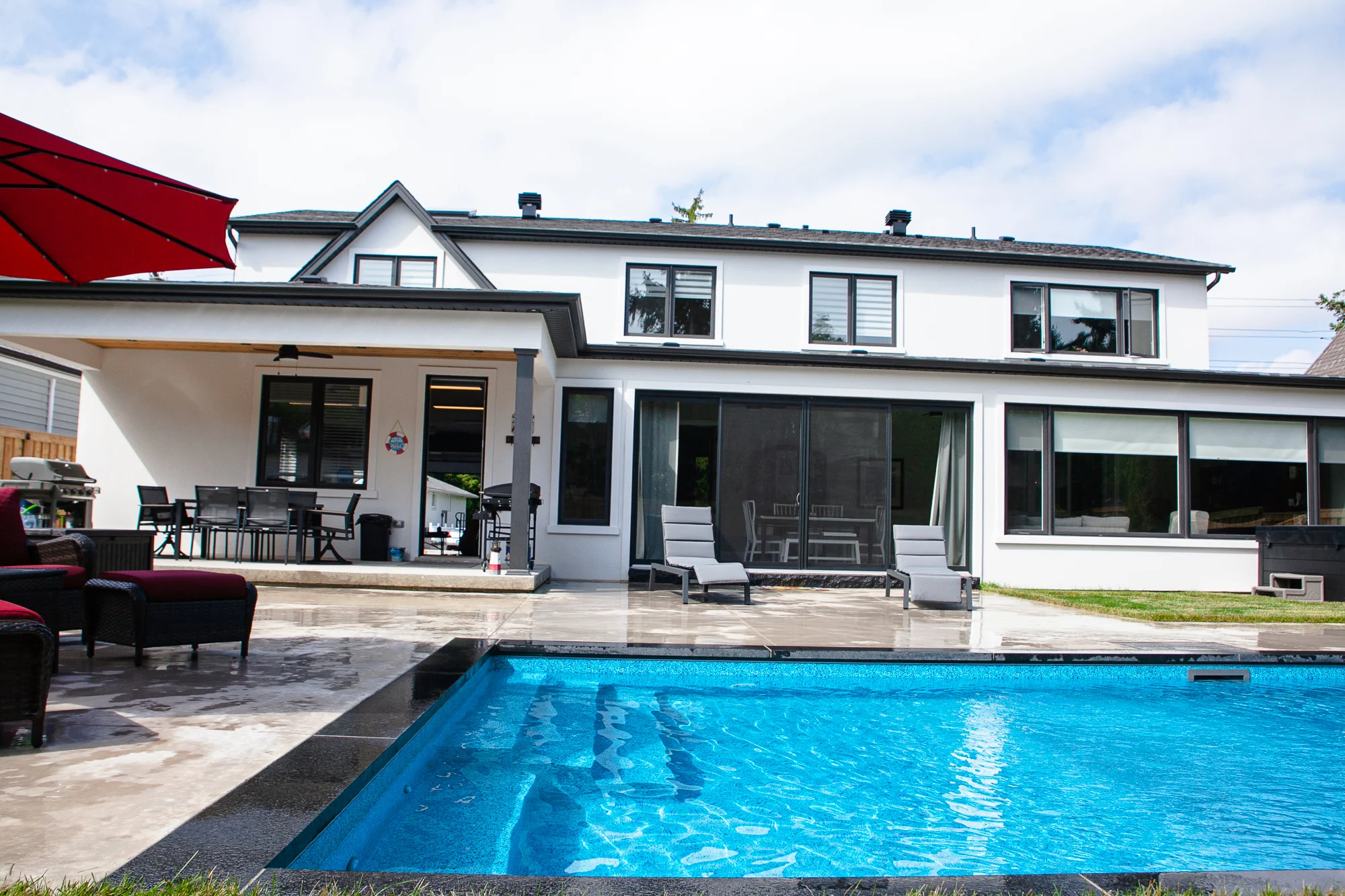
- Property integration: An inground pool becomes part of the permanent landscape of the property. Combined with a well-designed deck and landscaping, it transforms the backyard into a cohesive outdoor living space.
- Property value: In Toronto’s market, a well-executed inground pool and backyard transformation can add meaningful value to the property, particularly in neighbourhoods where pools are expected or desirable.
Disadvantages
- Higher upfront investment: Inground pools involve significantly more planning, permitting, excavation, and construction than above ground alternatives.
- Longer construction timeline: From permit approval to a filled, swimmable pool, an inground pool typically takes two to three months, sometimes longer depending on complexity and site conditions.
- Permanent: Once built, an inground pool cannot be removed without significant cost and disruption. The decision warrants careful thought before committing.
- Ongoing maintenance: Inground pools require seasonal opening and closing, regular water chemistry management, and periodic equipment servicing. The maintenance commitment is real, though manageable.
Side-by-Side Comparison
| Factor | Above Ground Pool | Inground Pool |
|---|---|---|
| Installation time | 1 to 2 days | 6 to 12 weeks |
| Lifespan | 10 to 15 years | 30 to 50+ years |
| Customization | Limited (standard kits) | Extensive (custom shapes, features) |
| Permanence | Removable | Permanent structure |
| Property value impact | Minimal to none | Can add value in Toronto market |
| Permit requirements | Fence enclosure required for deeper pools | Building permit and fence enclosure required |
| Maintenance commitment | Moderate | Moderate to higher (seasonal) |
Key Factors to Consider for Toronto Properties
Lot Size and Access
Toronto lots, particularly in the older neighbourhoods, often have narrow side yards and tight access points. Inground pool installation requires equipment access for excavation, which is worth assessing early. Above ground pools require less clearance but still need adequate space and a level base.
Intended Use
How you plan to use the pool matters. A family looking for a place to cool off on summer evenings has different needs than one planning to entertain regularly, swim laps, or create a resort-style backyard. Inground pools offer more flexibility to design around specific use cases.
Long-Term Plans
If you plan to stay in your home for many years, the long-term value of an inground pool, both in quality of life and in property terms, tends to outweigh the higher upfront investment over time. If your timeline is uncertain, an above ground pool carries less financial risk.
Making the Decision
There is no universal right answer between above ground and inground. Both serve different needs at different investment levels. The decision comes down to budget, how long you plan to stay in the home, what you want the backyard to look like, and how much customization matters to you.
If you are leaning toward an inground pool, our guide to concrete vs. vinyl vs. fiberglass pools in Toronto walks through the next layer of decisions around pool type and material. Our inground pool cost guide for Toronto covers the factors that shape the overall investment.
Destination Pools and Landscaping specializes in inground pool installation across Toronto and South Mississauga. If you are ready to explore what an inground pool would look like on your property, contact us to arrange a consultation.
Frequently Asked Questions
Do above ground pools require a permit in Toronto?
A building permit is not always required for an above ground pool in Toronto, but a pool fence enclosure is required for any pool, including above ground, that holds water 89 cm or deeper. Check with the City of Toronto or your pool contractor before installation to confirm current requirements.
Can I build a deck around an above ground pool in Toronto?
Yes, but it adds cost and planning complexity. The deck itself may require a permit depending on its size and height above grade. If you are committed to having a deck around the pool, the cost difference between a decked above ground pool and a basic inground pool becomes smaller, which changes the comparison somewhat.
Do inground pools add value to a home in Toronto?
A well-executed inground pool and backyard transformation can add value to a Toronto property, particularly in neighbourhoods where buyers expect this type of outdoor space. An above ground pool is typically viewed as personal property and removed at sale, so it generally does not contribute to the property’s assessed or market value.
How long does it take to install an inground pool in Toronto?
From permit approval to a filled and operational pool, most inground installations in Toronto take between six and twelve weeks, depending on pool type, site conditions, and complexity. The permit process itself can add several weeks before construction begins. Our post on pool construction in Toronto walks through the full process step by step.
Is an inground pool worth it in Toronto’s short summer season?
Ontario’s swim season typically runs from late May through September, giving most Toronto homeowners three to four months of active pool use per year. Many pool owners find that the enjoyment, the backyard lifestyle, and the long-term property benefit make the investment worthwhile even within a shorter season. The decision depends on how you weigh those factors against the upfront and ongoing costs.
To learn more about the team behind your project, visit our About Us page or head back to the Destination Pools homepage to explore our full range of pool and landscaping services for Toronto and South Mississauga homeowners.