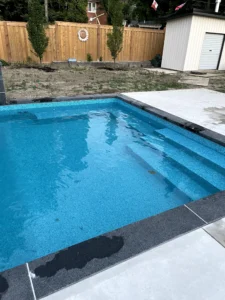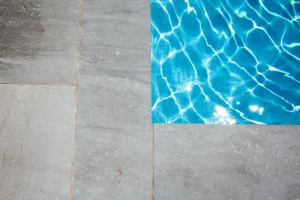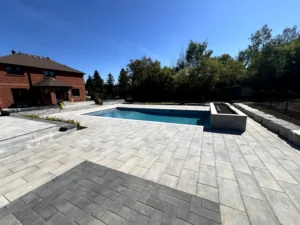
Why Concrete Pool Decks Deteriorate
Concrete is one of the most common materials used for pool surrounds in Toronto and South Mississauga, and for good reason. It is durable, customizable, and practical when first installed. But it takes a beating over time. Toronto’s freeze-thaw cycles cause concrete to expand and contract repeatedly through the winter, which opens cracks and causes surface spalling. Add in constant exposure to pool water, chlorine, UV, and heavy foot traffic, and even a well-installed deck will show significant wear after several years.
Destination Pools and Landscaping is a Toronto-based outdoor living company with hands-on expertise in pool installation, hardscaping, and landscaping. Our team serves homeowners across Toronto and South Mississauga, from the first design conversation through to the final finish.
The good news is that most concrete pool decks can be restored rather than fully replaced. Understanding your options helps you make the right call for your pool and your backyard.
Assess the Condition of Your Deck First
Not all deck damage is the same, and the right restoration approach depends on what is actually wrong. Surface wear, light staining, minor cracks, and faded colour are candidates for overlay and resurfacing solutions. Significant structural cracking, heaved or sunken sections, or active water intrusion beneath the slab require repair work before any surface treatment goes on top. Applying a new finish over an unstable base leads to early failure and a second round of work.
A contractor experienced in pool deck restoration will inspect the slab for structural integrity, drainage, and the extent of surface damage before recommending an approach. If you have noticed other warning signs around your pool beyond just the deck, it is worth assessing the pool shell and equipment at the same time.
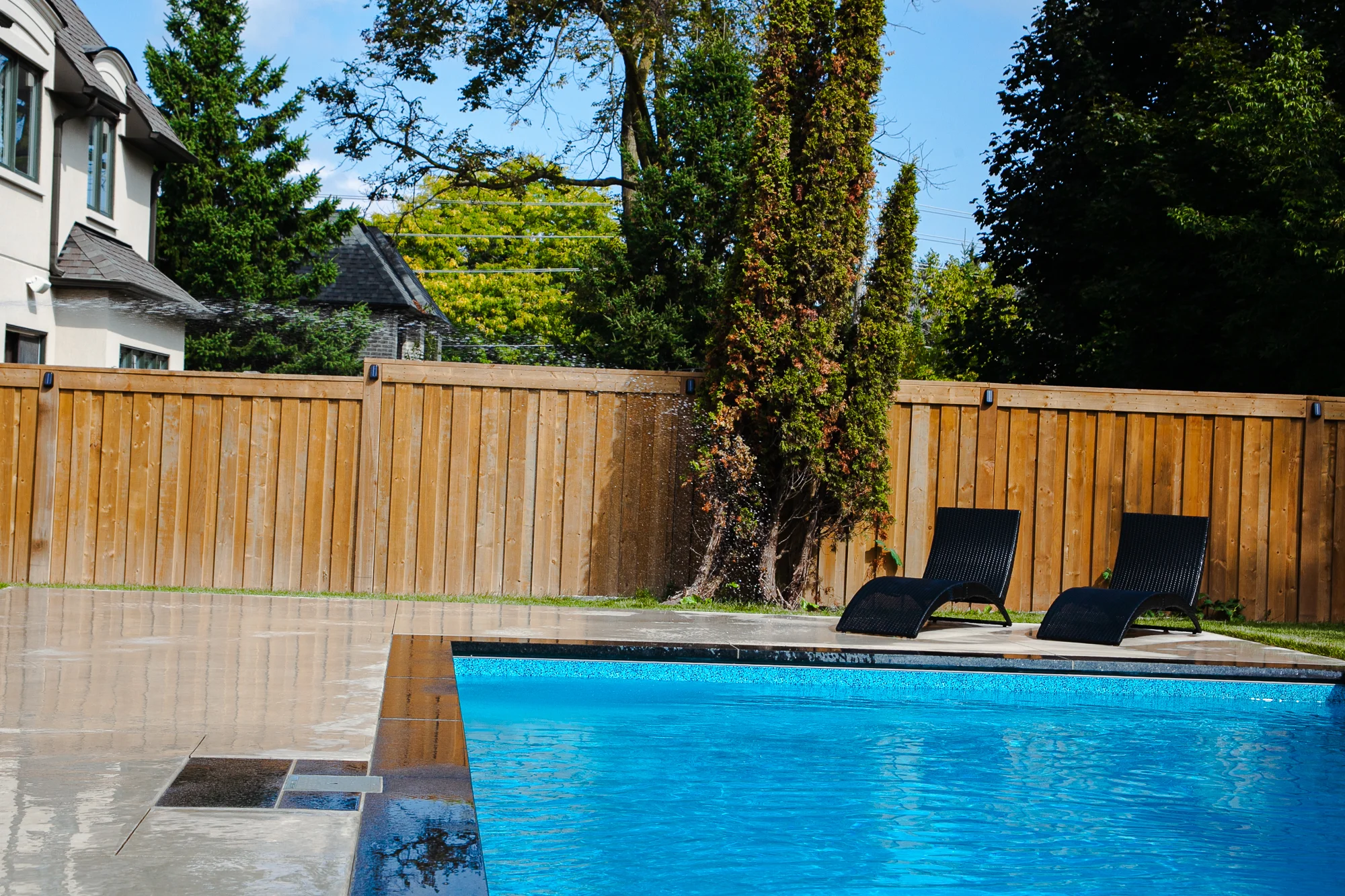
Concrete Pool Deck Restoration Options
There are several approaches to restoring a concrete pool deck, ranging from surface treatments to full replacement. Each has its place depending on the condition of the existing slab and the result you are after.
Concrete Resurfacing and Overlays
A concrete overlay involves applying a thin layer of new material over the existing slab. This is a practical option when the underlying concrete is structurally sound but the surface is worn, stained, or cracked at a cosmetic level. Overlays can be smooth, textured, or stamped to create a decorative pattern. They restore the appearance of the deck without the disruption and cost of breaking out and replacing the slab entirely.
Slip resistance is an important consideration for any pool deck. A textured overlay or one with an anti-slip additive is a sensible choice in an area that will regularly be wet.
Stamped Concrete Overlays
For homeowners who want a more decorative result, a stamped overlay creates the look of natural stone, wood, or tile on top of the existing slab. This option suits backyards where the pool surround has become an eyesore and a visual upgrade is as much of a priority as the structural fix. Stamped overlays can be tinted to complement the home exterior, the pool finish, or existing landscaping.
Full Concrete Replacement
When the existing slab is beyond resurfacing, it is removed and replaced entirely. This opens up the full range of finish options: new poured concrete in smooth, exposed aggregate, or stamped form; large-format natural stone; or porcelain pavers. Full replacement adds to the scope but gives you complete control over the finished result and eliminates any residual issues from the old slab. If the deck layout also needs to change, replacement is the only option that allows for that.
Large-Format Stone and Porcelain Pavers
Large-format paving stones and porcelain pavers have become a popular choice for pool decks in Toronto and South Mississauga, particularly in the Port Credit, Lakeview, and Mineola neighbourhoods where premium finishes are in high demand. These materials pair well with a newly restored pool interior, require minimal maintenance, and hold up well through Ontario winters when properly installed on a prepared base.
Interlock Pool Surrounds
Interlock pavers are another strong option, particularly where drainage is a concern. Unlike poured concrete, interlock allows individual units to be lifted and reset if the base shifts over time, making it a practical long-term choice. The joints between pavers also provide natural drainage, which is an advantage around any pool. Destination Pools handles interlock installation across Toronto and South Mississauga and can incorporate interlock seamlessly into a pool deck project.
| Option | Best For | Existing Slab Required | Finish Options |
|---|---|---|---|
| Concrete overlay | Surface wear, minor cracks, fading | Structurally sound | Smooth, textured, stamped |
| Stamped overlay | Decorative upgrade over existing slab | Structurally sound | Stone, tile, wood patterns |
| Full concrete replacement | Structural failure or full redesign | Removed and replaced | Smooth, exposed aggregate, stamped |
| Large-format stone or porcelain | Premium finish, complete replacement | Removed and replaced | Natural stone, porcelain, travertine |
| Interlock pavers | Long-term durability, drainage, flexibility | Removed and replaced | Wide range of colours and patterns |
The Restoration Process: What to Expect
Concrete pool deck restoration follows a clear sequence regardless of which option you choose.
Step 1: Assessment and Scope Definition
A qualified contractor inspects the deck to determine what is cosmetic, what is structural, and which approach is appropriate for your specific situation. This is where the right solution gets identified and a quote is developed.
Step 2: Surface Preparation
Whether you are resurfacing or replacing, preparation is critical. For overlays, the existing surface is cleaned, cracks and voids are filled, and the slab is primed to accept the new material. For full replacement, the old concrete is broken out and removed, and the base is prepared before new material goes down.
Step 3: Structural Repairs
Any structural cracks, sunken sections, or drainage issues are addressed before the new surface goes on. Skipping this step compromises the longevity of whatever finish is applied on top.
Step 4: Application or Installation
The chosen material is applied or installed. For overlays this means pouring and finishing the new layer, then applying texture or stamping as specified. For replacement it involves forming, pouring, and finishing new concrete, or setting pavers on a prepared base.
Step 5: Curing and Sealing
Concrete and overlays require adequate cure time before the pool is opened or the deck returns to use. Sealing the finished surface protects against chlorine, UV, and staining, and is typically part of a complete restoration package.
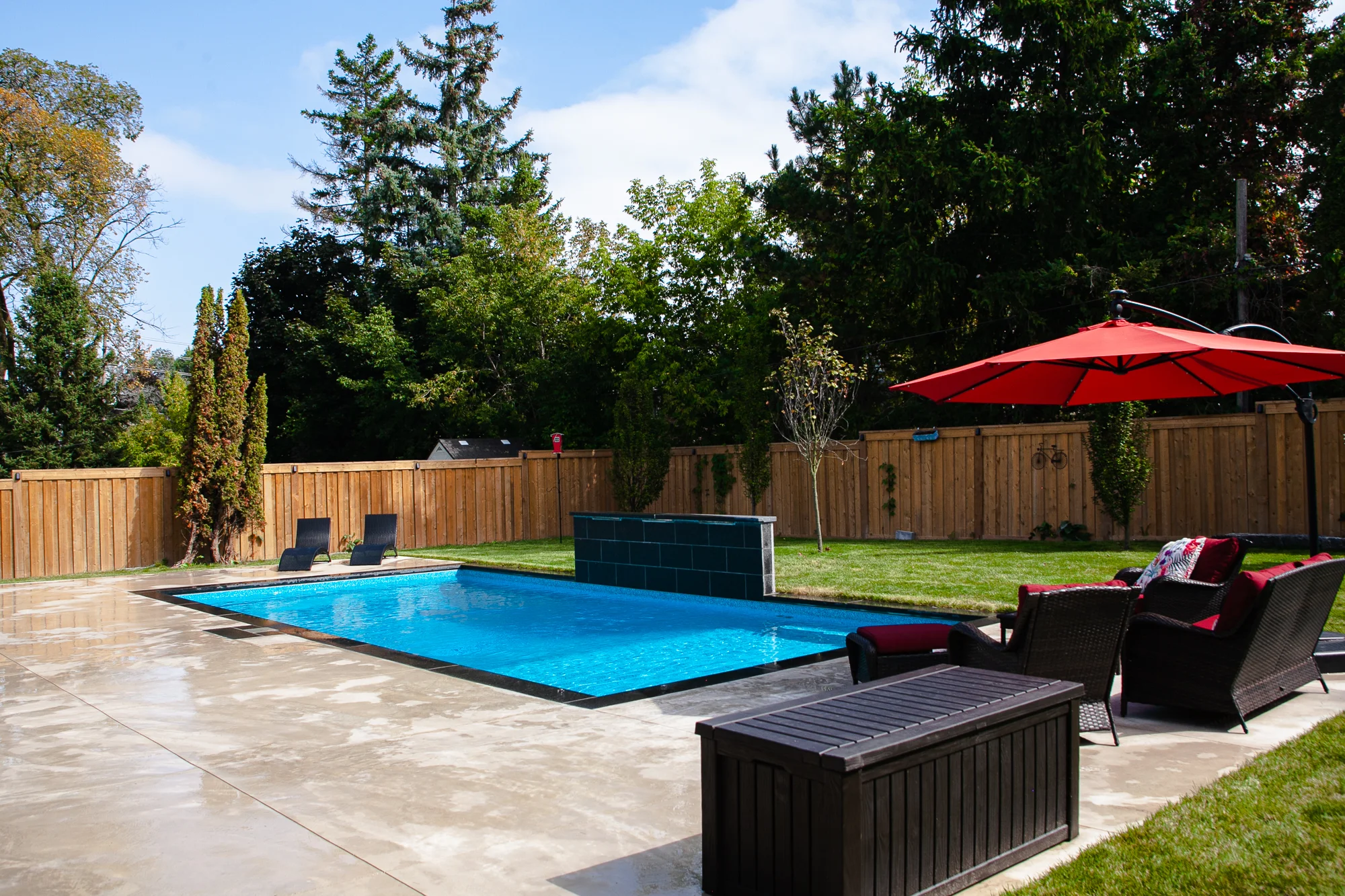
What Toronto’s Climate Demands of a Pool Deck
Toronto’s climate makes material and finish selection more consequential than in warmer regions. Any surface around a pool in Ontario needs to handle freeze-thaw cycling, road salt tracked in on footwear, and heavy summer UV exposure in addition to the usual pool chemistry. Not all overlay products or sealers are rated for this range of conditions, so specifying materials appropriate to Ontario winters is important.
Drainage is another key consideration. Pool decks in Toronto and South Mississauga need to move water away from the pool, the house foundation, and neighbouring properties. If the existing deck has drainage issues, a restoration is the opportunity to correct them at the same time.
Combining Pool Deck and Pool Interior Restoration
If the pool interior also needs attention, combining both projects with one contractor is a practical approach. The pool is already drained for interior resurfacing work, which makes deck access easier and avoids a second mobilization. Coordinating the two means the finished pool and deck complement each other visually, and the disruption to your backyard is contained to a single project window.
Destination Pools handles full pool restoration in Toronto and South Mississauga, including interior resurfacing and pool deck work. Our team can assess both the pool shell and the surrounding deck in a single visit and give you a clear picture of what both projects involve. To explore what a complete backyard transformation can look like, visit our backyard pool ideas gallery.
Ready to get started? Contact Destination Pools to arrange an on-site assessment and discuss the right approach for your pool deck.
Frequently Asked Questions
Can I resurface a pool deck without replacing the concrete?
Yes, in many cases. If the existing slab is structurally sound with no major heaving, sinking, or active cracking, a concrete overlay or resurfacing product can be applied over top. A contractor will assess the slab condition first to confirm whether an overlay is viable or whether full replacement makes more sense.
How long does a concrete pool deck restoration take?
Timeline depends on the scope and the approach. An overlay on an existing slab can be completed in a few days, plus cure time before the area returns to full use. Full slab replacement takes longer, typically one to two weeks depending on the size and complexity of the deck. Your contractor should provide a clear timeline as part of the quote.
What is the most durable surface for a pool deck in Toronto?
Durability in Toronto’s climate comes down to material quality, proper installation, and sealing. Large-format natural stone, quality porcelain pavers, and properly installed interlock all perform well when the base is correctly prepared. For concrete-based options, using a product and sealer rated for freeze-thaw conditions is important. A contractor familiar with Ontario winters can guide you toward the right choice for your situation.
Does a pool deck restoration require a permit in Toronto?
In most cases, resurfacing or replacing a pool deck does not require a building permit. However, if the work changes grading around the pool, involves structural modifications, or affects drainage in a way that impacts adjacent properties, a permit may be required. Your contractor can advise based on the specific scope of your project.
How do I maintain a restored concrete pool deck?
Regular cleaning with a pool-safe cleaner, prompt attention to staining from leaves or pool chemicals, and resealing on the schedule recommended for your specific surface type are the main maintenance tasks. Avoiding abrasive tools and harsh chemicals preserves the finish. Your contractor can provide specific maintenance guidance based on the material used in your restoration.
To learn more about the team behind your project, visit our About Us page or head back to the Destination Pools homepage to explore our full range of pool and landscaping services for Toronto and South Mississauga homeowners.