If you own a concrete inground pool, resurfacing is not a question of if, it is a question of when. Unlike vinyl liner pools or fiberglass pools, which have their own maintenance cycles, concrete pools rely on a plaster or aggregate interior finish that erodes over time. In Ontario’s climate, the combination of UV exposure, chemical use, and the stress of seasonal opening and closing accelerates that wear.
What Is Pool Resurfacing?
Pool resurfacing involves removing the deteriorated interior finish from a concrete pool shell and applying a new one. The process typically includes draining the pool, pressure washing and preparing the shell, repairing any cracks or structural issues, and applying the new finish material. Depending on the finish type chosen, curing times vary before the pool can be refilled and returned to use.
It is worth noting that resurfacing applies specifically to concrete (gunite and shotcrete) pools. Vinyl liner pools undergo a different process when their interior is worn, specifically liner replacement, and fiberglass pools require gel coat restoration rather than traditional resurfacing. For a full comparison of how the three pool types differ in maintenance and long-term ownership, see our post on concrete vs. vinyl vs. fiberglass pools in Toronto.
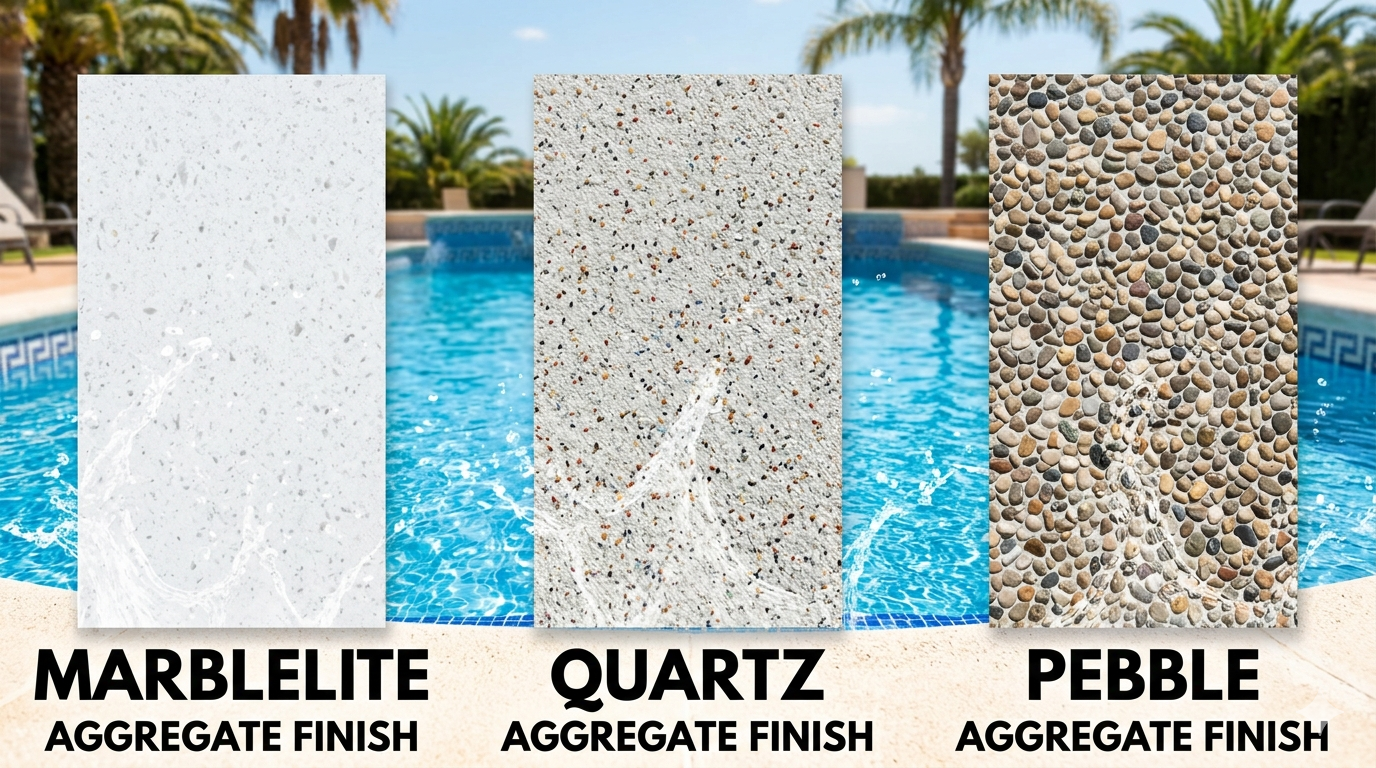
Marbelite (Standard White Plaster)
Marbelite, also called white plaster, is the original concrete pool finish and has been used in Ontario pools for decades. It is a blend of white Portland cement and marble dust, applied by hand trowel directly to the prepared pool shell at a thickness of roughly 3/4 inch. When newly applied, marbelite produces a smooth, bright white surface that gives pool water a clean, classic blue appearance.
Advantages of marbelite:
- The most straightforward finish to source and install
- Produces a smooth, comfortable surface underfoot
- Delivers the classic bright-white pool appearance many homeowners recognize
- Well-understood by pool contractors across the GTA
Limitations of marbelite:
- Softer than aggregate finishes, making it more susceptible to surface etching and staining
- More sensitive to chemical imbalances: aggressive water (low pH or alkalinity) dissolves it relatively quickly
- Prone to rough patches and discolouration over time as the marble dust erodes and exposes the Portland cement underneath
- Shorter expected lifespan than quartz or pebble options
Typical lifespan: 7 to 15 years, with consistent water chemistry maintenance.
Quartz Aggregate Finish
Quartz aggregate finish takes the base plaster formula and blends in small quartz crystals throughout the mix. The result is a harder, denser surface than standard plaster, with a slightly textured appearance and a broader palette of colour options. Quartz finishes are available in a range of tones from white through blue-grey, beige, and darker charcoal shades, which changes the perceived colour of the pool water significantly.
Advantages of quartz aggregate:
- Harder and more durable surface than standard marbelite
- Better stain resistance, particularly to organic and mineral staining
- Wider colour range, allowing homeowners to move away from the traditional white finish
- More forgiving with minor chemical fluctuations than plain plaster
- Longer expected lifespan than standard plaster
Limitations of quartz aggregate:
- Slightly more abrasive texture underfoot than smooth marbelite, particularly noticeable in coarser blends
- Higher material cost than standard plaster
Typical lifespan: 10 to 20 years with proper maintenance.
Pebble Aggregate Finish
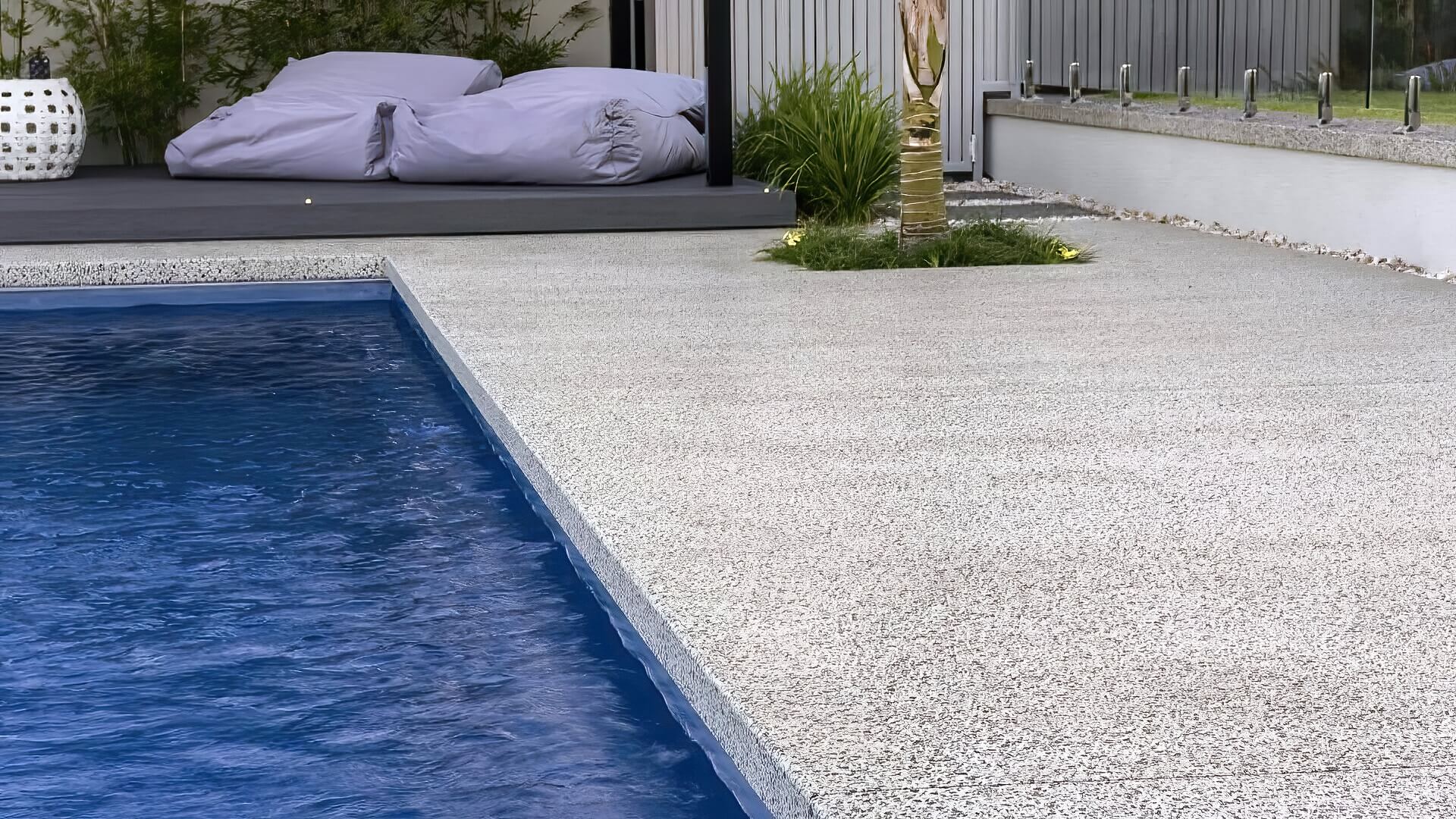
Pebble aggregate finishes embed small, smooth river pebbles or crushed stone pieces into a cement base. These finishes are sometimes referred to by brand names in the industry, such as Pebble Tec or Pebble Fina, though the general product category is widely available. The surface has a natural, textured appearance with a look that reads more like stone than plaster and produces rich, jewel-toned water colours that many homeowners prefer to the traditional blue-on-white appearance.
Advantages of pebble aggregate:
- The most durable of the three finish categories
- Highly resistant to staining, chipping, and surface erosion
- Handles chemical fluctuations better than both plaster and quartz finishes
- Wide range of colour and texture options, from fine pebble for a smoother feel to larger aggregate for a bolder look
- Natural stone appearance that reads well in contemporary backyard designs
Limitations of pebble aggregate:
- The most textured surface of the three, which some swimmers find rough underfoot, particularly finer-soled children
- Typically carries the highest material and installation cost of the three options
- Requires careful installation technique; improperly applied pebble finishes can have exposed, sharp aggregate edges
Typical lifespan: 15 to 25 or more years with consistent maintenance and proper winterization.
Side-by-Side Comparison
| Feature | Marbelite (Plaster) | Quartz Aggregate | Pebble Aggregate |
|---|---|---|---|
| Surface texture | Smooth | Lightly textured | Textured to rough |
| Durability | Moderate | Good | Excellent |
| Stain resistance | Low to moderate | Good | Excellent |
| Colour range | White / off-white | White through charcoal | Wide range, natural tones |
| Chemical sensitivity | High | Moderate | Low |
| Typical lifespan | 7 to 15 years | 10 to 20 years | 15 to 25+ years |
| Relative cost | Lower | Mid-range | Higher |
What About Vinyl Liner and Fiberglass Pools?
The three finish options above apply specifically to concrete pools. If you have a vinyl liner pool, the equivalent renewal process is liner replacement. Liners come in a wide range of patterns and colours, and a replacement delivers a similar visual transformation to resurfacing a concrete pool. If you have a fiberglass pool, the process is gel coat restoration or re-coating, which addresses surface erosion and blistering without removing the shell.
If you are not certain which type of pool you have, or if you are researching pool types for a future build, our guide to concrete, vinyl, and fiberglass pools in Toronto walks through the structural differences and the maintenance considerations of each.
Factors That Affect How Long a Resurfaced Pool Lasts in Ontario
The finish type is one factor in longevity, but it is not the only one. Several other variables affect how long a resurfaced pool holds up in the Toronto and Mississauga climate:
Water chemistry is the single biggest factor in surface longevity. Aggressive water with low pH and low alkalinity dissolves plaster and etches aggregate finishes steadily. High calcium levels produce scaling that deposits on the surface and is difficult to remove. Consistent water balance testing and adjustment is the most important thing a pool owner can do to get full life out of a new surface finish.
Winterization quality matters significantly in Ontario. Pools that are improperly closed in the fall, with insufficient anti-freeze protection or water left in plumbing lines, experience accelerated surface damage from freeze-thaw cycling. The expansion of freezing water in pores and surface cracks works against even the most durable finishes over time.
Application quality at the time of resurfacing affects durability as much as material choice. Improper surface preparation, incorrect water-to-mix ratios, or rushing through the curing period can compromise the adhesion and integrity of any finish type. Choosing an experienced resurfacing contractor matters.
Usage and cleaning practices also play a role. Abrasive cleaning tools, high bather loads, and physical impact from diving or pool toys can contribute to localized surface wear over time.
Frequently Asked Questions
How long does pool resurfacing take in Toronto?
The process typically takes one to two weeks from draining to refill, depending on the finish type chosen and any shell repairs required. Marbelite cures faster than aggregate finishes. The pool needs to remain out of service through the curing period after refilling as well, usually an additional few days while the water chemistry is balanced against the new surface.
Can I change the colour of my pool when I resurface?
Yes. Resurfacing is the natural opportunity to update the pool’s colour. Moving from white marbelite to a grey or blue quartz finish, or to a darker pebble aggregate, is common and can dramatically change the visual character of the pool and the water colour it produces.
Does resurfacing fix cracks in a concrete pool?
Surface resurfacing covers minor surface crazing and cosmetic cracking. Structural cracks in the shell need to be repaired before the new finish is applied. A qualified resurfacing team will assess the shell during preparation and address any structural issues as part of the process. Applying a new finish over an unrepaired structural crack will not stop the crack from progressing.
Is there a best time of year to resurface a pool in Ontario?
Late spring and early fall are typically the preferred windows. The pool needs to be drained, so you want temperatures above freezing throughout the process. Spring resurfacing lets you have the pool ready for the swim season. Fall resurfacing can work well for pools being closed for winter, as long as the new surface has adequate time to cure before temperatures drop.
Which resurfacing option is most popular in the Toronto area?
Quartz aggregate finishes have grown significantly in popularity across the GTA over the past decade, largely because they offer a meaningful upgrade in durability and colour range over standard plaster without the premium of full pebble aggregate. Pebble finishes are increasingly requested for renovation projects where the homeowner is making a broader investment in the backyard. The best choice depends on your specific pool, goals, and how long you plan to stay in the home.
Ready to explore your options? Contact Destination Pools and Landscaping to schedule a free pool restoration and resurfacing consultation in Toronto or South Mississauga. We will assess your existing surface, review your finish options, and help you make the right call for your pool.