Understanding what drives the complexity of an outdoor kitchen project helps you have better conversations with a contractor and make decisions that align with how you actually plan to use the space.
1. Layout and Size
The footprint of an outdoor kitchen is the starting point. A simple linear counter with a built-in grill and some storage occupies a different amount of space and labour than an L-shaped or U-shaped kitchen with a bar seating area, prep counter, and dedicated appliance zones.
Common layout configurations include:
| Layout | Description | Best For |
|---|---|---|
| Linear (straight run) | Single counter along one wall or edge; grill and a few accessories | Compact spaces; straightforward setups with lower complexity |
| L-shaped | Two counter runs at a corner; separates cooking and prep or serving areas | Mid-size patios; better workflow for entertaining |
| U-shaped or island with seating | Wraps around on three sides or includes a bar counter facing guests | Larger patios; designed for social cooking and guest interaction |
2. Appliances and Equipment
The appliances selected for an outdoor kitchen are one of the primary variables in determining the overall scope of the project. Entry-level and premium versions of the same appliance type perform the same core function but differ significantly in materials, build quality, and features. Outdoor appliances need to be rated for outdoor use and capable of handling Toronto’s climate, including cold winters.
| Appliance | Considerations |
|---|---|
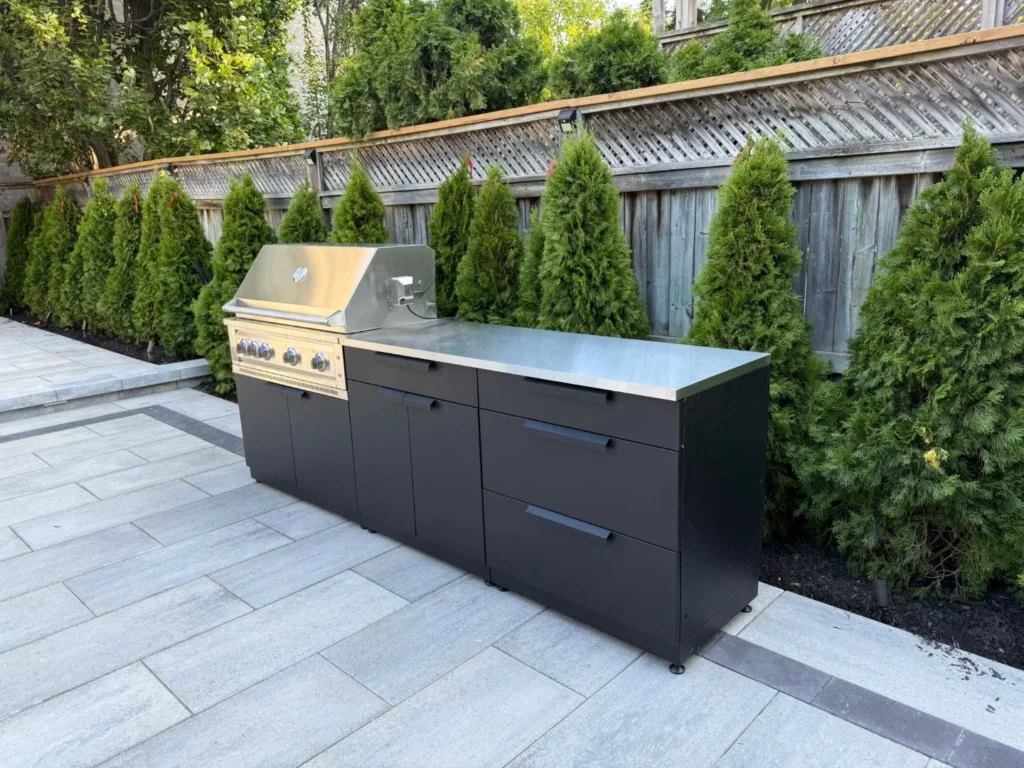
| Built-in grill | BTU output, number of burners, material (cast iron vs. stainless steel grates), brand quality; the most common anchor appliance |
| Side burner | Useful for sauces and side dishes; often paired with the grill |
| Outdoor refrigerator | Must be rated for outdoor temperature ranges; useful for keeping drinks and prep ingredients accessible |
| Pizza oven | Gas or wood-fired; adds a distinctive cooking function and visual anchor to the kitchen |
| Sink with running water | Adds convenience for prep and cleanup; requires water and drain connections, which affects installation complexity |
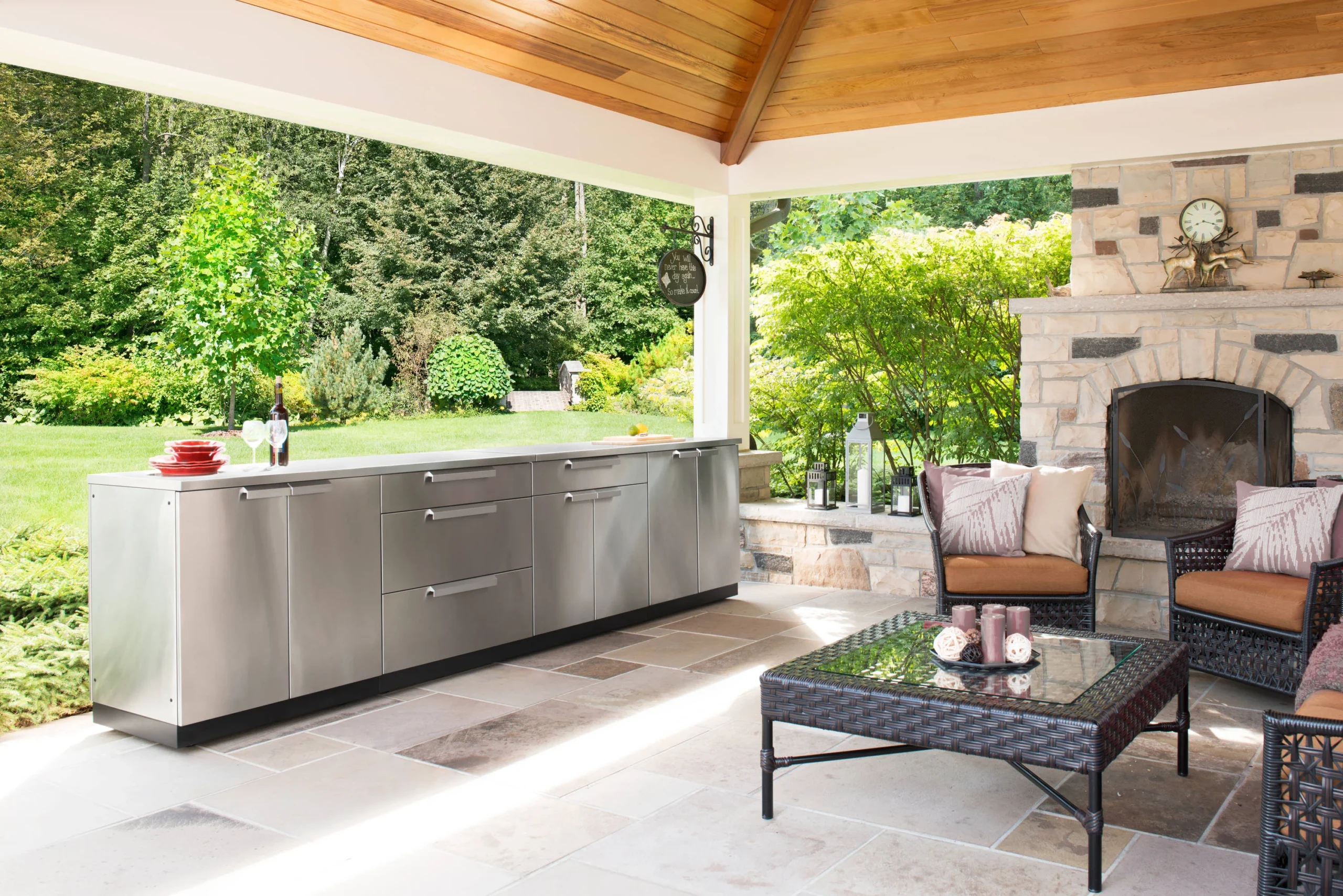
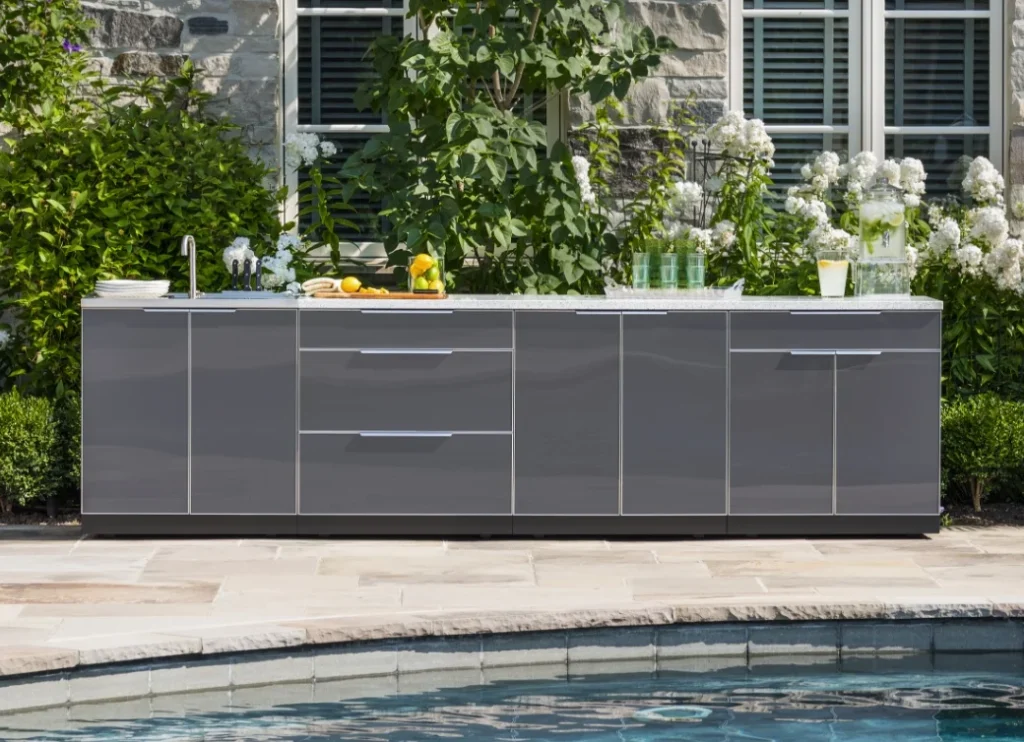
| Under-counter storage and drawers | Built-in stainless or powder-coated aluminum doors; keeps the area organized and weatherproofed |
3. Counter and Structure Materials
The counter surface and cabinet structure affect both the appearance and the long-term durability of the outdoor kitchen. Materials need to handle Toronto’s freeze-thaw cycles, UV exposure, and moisture, so outdoor-rated options are essential.
| Material | Appearance | Durability in Toronto Climate |
|---|---|---|
| Porcelain tile countertop | Clean, range of colours and finishes | Very good; frost-resistant grades available |
| Natural stone (granite, quartzite) | Premium, distinctive look | Excellent; dense stone performs well outdoors with sealing |
| Concrete countertop | Custom forms and finishes | Good with proper mix and sealing; can crack without proper reinforcement |
| Stucco or stone veneer cabinet base | Integrated with the backyard’s hardscaping aesthetic | Very good when properly waterproofed and detailed |
| Powder-coated aluminum frame | Clean, modern; often used with modular systems | Excellent; rust-free and handles temperature variation well |
4. Utilities: Gas, Electrical, and Plumbing
Running utilities to an outdoor kitchen is a necessary part of most full outdoor kitchen installations. The complexity and involvement depends on the distance from the house, what’s already accessible, and which utilities the kitchen requires.
Gas line extension for a built-in grill requires a licensed gas fitter and TSSA inspection in Ontario. Electrical work for outlets, lighting, and appliances must be done by a licensed electrician and inspected by the Electrical Safety Authority. Plumbing for a sink requires drain connections, which may involve connecting to the home’s drainage system. These are non-negotiable requirements for any outdoor kitchen in Ontario, and a reputable contractor coordinates all of it as part of the project.
5. Cover and Shade Structure
An outdoor kitchen that’s protected from direct sun and rain gets used more often and has a longer functional lifespan. Common cover options include a pergola integrated into the kitchen structure, a solid-roof shade structure, or a retractable awning. The cover is often planned as part of the initial build because attaching it post-construction is more complicated.
A pergola over the kitchen creates definition for the entertaining area and provides a place to mount lighting. Fans, misters, and heaters can also be mounted to extend the usable season into spring and fall, which is valuable in Toronto’s climate.
6. Integration With the Backyard
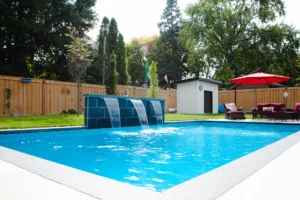
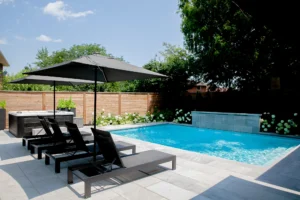
An outdoor kitchen is most valuable when it’s designed as part of a complete backyard, not as a standalone element dropped into a corner. How it connects to a deck, relates to a pool, and integrates with the surrounding landscaping determines how well the space works and how finished it looks.
Planning the outdoor kitchen as part of the broader backyard design means the materials, levels, and traffic flow all work together. The backyard ideas gallery shows completed projects where outdoor kitchens were integrated into full backyard transformations.
Frequently Asked Questions
Do outdoor kitchens add value to a home in Toronto?
A well-built outdoor kitchen that is integrated with quality hardscaping and a complete backyard environment does add value to a Toronto home. Buyers in the Toronto market respond positively to functional outdoor living spaces, particularly those that are well-maintained and extend the usable area of the property.
Can an outdoor kitchen be used year-round in Toronto?
Most outdoor kitchens in Toronto are used through the spring, summer, and fall. With a cover, outdoor heaters, and proper preparation before winter, the season can be extended. Built-in appliances need to be properly winterized when not in use to protect them from freeze-thaw damage.
What permits are required for an outdoor kitchen in Toronto?
Gas and electrical work associated with an outdoor kitchen requires permits and licensed trades in Ontario. A TSSA-certified gas fitter must handle gas connections, and all electrical work must meet ESA requirements. Structural elements like attached pergolas or shade structures may require a building permit depending on size and how they connect to the home. Your contractor should manage the permit and inspection process as part of the project.
What is the best countertop material for an outdoor kitchen in Toronto?
Granite, quartzite, and frost-resistant porcelain tile are well-suited to Toronto’s climate. The right choice depends on your budget, the aesthetic you’re aiming for, and how the kitchen surface coordinates with the surrounding hardscaping. Each option has trade-offs in terms of maintenance, durability, and appearance.
How long does it take to install an outdoor kitchen?
A straightforward outdoor kitchen installation typically takes one to two weeks. Projects with custom structures, utility connections, and shade structures, particularly when coordinated with a broader backyard build, take longer. Planning and permit lead time should be factored into your project timeline.
Thinking About an Outdoor Kitchen for Your Toronto Backyard?
Destination Pools and Landscaping designs and builds outdoor kitchens for homeowners across Toronto and South Mississauga, integrated with decks, pools, and complete backyard environments. If you’re planning a backyard project and want to explore what an outdoor kitchen could look like in your space, get in touch.