1. Pool Type: The Foundation of Every Decision
The single biggest variable in any pool project is the type of pool you choose. There are three primary options available to Ontario homeowners, and each comes with its own set of trade-offs.Concrete Pools
Concrete pools are fully custom, built on-site and shaped to your exact specifications, finished with plaster, aggregate, or tile. They can accommodate virtually any shape, depth, or feature. Because of the labour and time involved in construction, they are typically the most involved build, but they offer unmatched design flexibility and long-term durability.Vinyl Liner Pools
Vinyl liner pools are built with a steel or polymer frame and finished with a replaceable liner. They’re available in a wide range of shapes and sizes and tend to have a faster installation timeline than concrete. The liner itself is a component that will need to be replaced over the life of the pool, which is worth factoring into your long-term planning.Fiberglass Pools
Fiberglass pools arrive as a pre-manufactured shell that is craned into the excavated hole. Installation is generally faster than the other two options, and the non-porous surface is easy to maintain. The main limitation is that you’re choosing from the shapes and sizes offered by the manufacturer rather than designing a fully custom form. Each pool type has its own strengths and considerations. The table below summarizes the key differences at a glance.| Pool Type | Customization | Installation Speed | Surface Material | Liner Replacement | Long-Term Durability |
|---|---|---|---|---|---|
| Concrete | Fully custom (any shape or size) | Longest (weeks to months) | Plaster, aggregate, or tile | Resurfacing every 10-15 years | Very high with proper maintenance |
| Vinyl Liner | Wide range of pre-set shapes | Moderate | Replaceable vinyl liner | Liner replacement every 8-12 years | Good with regular liner upkeep |
| Fiberglass | Limited to manufacturer shapes | Fastest | Non-porous gel coat | No liner to replace | High; low-maintenance surface |
2. Size, Shape, and Depth
A larger pool requires more excavation, more materials, and more labour than a smaller one. But size is only part of the picture. Irregular shapes require more complex formwork, tiling, or liner cutting. Deeper pools, whether for diving or aesthetics, require more excavation and additional structural reinforcement. The footprint of your pool also affects how much space remains in your yard for decking, landscaping, and other features. A well-proportioned pool that leaves room for a deck, outdoor kitchen, or garden is often a more satisfying outcome than one that fills the yard edge to edge. This is why design conversations about the entire backyard tend to produce better results than focusing on the pool in isolation.3. Your Property and Site Conditions
Two homes on the same street can present very different site conditions, and those conditions have a significant impact on the scope of a pool project.Soil Type
Ontario’s geology varies considerably. Sandy or loamy soil is relatively easy to excavate. Clay-heavy soil, bedrock, or high water tables all present added challenges that require additional planning and work to address properly. A reputable contractor will conduct a site assessment before providing a proposal. This step is essential, not optional.Yard Access
Getting equipment into a backyard is straightforward on some properties and complicated on others. Narrow gates, mature trees, underground utilities, or limited clearance can all affect how equipment is brought in and how excavated material is removed. In some cases, specialized equipment or crane lifts are required, particularly for fiberglass shells in tight spaces.Grading and Drainage
A sloped yard requires grading to create a level surface for the pool. That excavated and moved earth needs somewhere to go. Sometimes it can be redistributed on the property to improve drainage or create landscaping features, and sometimes it needs to be hauled away. Either way, it’s a factor that shapes the overall scope of work.4. Ontario Permits and Regulations
Every inground pool in Ontario requires permits, and navigating the regulatory landscape is a non-negotiable part of the process. Working with a contractor who handles permitting is one of the most important things you can do to protect your investment.| Requirement | What It Covers | Who Oversees It |
|---|---|---|
| Building Permit | Site plans, pool specifications, and structural compliance | Your local municipality |
| Pool Fencing | Mandatory enclosure meeting height and gate requirements under the Residential Swimming Pools Act | Municipal bylaw enforcement |
| Electrical Inspection | All pool equipment wiring including pumps, lighting, and automation | Electrical Safety Authority (ESA) |
| Gas Inspection | Required if a gas heater is installed | TSSA-certified gas fitter |
| Conservation Authority Approval | Required for properties near ravines, floodplains, or regulated watercourses | Local Conservation Authority |
5. Features and Add-Ons
A pool is a canvas. The features you add to it shape both the experience of using it and the overall scope of the project. The table below outlines the most common additions and what each one brings to the project.| Feature | What It Does | Best Time to Add |
|---|---|---|
| Pool Heater | Extends the swimming season; options include gas, heat pump, and solar | During initial build (easier than retrofitting) |
| LED Lighting | Underwater and perimeter lighting for safety and ambiance; colour-changing options available | During initial build |
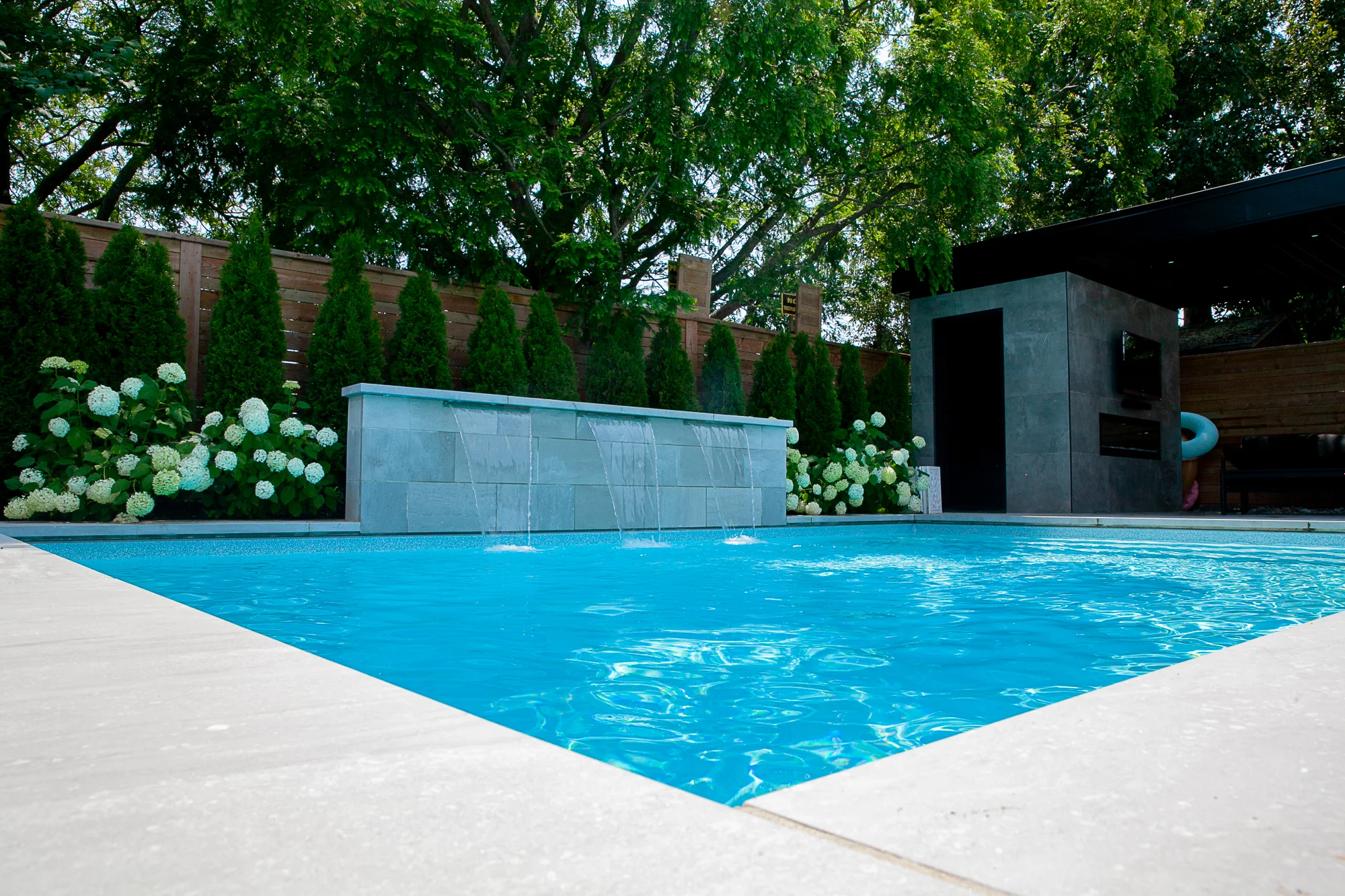
| Water Features | Waterfalls, deck jets, bubblers, and scuppers; improves circulation and aesthetics | During initial build |
| Automation System | Smartphone control for temperature, lighting, jets, and cleaning schedules | During initial build or as an upgrade |
| Saltwater System | Alternative to traditional chlorine; affects day-to-day maintenance and water feel | During initial build |