
Toronto gets significant snowfall every winter. For most homeowners, that means regular shoveling, snowblowing, or plowing for four to five months of the year — plus the ongoing battle against ice and the surface damage that comes with heavy salt use. A heated driveway eliminates most of that, and for the right homeowner, it’s one of those upgrades that makes everyday life noticeably easier.
But is it worth the investment for a Toronto property? The answer depends on how you use your driveway, what your driveway is made of, and how you weigh upfront investment against long-term convenience. This post covers both sides of the decision so you can make the right call for your situation.
How Heated Driveways Work
Heated driveway systems work by embedding heat-generating elements beneath the driveway surface. When activated, the system raises the surface temperature above freezing, melting snow and ice as it falls or accumulates. Most systems can be controlled manually or set to activate automatically via a snow and temperature sensor.
There are two primary system types used in Toronto residential installations:
| System Type | How It Works | Best For | Key Consideration |
|---|---|---|---|
| Hydronic (Water-Based) | Heated water circulates through tubing embedded in the driveway base | Larger driveways; new construction or full driveway replacement | Requires a boiler unit; higher upfront complexity but lower operating costs over time |
| Electric (Resistance Cable) | Electric heating cables embedded beneath the surface generate heat directly | Smaller areas; retrofits or targeted zones | Simpler installation; higher operating costs on larger areas |
Both systems need to be installed before the driveway surface is poured or laid. Retrofitting a heated system into an existing driveway requires removing and replacing the surface, so the most cost-effective time to install is during a new driveway project.
The Case For a Heated Driveway in Toronto
No More Shoveling or Snowblowing
The most obvious benefit is the elimination of manual snow removal. For homeowners with larger driveways, mobility concerns, or simply a preference not to deal with winter maintenance, this is a significant quality-of-life improvement. The driveway clears itself automatically overnight or before you leave for work.
No Salt or De-Icing Chemicals
One of the less-discussed advantages of a heated driveway is what it removes from your routine: salt and chemical ice melters. These products are the primary cause of surface deterioration in concrete and other driveway materials over time. Eliminating them extends the lifespan of the driveway surface considerably.
Improved Safety
Black ice and packed snow at the end of a driveway are real hazards. A heated system keeps the surface clear and dry, reducing slip-and-fall risk for anyone walking or driving on the property. This is particularly relevant for households with elderly family members or young children.
Protects the Driveway Surface
Freeze-thaw cycles and chemical de-icers are the primary forces that degrade driveway surfaces over time. A heated driveway that eliminates both extends the functional life of the surface, which has its own long-term value.
Works With Multiple Surface Types
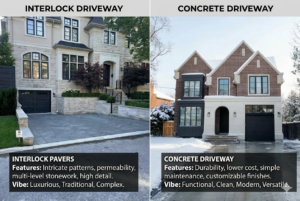
Heated systems are compatible with concrete, interlock, flagstone, and asphalt surfaces. The installation approach varies slightly by surface type, but the heating function is the same regardless of what you’re driving on.
The Considerations for Toronto Homeowners
Installation Timing
The system must be embedded before the surface is installed. This means the most practical window to add a heated driveway is when the driveway is being replaced or newly installed. Adding it to an existing driveway means the entire surface needs to come up first, which is a more involved undertaking.
Operating Costs
Heated driveways consume energy to operate. Electric systems running across a full double-car driveway during a Toronto winter will have a measurable impact on your hydro bill. Hydronic systems have lower ongoing operating costs once installed but involve a more complex initial setup with a boiler. Automation with snow sensors reduces waste by only activating when conditions require it.
Repair Access
If a heating element or tubing section fails, accessing it requires opening up the driveway surface. Reputable installers use high-quality materials and installation methods that minimize this risk, and most systems come with warranties, but it’s worth understanding before committing.
Best Paired With Durable Surfaces
The long-term value of a heated driveway is maximized when it’s paired with a durable, high-quality surface. A heated system installed under a properly built concrete or interlock driveway delivers the best combination of low maintenance and longevity.
Is a Heated Driveway Right for Your Property?
| Heated Driveway Makes the Most Sense When… | It May Be Less Necessary When… |
|---|---|
| You’re already replacing or building a new driveway | Your driveway is in good condition and not due for replacement |
| The driveway is large and snow removal is a significant burden | The driveway is small and easy to clear manually |
| Anyone in the household has mobility limitations | Manual snow removal is practical and preferred |
| You want to eliminate salt damage to a premium driveway surface | Operating costs are a primary concern |
| You travel frequently and need the driveway to maintain itself | You’re rarely away and can manage manual clearing |
For more on how a heated driveway is installed and what the process involves, visit our heated driveway installation page. If you’re also considering what driveway surface to pair with a heated system, our posts on concrete driveways and interlock driveways cover the surface options in detail.
Frequently Asked Questions
Can a heated driveway be added to an existing driveway in Toronto?
Technically yes, but it requires removing and replacing the existing surface to install the heating elements underneath. The most practical and cost-effective time to add a heated system is during a new driveway installation or a full replacement project.
What surface works best with a heated driveway?
Heated systems are compatible with concrete, interlock, flagstone, and asphalt. Each surface transmits heat slightly differently, and your contractor will recommend the right system configuration for the material you’re using. Concrete and interlock are the most common pairings in Toronto residential installations.
How is a heated driveway controlled?
Most systems offer both manual and automatic control. Automatic operation uses a snow and temperature sensor to detect when conditions require the system to activate, which reduces energy use compared to leaving the system running continuously. Smartphone-connected controls are also available on many modern systems.
How much does it cost to run a heated driveway in Toronto?
Operating costs depend on the system type, driveway size, and how many hours the system runs per season. Electric systems cost more to operate than hydronic on a per-hour basis, but a sensor-controlled system that only runs when needed can significantly reduce the annual operating bill.
Does a heated driveway work during a heavy Toronto snowstorm?
A heated driveway system is designed for regular snow management, not for melting heavy accumulations mid-storm. During an active heavy snowfall, the system maintains the surface near freezing to prevent ice bonding and reduce accumulation, but very heavy snowfall may still require some manual clearing. The real benefit is what the driveway looks like when you wake up the next morning.
Considering a Heated Driveway for Your Toronto Home?
Destination Pools and Landscaping installs heated driveway systems for homeowners across Toronto and South Mississauga, integrated with concrete, interlock, and other driveway surfaces. If you’re planning a driveway replacement, it’s the ideal time to explore whether a heated system makes sense for your property.
Request a Consultation